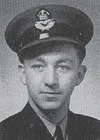
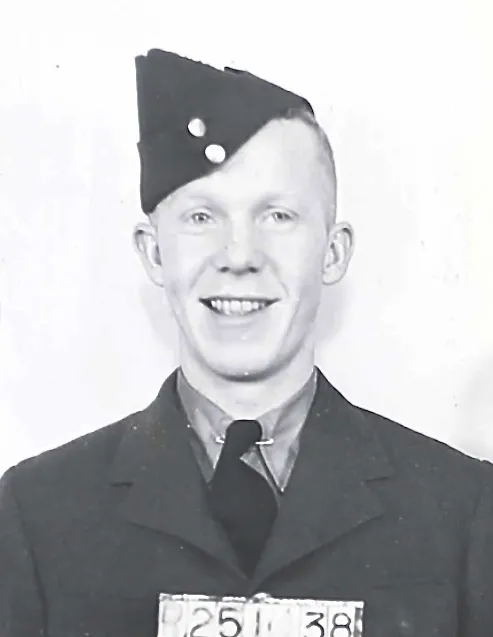
Henderson, Leslie (Sergeant)
Killed in Action 1944-July-31


Birth Date: unkown date
Born:
Parents:
Spouse:
Home:
Enlistment:
Enlistment Date: unkown date
Service
RAFVR
Unit
103 (B) Sqn- Squadron (RAF)
Noli Me Tangere Touch me not
Base
RAF Elsham Woods
Rank
Sergeant
Position
Flight Engineer
Service Numbers
1592119
Target
 Le Havre France
 Commonwealth War Graves Commission
 Finadagrave.com
Crew or Other Personnel
Lancaster JB746

Mission
Lancaster Mk.III JB746
Bombing Le Havre France 1944-July-30 to 1944-July-31
103 (B) Sqn (RAF) RAF Elsham Woods
103 Squadron (Noll Me Tangere) RAF Elsham Woods. Lancaster III aircraft JB 746 PM-I was hit by flak while engaged in a raid against shipping targets in the port of Le Havre, France. A wing separated from the aircraft before it exploded and only two crew members were able to escape before the Lancaster crashed near the target area
Flying Officer Joseph Leonidas Gerald Avon (RCAF), Sergeant Donald Fraser Enright (RCAF), Flight Sergeant George Roughton Carver Gilroy Adams (RAFVR), Sergeant George Robert Carr (RAFVR) and Sergeant Leslie Henderson (RAFVR) were all killed in action
Flying Officer Kenneth Norris (RCAF) and Warrant Officer Class 2 Wilfrid Lucien Morneau (RCAF), survived to be taken as Prisoners of War
 Royal Air Force Serial and Image Database
Lancaster serial: JB746
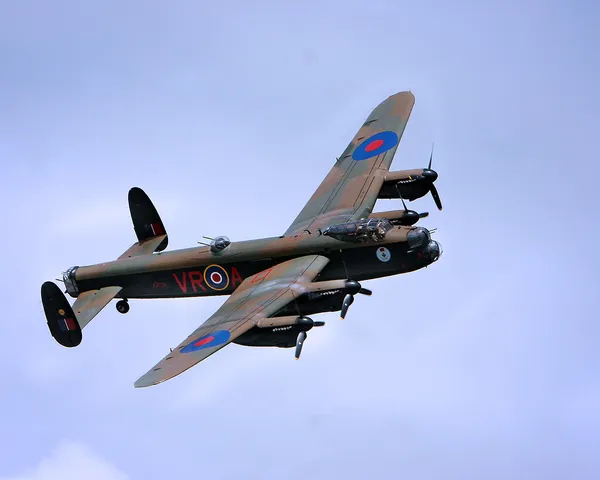
Avro Lancaster Mk. X RCAF Serial FM 213
Canadian Warplane Heritage Museum
Canadian Warplane Heritage Museum
The Avro Lancaster is a British Second World War heavy bomber. It was designed and manufactured by Avro as a contemporary of the Handley Page Halifax, both bombers having been developed to the same specification, as well as the Short Stirling, all three aircraft being four-engined heavy bombers adopted by the Royal Air Force (RAF) during the same wartime era.
The Lancaster has its origins in the twin-engine Avro Manchester which had been developed during the late 1930s in response to the Air Ministry Specification P.13/36 for a capable medium bomber for "world-wide use". Originally developed as an evolution of the Manchester (which had proved troublesome in service and was retired in 1942), the Lancaster was designed by Roy Chadwick and powered by four Rolls-Royce Merlins and in one version, Bristol Hercules engines. It first saw service with RAF Bomber Command in 1942 and as the strategic bombing offensive over Europe gathered momentum, it was the main aircraft for the night-time bombing campaigns that followed. As increasing numbers of the type were produced, it became the principal heavy bomber used by the RAF, the Royal Canadian Air Force (RCAF) and squadrons from other Commonwealth and European countries serving within the RAF, overshadowing the Halifax and Stirling. Wikipedia
 Lancaster Bomber
 Wikipedia
Lancaster JB746 Mk.III - Bombing Le Havre France - 1944-07-30 to 1944-07-31
Squadron: 103 (B) Sqn (RAF)
Start Date: 1944-07-30
Completion Date: 1944-07-31
Mission: Bombing
Operation: unspecified
Target City: Le Havre France
Target Specific: shipping
Base: RAF Elsham Woods
Take Off Time: 18:13:00
Squadron Code: PM-I
Radio Code:
Return Base:
Return Time:
Crash City: France
Crash Specifics: in target area near Le Havre
Crash Latitude: 0.00000000
Crash Longitude: 0.00000000
Crash Reason: flak
Flak Battery: unspecified
Enemy Claim:
War Diary Unavailable
6 Group Unavailable
103 Squadron (Noll Me Tangere) RAF Elsham Woods. Lancaster III aircraft JB 746 PM-I was hit by flak while engaged in a raid against shipping targets in the port of Le Havre, France. A wing separated from the aircraft before it exploded and only two crew members were able to escape before the Lancaster crashed near the target area
Flying Officer Joseph Leonidas Gerald Avon (RCAF), Sergeant Donald Fraser Enright (RCAF), Flight Sergeant George Roughton Carver Gilroy Adams (RAFVR), Sergeant George Robert Carr (RAFVR) and Sergeant Leslie Henderson (RAFVR) were all killed in action
Flying Officer Kenneth Norris (RCAF) and Warrant Officer Class 2 Wilfrid Lucien Morneau (RCAF), survived to be taken as Prisoners of War
Royal Air Force Serial and Image Database
Joseph L Avon and crew 103 Sqn
