Combatants and First Casualties
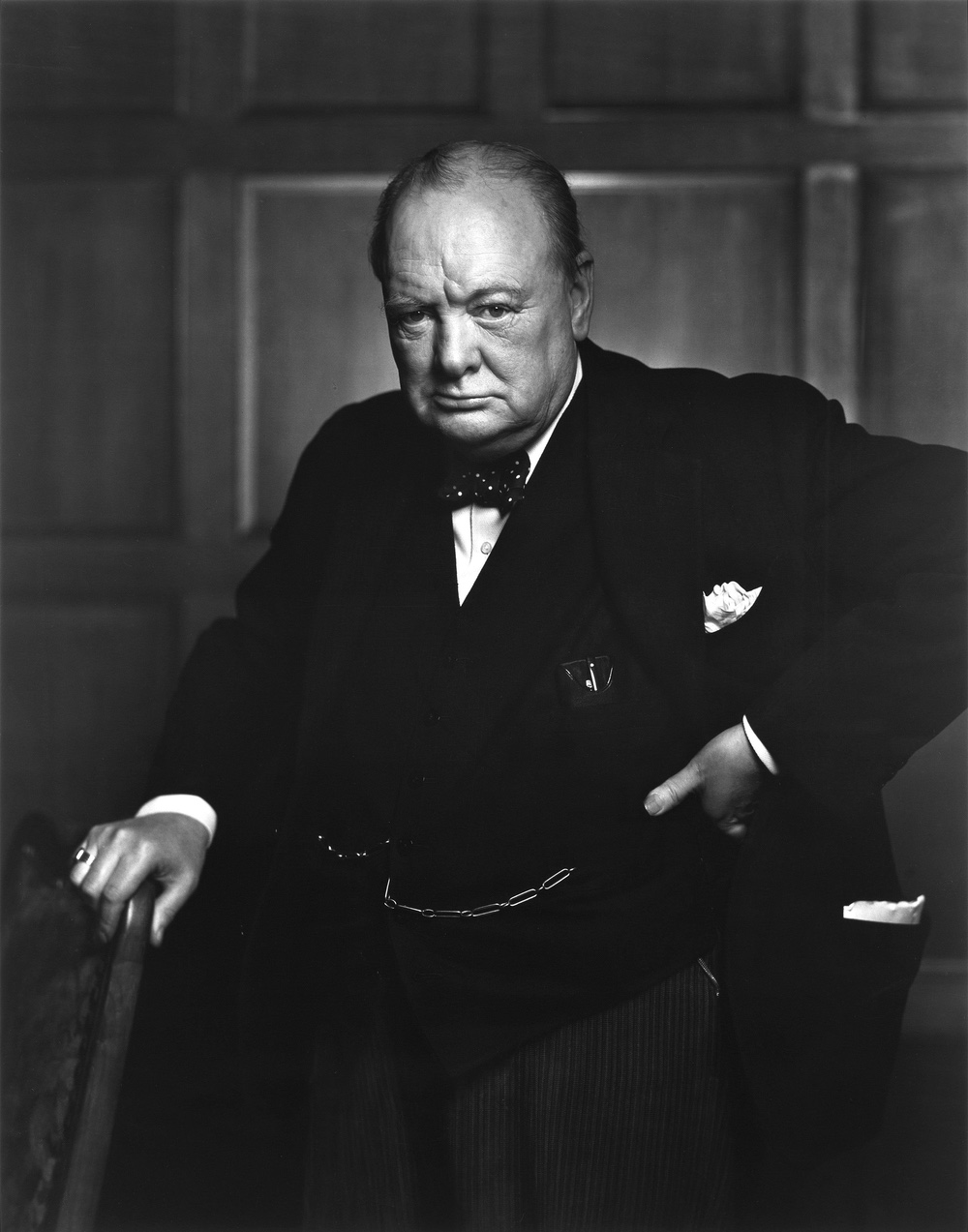
The Second World War pitted two World leaders against each other in 1939: Sir Winston Churchill and Adolf Hitler. Hitler was intending to conquer Europe and the entire world using alliances with Japan, Russia and Italy.
When the war began in 1939, the USA was neutral and Russia was on the same side as Germany. However in mid 1941 Germany attacked Russia in Operation Barbarossa.
In December 1941 Japan attacked the USA at Pearl Harbor, Hawaii. This brought the USA into the War. As a result, by the end of 1941 the Axis forces were:
- Germany led by Adolf Hitler
- Japan led by Emperor Hirohito
- Italy led by Benito Mussolini
 Adolf Hitler
The Allied Forces were:
- Britain led by Winston Churchill
- British Commonwealth countries and their respective Prime Ministers. Canada's Prime Minister was William Lyon Mackenzie King.
- United States of America led by President Franklin Delano Roosevelt
- Russia led by Joseph Stalin
War was declared by Britain against Germany at 11:00 am on September 3, 1939. Four hours later a Canadian Airman Ellard Alexander Cummings was Killed in a Flying Accident in Scotland. The very next day Albert Stanley Prince was Killed in Action during a bombing raid in Germany.
Invasion of Poland
The Gamble
At 4.45 am on 1 September 1939 the German battleship Schleswig-Holstein opened fire on the Polish garrison of the Westerplatte Fort, Danzig (modern-day Gdansk), in what was to become the first military engagement of the Second World War. Simultaneously, 62 German divisions supported by 1,300 aircraft commenced the invasion of Poland.
The decision of Adolf Hitler to invade Poland was a gamble. The Wehrmacht (the German Army) was not yet at full strength and the German economy was still locked into peacetime production. As such, the invasion alarmed Hitler's generals and raised opposition to his command - and leaks of his war plans to Britain and France.
Hitler's generals urged caution and asked for more time to complete the defences of the 'West Wall', in order to stem any British and French counter-offensive in the west while the bulk of the Wehrmacht was engaged in the east. Their leader dismissed their concerns, however, and demanded instead their total loyalty.
Hitler was confident that the invasion of Poland would result in a short, victorious war for two important reasons. First, he was convinced that the deployment of the world's first armoured corps would swiftly defeat the Polish armed forces in a blitzkrieg offensive. Secondly, he judged the British and French prime ministers, Neville Chamberlain and Edouard Daladier, to be weak, indecisive leaders who would opt for a peace settlement rather than war. BBC - History (http://www.bbc.co.uk/history/worldwars/wwtwo/invasion_poland_01.shtml)
 Britain's Declaration of War (12:57)
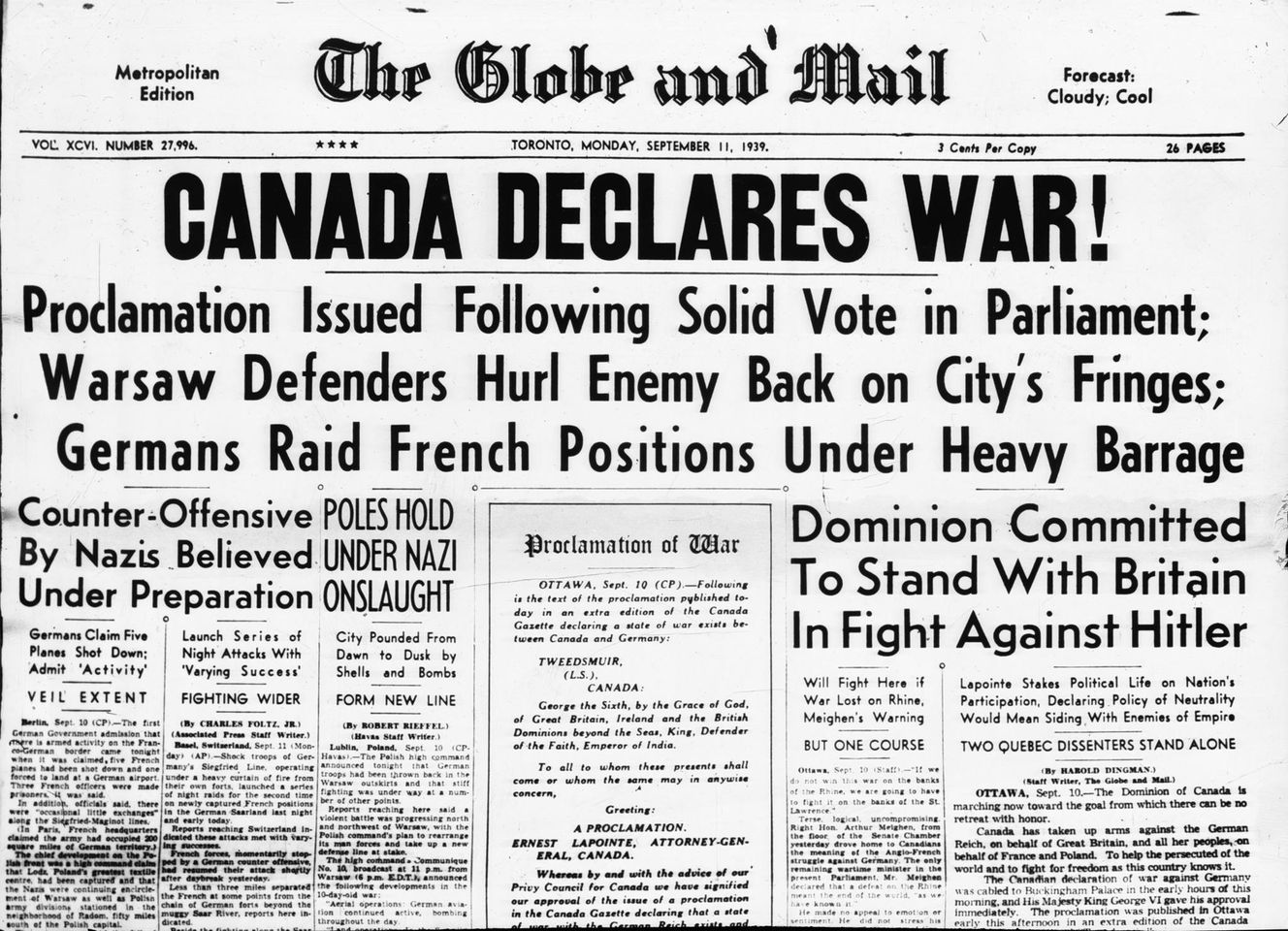
 Canada Declares War