 'Rockliffe', Mussoorie, India
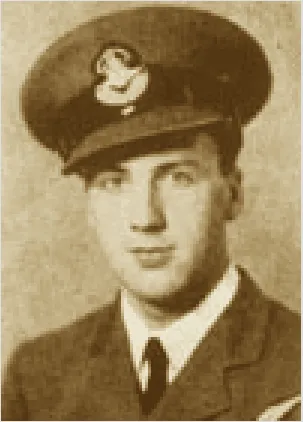
Group Captain McKenna was the Station Commander at RAF Langar at the time of his death
McKenna, Austin Flower (Group Captain)
Killed in Action 1943-September-03


Birth Date: 1909-April-08
Born: 'Rockliffe', Mussoorie, India
Parents: Son of Robert Flower McKenna and Grace Alice McKenna
Spouse: Husband of Maud Katharine McKenna
Home: 'Rockliffe', Mussoorie, India
Enlistment:
Enlistment Date: unkown date

Service
RAF
Unit
207 (B) Sqn- Squadron (RAF)
Semper Paratus Always prepared
Base
RAF Langar
Rank
Group Captain
Position
Flight Engineer
Service Numbers
29110
 Commonwealth War Graves Commission
 Finadagrave.com
Crew or Other Personnel
Lancaster ED832


Mission
Lancaster Mk.I/III ED832
Bombing Berlin Germany 1943-September-03 to 1943-September-03
207 (B) Sqn (RAF) RAF Langar
207 Squadron RAF (Semper Paratus) RAF Langar. Lancaster BIII aircraft ED 832 EM-X failed to return from a raid against targets in Berlin, Germany. Lost without a trace, the cause of loss was not determined
Flight Lieutenant T J D Waterman DFC (RCAF), Flying Officer F G C Spanner DFC (RCAF), Group Captain A F McKenna MiD (RAF), Squadron Leader Ian McArtair Huntly-Wood DFC (RAFVR), Flying Officer K J Knight DFC (RAFVR), Flight Sergeant A J C Whitehead (RAFVR) and Flying Officer J L Young DFM (RAFVR) were all missing, presumed killed in action
The missing have no known grave and all are commemorated on the Runnymede Memorial
 Royal air Force Serial and Image Database
Lancaster serial: ED832
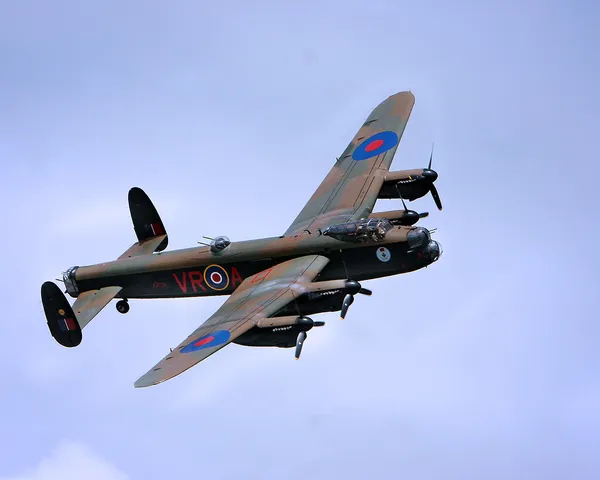
Avro Lancaster Mk. X RCAF Serial FM 213
Canadian Warplane Heritage Museum
Canadian Warplane Heritage Museum
The Avro Lancaster is a British Second World War heavy bomber. It was designed and manufactured by Avro as a contemporary of the Handley Page Halifax, both bombers having been developed to the same specification, as well as the Short Stirling, all three aircraft being four-engined heavy bombers adopted by the Royal Air Force (RAF) during the same wartime era.
The Lancaster has its origins in the twin-engine Avro Manchester which had been developed during the late 1930s in response to the Air Ministry Specification P.13/36 for a capable medium bomber for "world-wide use". Originally developed as an evolution of the Manchester (which had proved troublesome in service and was retired in 1942), the Lancaster was designed by Roy Chadwick and powered by four Rolls-Royce Merlins and in one version, Bristol Hercules engines. It first saw service with RAF Bomber Command in 1942 and as the strategic bombing offensive over Europe gathered momentum, it was the main aircraft for the night-time bombing campaigns that followed. As increasing numbers of the type were produced, it became the principal heavy bomber used by the RAF, the Royal Canadian Air Force (RCAF) and squadrons from other Commonwealth and European countries serving within the RAF, overshadowing the Halifax and Stirling. Wikipedia
 Lancaster Bomber
 Wikipedia
Lancaster ED832 Mk.I/III - Bombing Berlin Germany - 1943-09-03 to 1943-09-03
Squadron: 207 (B) Sqn (RAF)
Start Date: 1943-09-03
Completion Date: 1943-09-03
Mission: Bombing
Operation: unspecified
Target City: Berlin Germany
Target Specific:
Base: RAF Langar
Take Off Time:
Squadron Code: EM-X
Radio Code:
Return Base:
Return Time:
Crash City: unknown
Crash Specifics: unknown
Crash Latitude: 0.00000000
Crash Longitude: 0.00000000
Crash Reason:
Flak Battery:
Enemy Claim:
War Diary Unavailable
6 Group Unavailable
207 Squadron RAF (Semper Paratus) RAF Langar. Lancaster BIII aircraft ED 832 EM-X failed to return from a raid against targets in Berlin, Germany. Lost without a trace, the cause of loss was not determined
Flight Lieutenant T J D Waterman DFC (RCAF), Flying Officer F G C Spanner DFC (RCAF), Group Captain A F McKenna MiD (RAF), Squadron Leader Ian McArtair Huntly-Wood DFC (RAFVR), Flying Officer K J Knight DFC (RAFVR), Flight Sergeant A J C Whitehead (RAFVR) and Flying Officer J L Young DFM (RAFVR) were all missing, presumed killed in action
The missing have no known grave and all are commemorated on the Runnymede Memorial
