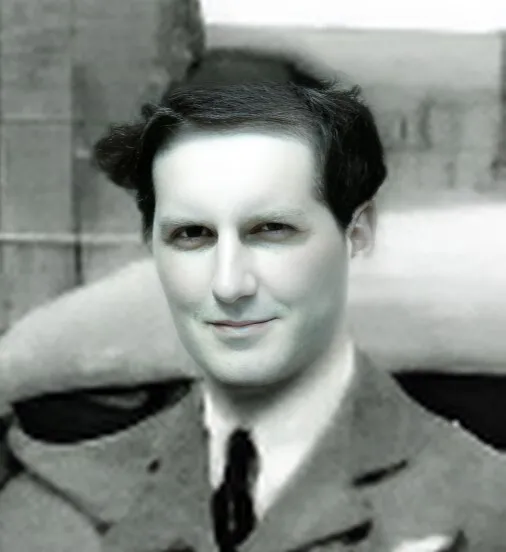
Martin, Alexander (Pilot Officer)
Killed in Action 1944-December-31

Birth Date: unkown date
Born:
Parents:
Spouse:
Home:
Enlistment:
Enlistment Date: unkown date
Service
RAFVR
Unit
166 (B) Sqn- Squadron (RAF)
Tenacity
Base
RAF Kirmington
Rank
Pilot Officer
Position
Flight Engineer
Service Numbers
185419
 Osterfeld Germany
Crew or Other Personnel
Lancaster ME647

Mission
Lancaster Mk.I ME647
Bombing Osterfeld Germany 1944-December-31 to 1944-December-31
166 (B) Sqn (RAF) Kirmington
149 Lancasters and 17 Mosquitoes of 1 and 8 Groups to attack the railway yards. The only details available are Bomber Command's estimates that the railway sidings ·were 35 percent damaged and the 'facilities' 20 per cent damaged. 2 Lancasters lost.source: The Bomber Command War Diaries, Martin Middlebrook and Chris Everitt
Claim by Hptm Johannes Hager 6/NJG1 at 19:00. (Nachtjagd Combat Archive 1945 Part 5 - Theo Boiten)
Aircraft came down at Eygelshoven, inside of the Rimburgerweg, near Heerlen, 26 Km east-north-east of Maastricht, just inside Dutch territory and in the already liberated Province of Zuid-Limburg The area had been under Allied control since mid-September 1944. (Aviation Safety Network)
The crew were initially buried in Margraten US Military Cemetery. Fg Off Sherry was reinterred on 24 March 1947. (CWGC). The remaing crew members were reinterred on 20 November 1946. (CWGC) source: John Jones
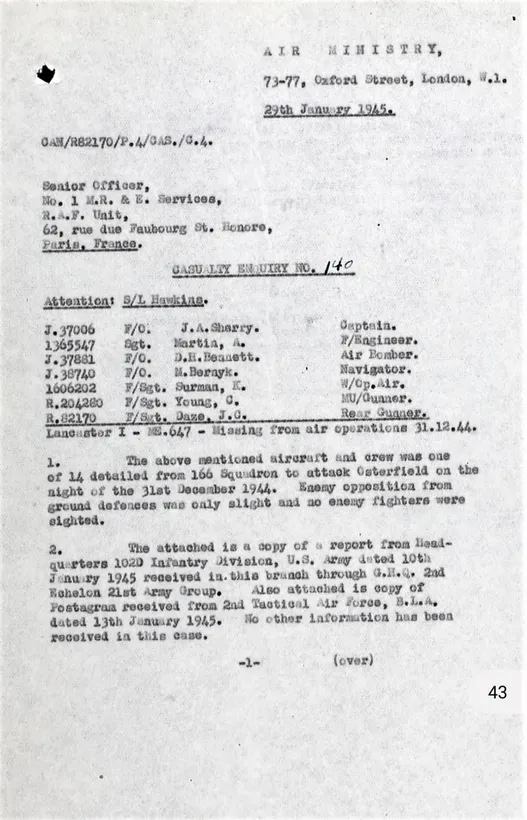
Crew Listing of Lancaster ME647, Source:Todd Johnson, Bomber Command Museum of Canada
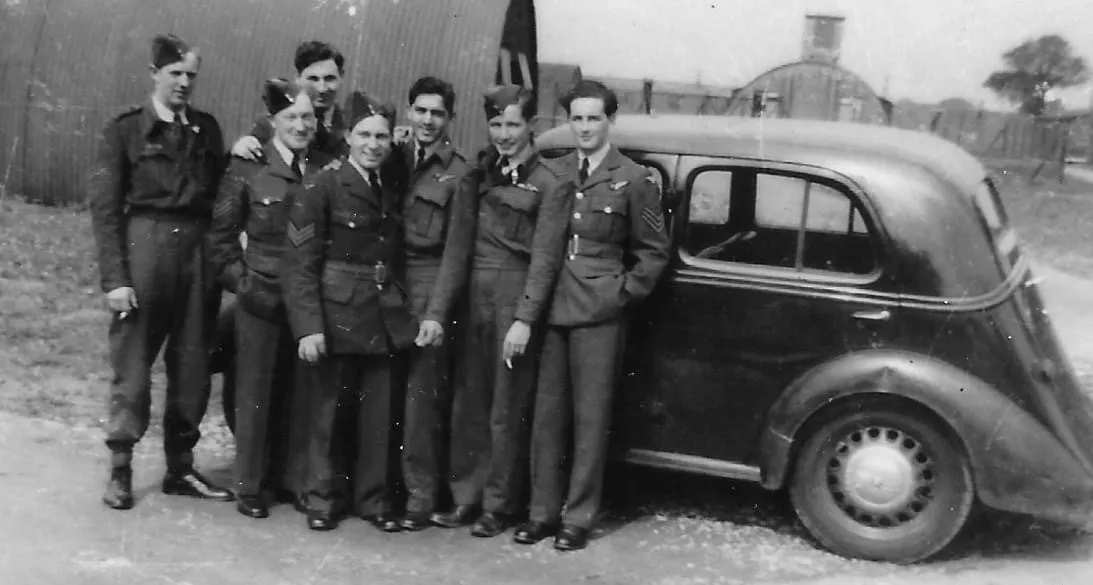
Crew of Lancaster ME647, Source:Todd Johnson, Bomber Command Museum of Canada
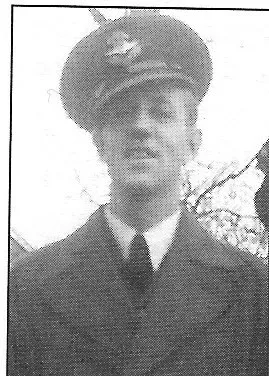
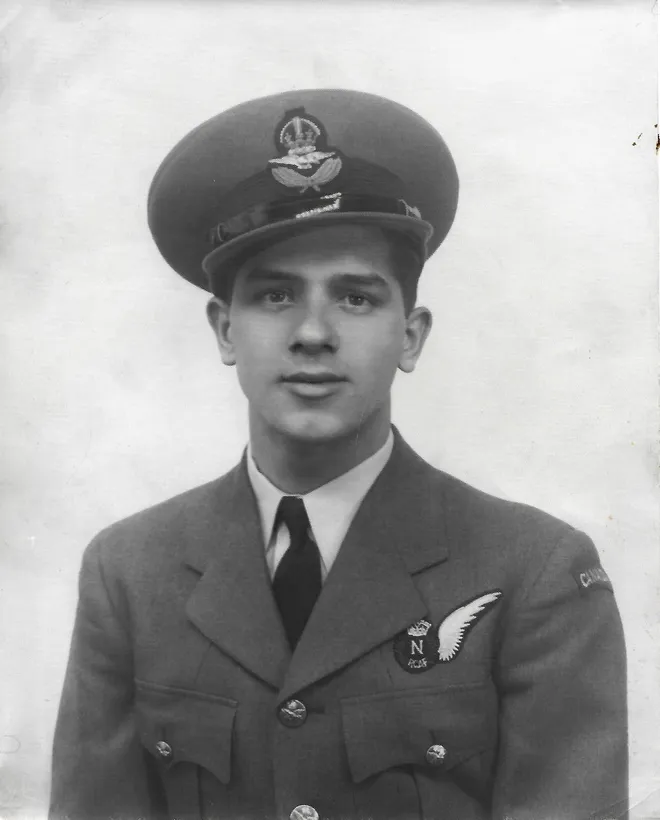
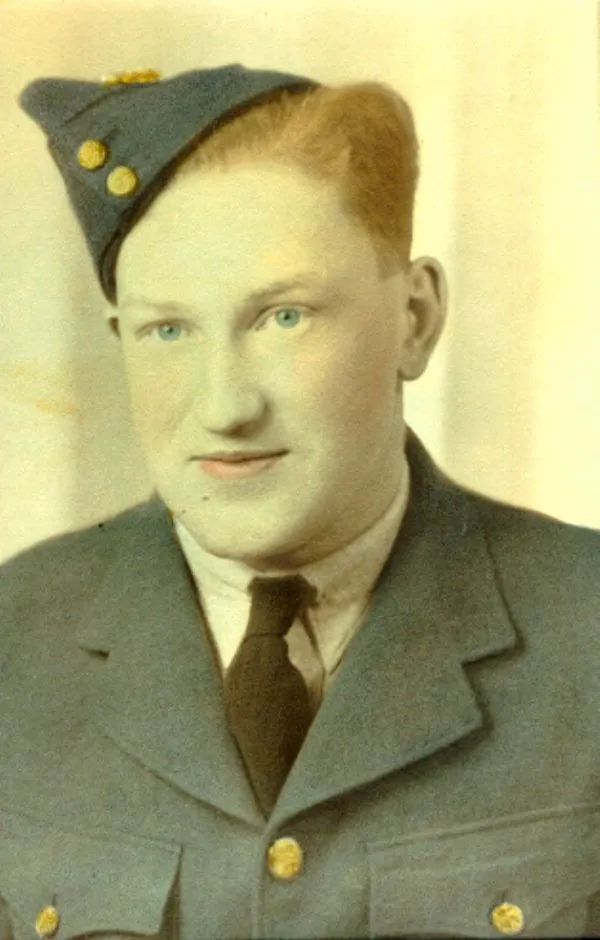
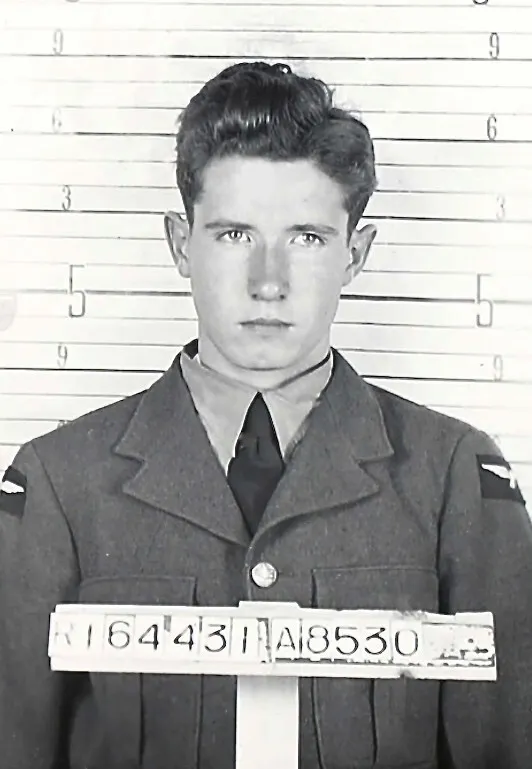
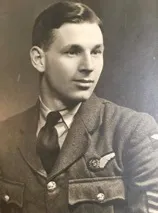
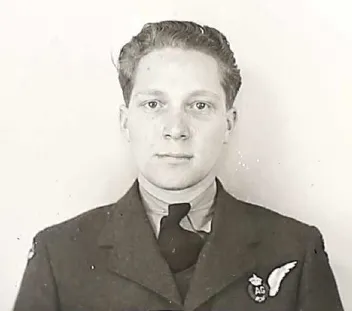
Thank you to Wargraves Foundation Nederweert, The Netherlands, for their contribution of the individual crew's images
Lancaster serial: ME647
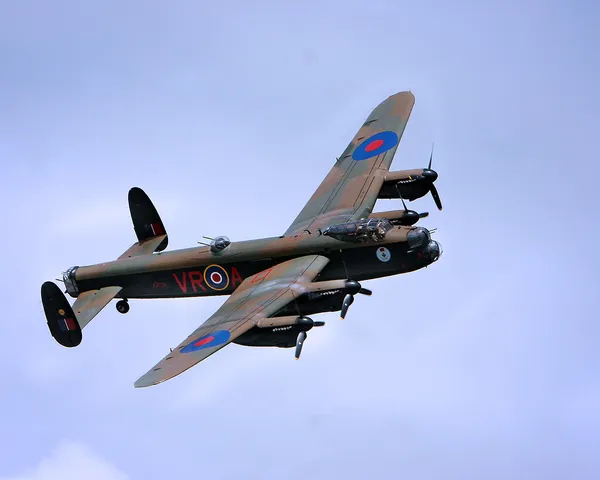
Avro Lancaster Mk. X RCAF Serial FM 213
Canadian Warplane Heritage Museum
Canadian Warplane Heritage Museum
The Avro Lancaster is a British Second World War heavy bomber. It was designed and manufactured by Avro as a contemporary of the Handley Page Halifax, both bombers having been developed to the same specification, as well as the Short Stirling, all three aircraft being four-engined heavy bombers adopted by the Royal Air Force (RAF) during the same wartime era.
The Lancaster has its origins in the twin-engine Avro Manchester which had been developed during the late 1930s in response to the Air Ministry Specification P.13/36 for a capable medium bomber for "world-wide use". Originally developed as an evolution of the Manchester (which had proved troublesome in service and was retired in 1942), the Lancaster was designed by Roy Chadwick and powered by four Rolls-Royce Merlins and in one version, Bristol Hercules engines. It first saw service with RAF Bomber Command in 1942 and as the strategic bombing offensive over Europe gathered momentum, it was the main aircraft for the night-time bombing campaigns that followed. As increasing numbers of the type were produced, it became the principal heavy bomber used by the RAF, the Royal Canadian Air Force (RCAF) and squadrons from other Commonwealth and European countries serving within the RAF, overshadowing the Halifax and Stirling. Wikipedia
 Lancaster Bomber
 Wikipedia
 Harold A Skaarup Web Page
Unit Desciption
166 (B) Sqn Tenacity (Huddersfield's Own)
No 166 Squadron RAF was originally formed at Bircham Newton, Norfolk on June 13, 1918, designed as a heavy bomber unit, to fly the Handley Page V/1500 aircraft. The squadron was never fully mobilized because the Armistice intervened. The squadron was re-formed in November 1936 as a heavy bomber unit, flying Handley Page Heyfords, later equipping with Armstrong Whitworth Whitleys. It was based at Boscombe Down, Wiltshire from November 1936 to January 1937, when it moved to Leconfield, Yorkshire. The squadron became part of an air observer's school on June 7, 1938, and then became a 1 Group pool squadron in May 1939. From September 1939 it was based at Abingdon, Berkshire until April 1940. In that month the squadron merged with no. 97 Squadron to form No. 10 OTU.
In January 1943 the squadron was re-formed at Kirmington, Yorkshire (53.578,-0.344, now Humberside Airport), from flights of Nos. 150 and 170 squadrons, when parts of these squadrons were posted to the Middle East. It was again bomber squadron, flying Vickers Wellingtons in No. 1 Group of Bomber Command. It remained at Kirmington until the end of WWII, later re-equipping with Avro Lancasters. In the period 27/28 January 1943 and 25 April 1945, it dropped 27,287 tons of bombs and laid 333 tons of mines. The squadron won "at least" 2 DSOs, 2 CGMs, 117 DFCs and 108 DFMs in the course of WWII. The squadron was disbanded on November 18, 1945.
Lancaster ME647 Mk.I - Bombing Osterfeld Germany - 1944-12-31 to 1944-12-31
Squadron: 166 (B) Sqn (RAF)
Start Date: 1944-12-31
Completion Date: 1944-12-31
Mission: Bombing
Operation: unspecified
Target City: Osterfeld Germany
Target Specific:
Base: Kirmington
Take Off Time: 15.10
Squadron Code: AS J
Radio Code:
Return Base:
Return Time:
Crash City:
Crash Specifics:
Crash Latitude: 0.00000000
Crash Longitude: 0.00000000
Crash Reason: fighter
Flak Battery:
Enemy Claim:
War Diary Unavailable
6 Group Unavailable
149 Lancasters and 17 Mosquitoes of 1 and 8 Groups to attack the railway yards. The only details available are Bomber Command's estimates that the railway sidings ·were 35 percent damaged and the 'facilities' 20 per cent damaged. 2 Lancasters lost.source: The Bomber Command War Diaries, Martin Middlebrook and Chris Everitt
Claim by Hptm Johannes Hager 6/NJG1 at 19:00. (Nachtjagd Combat Archive 1945 Part 5 - Theo Boiten)
Aircraft came down at Eygelshoven, inside of the Rimburgerweg, near Heerlen, 26 Km east-north-east of Maastricht, just inside Dutch territory and in the already liberated Province of Zuid-Limburg The area had been under Allied control since mid-September 1944. (Aviation Safety Network)
The crew were initially buried in Margraten US Military Cemetery. Fg Off Sherry was reinterred on 24 March 1947. (CWGC). The remaing crew members were reinterred on 20 November 1946. (CWGC) source: John Jones
Crew Listing of Lancaster ME647, Source:Todd Johnson, Bomber Command Museum of Canada
Crew of Lancaster ME647, Source:Todd Johnson, Bomber Command Museum of Canada
Thank you to Wargraves Foundation Nederweert, The Netherlands, for their contribution of the individual crew's images
