Lobb, Kenneth Alfred (Flying Officer)
Killed in Action 1944-February-03
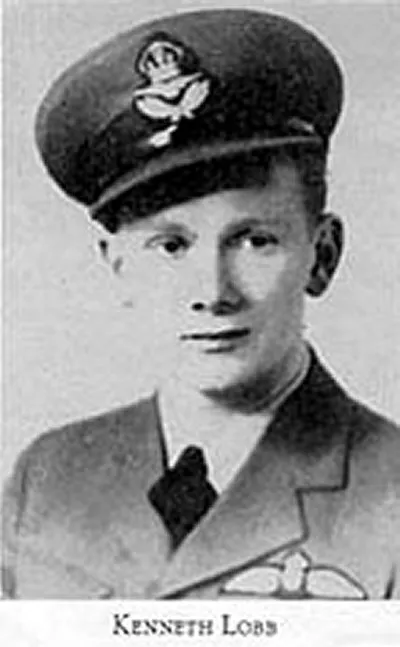

Birth Date: 1922-November-12
Born: Montreal, Montreal Region, Quebec, Canada
Parents: Son of Alfred Hastings Lobb and Edith Lobb, of Montreal, Province of Quebec.
Spouse:
Home: Montreal, Quebec
Enlistment: Montreal, Quebec
Enlistment Date: 1942-February
Service
RCAF
Unit
126 (F) Sqn- Squadron
Base
RCAF Station Gander, Newfoundland
Rank
Flying Officer
Position
Pilot
Service Numbers
J/26389
Prev: R/164576
 Montreal, Quebec
 Canadian Virtual War Memorial
 Commonwealth War Graves Commission
 Finadagrave.com
 Library and Archives Canada Service Files (may not exist)
Accident Card - Hawker Hurricane Mk. XII serial:5668
This accident involved 1 aircraft on 1944-February-03. Hawker Hurricane XII s/n 5668.
This accident involved 1 person. Lobb KA
This accident had 1 fatality. Flying Officer Kenneth Alfred Lobb RCAF Killed in Action service no:J/26389 Hurricane 5668
Mission
Hurricane Mk. XII 5668
Reconnaissance 1944-February-03 to 1944-February-03
126 (F) Sqn (RCAF) RCAF Station Gander, Newfoundland
126 Flying Lancers (F) Squadron, RCAF Station, Gander, Newfoundland. Flying Officer Kenneth Alfred Lobb (RCAF) was flying Canadian-built (Canadian Car and Foundry) Hurricane XII aircraft 5668 H on a dawn patrol when his aircraft was engulfed in a heavy snow squall and flew into the ground. Flying Officer Lobb was killed in action when he crashed thirty miles south of the aerodrome at Deer Pond, Newfoundland
Quietus Last Flight, Accident Proneness in WWII, Wartime Aviation Stories on the Canadian Home front by Anne Gafiuk, Chapter 13
 Royal Air Force Serial and Image Database
Hurricane serial: 5668
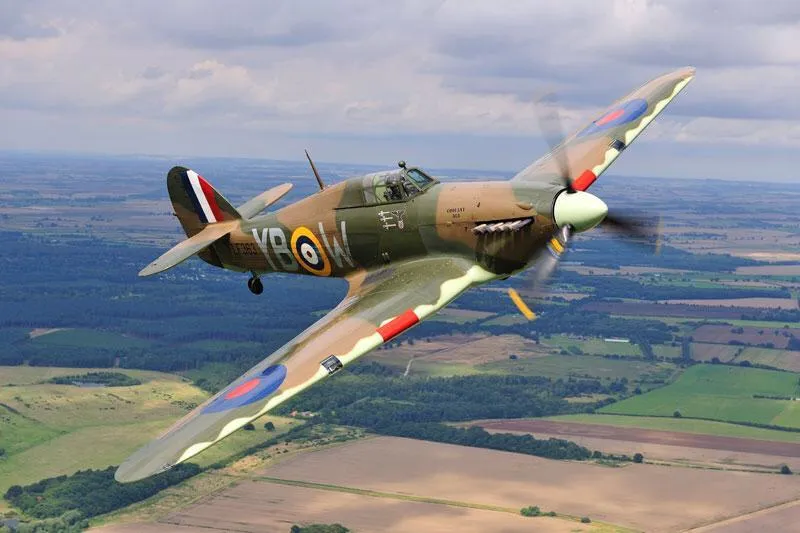
Source BBMF
The Hawker Hurricane is a single-seat fighter aircraft of the 1930s"“1940s that was designed and predominantly built by Hawker Aircraft Ltd. for service with the Royal Air Force (RAF). The Hurricane developed through several versions, as bomber-interceptors, fighter-bombers, and ground support aircraft in addition to fighters. Versions designed for the Navy were popularly known as the Sea Hurricane, with modifications enabling their operation from ships. Some were converted to be used as catapult-launched convoy escorts. By the end of production in July 1944, 14,487 Hurricanes had been completed in Britain and Canada.
A major manufacturer of the Hurricane was Canadian Car and Foundry at their factory in Fort William (now Thunder Bay), Ontario. The facility's chief engineer, Elsie MacGill, became known as the "Queen of the Hurricanes". The initiative was commercially led rather than governmentally, but was endorsed by the British government; Hawker, having recognized that a major conflict was all but inevitable after the Munich Crisis of 1938, drew up preliminary plans to expand Hurricane production via a new factory in Canada. Under this plan, samples, pattern aircraft, and a complete set of design documents stored on microfilm, were shipped to Canada; the RCAF ordered 20 Hurricanes to equip one fighter squadron and two more were supplied to Canadian Car and Foundry as pattern aircraft but one probably did not arrive. The first Hurricane built at Canadian Car and Foundry was officially produced in February 1940. As a result, Canadian-built Hurricanes were shipped to Britain to participate in events such as the Battle of Britain. Canadian Car and Foundry (CCF) was responsible for the production of 1,451 Hurricanes.
Sea Hurricane
While the Sea Hurricane never served in the Royal Canadian Navy, it was, ironically, operated by the Royal Canadian Air Force. In late 1941, the RCAF found itself without any frontline fighters, having sent its earlier Hawker Hurricanes off to the UK along with 1 (Fighter) Squadron, RCAF, and was having a hard time procuring additional fighters to meet its needs.
For reasons that are still slightly unclear, the RCAF received 50 Sea Hurricanes in 1942. It is assumed that these aircraft, built in Thunder Bay, Ontario by Canadian Car and Foundry, were to be used as part of the Fleet Air Arm (FAA) Merchant Ship Fighting Unit (MSFU) based in Canada, but were diverted to the RCAF. These Sea Hurricanes were basically a Hurricane Mk. I with a tail-hook, catapult spools, a short blunt de Havilland spinner, and an eight gun wing. Wikipedia and Harold A Skaarup Web Page
Folding Wings
The idea of adding folding wings to the Sea Hurricane was examined in 1940 but ultimately abandoned due to concerns about the aircraft's ability to accommodate the extra weight and the urgent need for next-generation aircraft. The Sea Hurricane was primarily designed as a stopgap measure for naval operations, which limited the resources available for such modifications.
Examination of the Concept
- Weight Concerns: There were significant worries about the Sea Hurricane's ability to handle the additional weight that folding wings would introduce.
- Resource Limitations: The Sea Hurricane was intended as a stopgap solution for naval operations, which meant that resources for further modifications were limited.
The Sea Hurricane was adapted from the original Hurricane design to meet the needs of naval aviation. Key modifications included:
- Strengthened Airframe: To withstand the rigors of carrier operations.
- Arrestor Hook: Essential for landing on aircraft carriers.
- Naval Equipment: Ensured functionality in maritime conditions.
While the folding wing concept was explored, the pressing demands of the war and the need for more advanced aircraft led to its dismissal. The Sea Hurricane continued to serve effectively in its modified form without the folding wings.
 Hurricane
 Wikipedia Hurricane
 Hurricane - Kestrel Publications
Aircraft Images
Hurricane 5668
Hurricane Mk. XII 5668
 H
H1943-02-03 Taken on Strength Eastern Air Command 2019-08-20
1944-February-03 Accident: 126 Squadron Loc: Gander Names: Lobb
1944-02-03 Accident Category A 2022-02-04
1944-03-22 Struck off Strength written off, reduction to spares and produce 2022-02-04
Hurricane 5668 Mk. XII - Reconnaissance - 1944-02-03 to 1944-02-03
War Diary Unavailable
6 Group Unavailable
126 Flying Lancers (F) Squadron, RCAF Station, Gander, Newfoundland. Flying Officer Kenneth Alfred Lobb (RCAF) was flying Canadian-built (Canadian Car and Foundry) Hurricane XII aircraft 5668 H on a dawn patrol when his aircraft was engulfed in a heavy snow squall and flew into the ground. Flying Officer Lobb was killed in action when he crashed thirty miles south of the aerodrome at Deer Pond, Newfoundland
Quietus Last Flight, Accident Proneness in WWII, Wartime Aviation Stories on the Canadian Home front by Anne Gafiuk, Chapter 13
Royal Air Force Serial and Image Database
Microsoft Word - Defence Gd 12 may.docx
