COMMUNCATIONS
{{webimage,wardiaries.jpg,float:right;width:150px;,Book no longer in print}}
671 aircraft - 348 Halifaxes, 285 Lancasters, 38 Mosquitoes - of 4, 5, 6 and 8 Groups to attack communications, mostly railways, at Amiens/St-Roch, Amiens/Longueau, Arras, Caen, Cambrai and Poitiers. (It is interesting to note that, with the exception of Caen, all of these targets were the sites of well-known battles of earlier wars and Caen was soon to be the scene of fierce fighting.)
Bomber Command's records state that the Poitiers attack, by 5 Group, was the most accurate of the night and that the 2 raids at Amiens and the raid at Arras were of reasonable accuracy. The target at Cambrai was hit but many bombs also fell in the town. The most scattered attack (also by 5 Group) was at Caen.
23 aircraft - 17 Halifaxes and 6 Lancasters - were lost from these raids; all of these losses were from 4 and 6 Groups. A Canadian airman, Pilot Officer Andrew Charles Mynarski from Winnipeg, was awarded a posthumous Victoria Cross for his bravery on the Cambrai raid, His Lancaster, of 419 Squadron, was attacked by a night fighter and set on fire and the crew were ordered to abandon the aircraft. Mynarski was about to jump when he saw that the tail gunner was trapped in his turret and he went through fierce flames to help. The rear turret was so badly jammed that it could not be freed and the trapped gunner eventually waved Mynarski away. By the time he left the aircraft, Mynarski's clothing and parachute were on fire and he died while being eared for by French civilians soon after he landed. The tail gunner was fortunate to survive the crash and his report on Mynarski's courage led to the award of the Victoria Cross. Pilot Officer Mynarski is buried in the small village cemetery at Meharicourt, east of Amiens.
GELSENKIRCHEN
303 aircraft - 286 Lancasters and 17 Mosquitoes of 1, 3 and 8 Groups - carried out the first raid of the new oil campaign; the target was the Nordstem synthetic-oil plant (the Germans called the plant Gelsenberg A.G.), 17 Lancasters were lost, 6.1 per cent of the Lancaster force.
The attack opened with exceptional accuracy owing to good work by the Path- finders and to improved versions of Oboe sets now available. Later phases of the bombing were spoiledby the clouds of smoke from the burning target and by a rogue target indicator which fell to miles short of the target and was bombed by 35 aircraft. A German industrial report* shows that all production at the oil plant ceased, with a loss of i,000 tons of aviation fuel a day for several weeks, as well as the loss of other fuels. Gelsenkirchen's civil records also pay tribute to the accuracy of the attack; 1,500 bombs fell inside the oil-plant area. The civil records also describe the extensive damage in the nearby working-class district of Horst. A total of 270 people were killed, including 24 workers in the oil plant at the time of the attack, 23 foreign workers who were killed when their wooden barracks near by were hit, and 6 school- boy 'Fiakhilfersi'.
Minor Operations: 27 Mosquitoes to Cologne, 3 R.C.M. sorties, 39 Serrate and 13 Intruder patrols 9 Halifaxes and 5 Stirlings minelaying off Brest and St-Nazaire, 13 aircraft on Resistance operations. No aircraft lost.
Total effort for the night: 1,083 sorties, 40 aircraft (3.7 per cent) lost. The Bomber Command War Diaries, Middlebrook and Everitt
6 Bomber Group June 12/13, 1944
32 Lancaster from 408 and 419 Squadrons were joined by 60 Halifaxes from 420, 425, 426, and 432 Squadrons on an attack of the rail yards at Cambrai. The crews were over the target at between 4,000 and 6,000feet, releasing 745,000 lbs of high explosives. According to reports, this attack was accurate with serious damage being done.
While some of the group went to Cambrai, 89 Halifaxes from 424, 427,429, 431, 433 and 434 Squadrons were ordered to attack the rail yards at Arras. The crews were over the target at between 4,000 and 6,000 feet, releasing 705,000 lbs of high explosives. According to reports, serious damage was caused.
4 Halifaxes from 428 squadron were ordered on a mining operation to Lorient and Saint-Nazaire. The crews were over the garden at 12,000 feet, sowing 8@1500 and 8@1850 lb mines. Richard Koval (6bombergroup.ca)
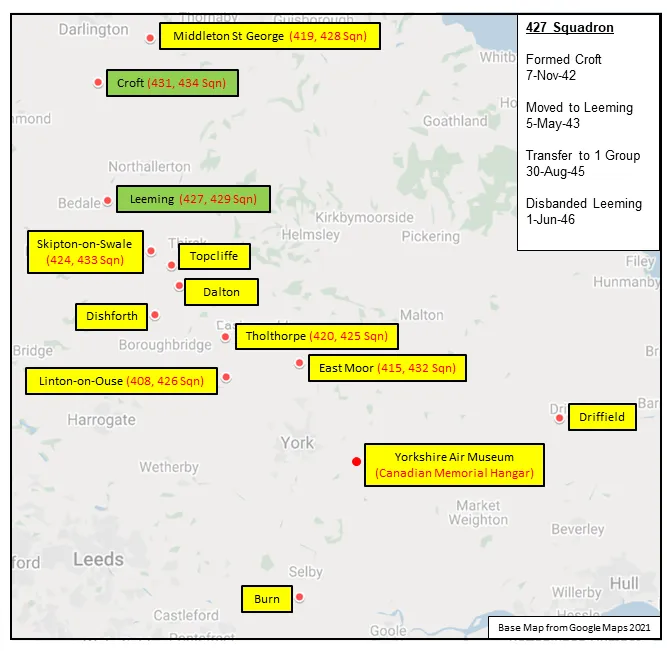
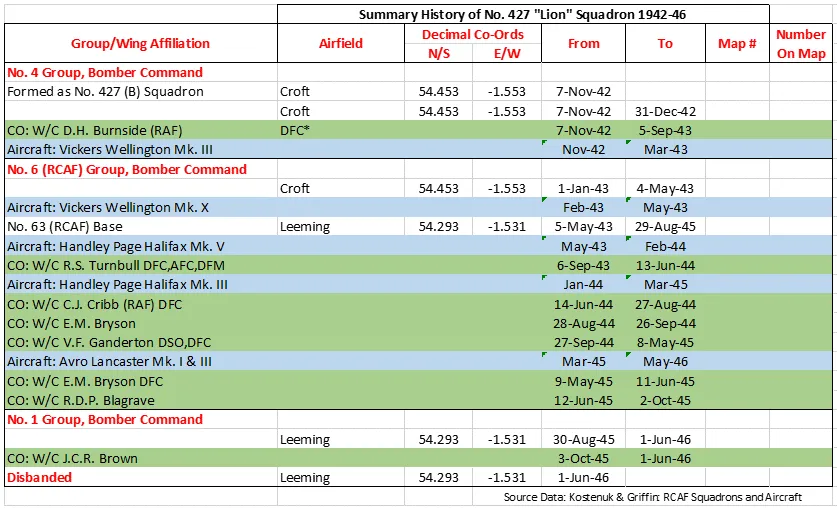
427 Lion Squadron (Ferte Manus Certas) RAF Leeming. Halifax III aircraft LV 995 ZL-Y was shot down by flak during a night operation to bomb railyards at Arras, France, crashing near Maquise, Pas-de-Calais, France
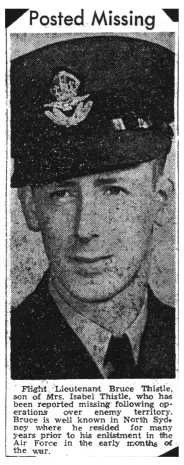
Flying Officer FH Lang (RCAF), Pilot Officer NF Fitton (RCAF), Flight Lieutenant LB Thistle (RCAF) and Sergeant DA Bristow (RAFVR) were all killed in action
Pilot Officer EL Wilson (RCAF), Flying Officer K Patrick (RCAF) and Flying Officer JDL Fulton (RCAF) avoided capture and were Evaders
There were two more 427 aircraft lost on the operation this night. Please see aircraft serials LW 165 ZL-M and LW135 ZL-R for additional information
 Search for France-Crashes 39-45
Daily Operations
[Royal Air Force Serial and Image Database]...
 6 Group Bomber Command
RAF Commands
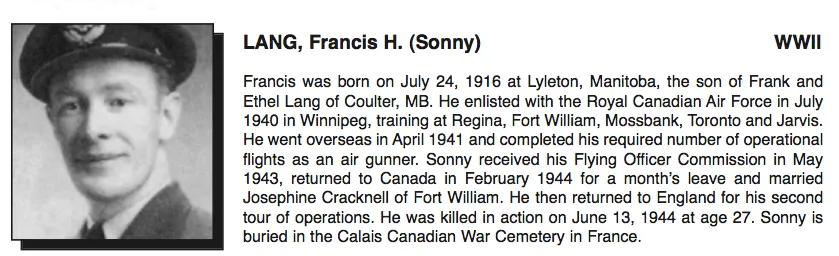

 Lyleton, Manitoba
 Canadian Virtual War Memorial
 Commonwealth War Graves Commission
 Finadagrave.com
 Library and Archives Canada Service Files (may not exist)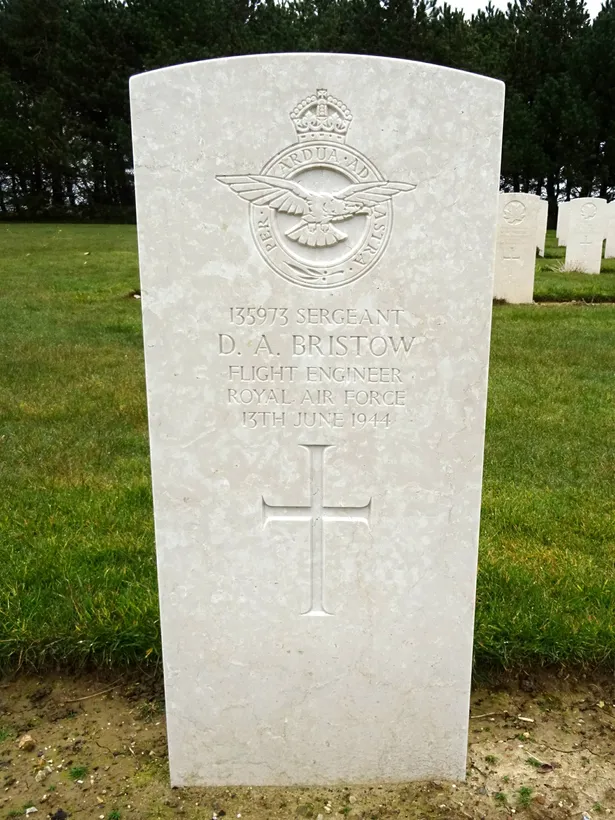


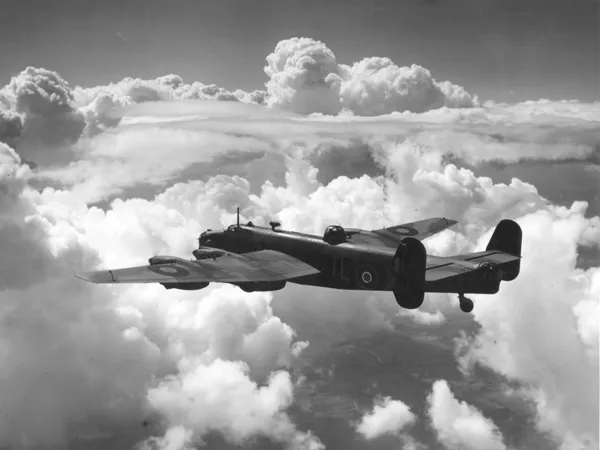
 Halifax Heavy Bomber WWII
 Wikipedia Halifax Bomber
 National Air Force Museum of Canada