Squadron: 432 (B) Sqn (RCAF)
Start Date: 1943-07-03
Completion Date: 1943-07-04
Mission: Bombing
Operation: Battle of the Ruhr
Target City: Cologne Germany
Target Specific:
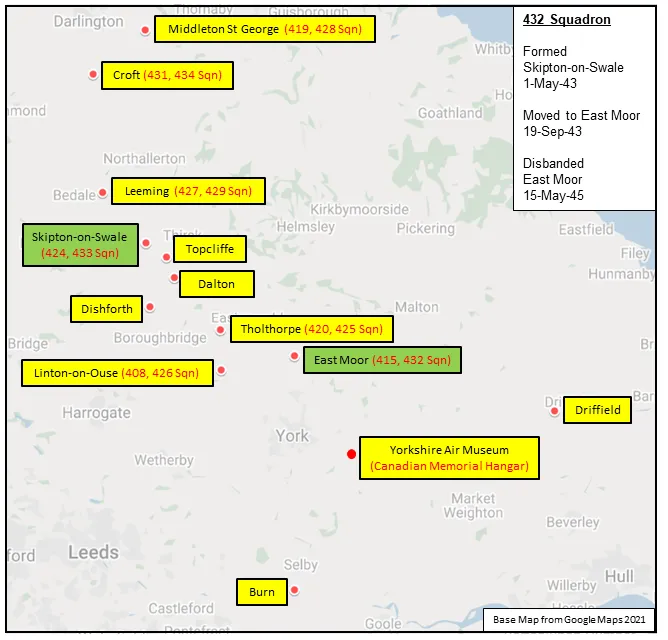
Base: RAF Skipton-on-Swale
Take Off Time:
Squadron Code: QO W
Radio Code:
Return Base:
Return Time:
Crash City: V
Crash Specifics:
Crash Latitude: 0.00000000
Crash Longitude: 0.00000000
Crash Reason:
Flak Battery:
Enemy Claim:
War Diary Unavailable
6 Bomber Group July 3/4 1943
42 Halifaxes from 408, 419, 427, and 428 Squadrons were joined by 34 Wellingtons 429, 431, and 432 Squadrons on an attack at Cologne. The crews were over the target at between 16,000 and 21,000 feet, releasing 205,000 lbs of incendiaries and 104,000 lbs of high explosives. According to reports, bombing was accurate and serious damage was caused. Richard Koval (6bombergroup.ca)
653 aircraft - 293 Lancasters, 182 Halifaxes, 89 Wellingtons, 76 Stirlings, 13 Mosquitoes. 30 aircraft - 9,Halifaxes, 8 Lancasters, 8 Wellingtons, 5 Stirlings - lost, 4.6 per cent of the force.
The aiming point for this raid was that part of Cologne situated on the east bank f the Rhine. Much industry was located there. Pathfinder ground marking was accurately maintained by both the Mosquito Oboe aircraft and the backers-up, allowing the Main Force to carry out another heavy attack on Cologne. 20 industrial remises and 2,200 houses were completely destroyed. 588 people were killed, approximately 1,000 were injured and 72,000 bombed out.
'l'hls night saw the first operations of' a new German unit, .Jagdgeschwader 300, equipped with single-engined fighters using the Wilde Sau (Wild Boar) technique. In this, a German pilot used any form of illumination available over a city being bombed - searchlights, target indicators, the glow of fires on the ground - to pick out a bomber for attack. Liaison with the local Flak defences was supposed to ensure that the Flak was limited to a certain height above which the Wild Boar fighter was free to operate. R.A.F. crews were not used to meeting German fighters over a target city and it was some time before the presence of the new danger was realized. The reports on this night from 4 bombers that they had been fired on over the target by other bombers were almost certainly the result of Wild Boar attacks. The new German unit claimed 12 bombers shot down over Cologne but had to share the 12 available aircraft found to have crashed with the local Flak, who also claimed 12 successes.
source: The Bomber Command War Diaries, Martin Middlebrook and Chris Everitt
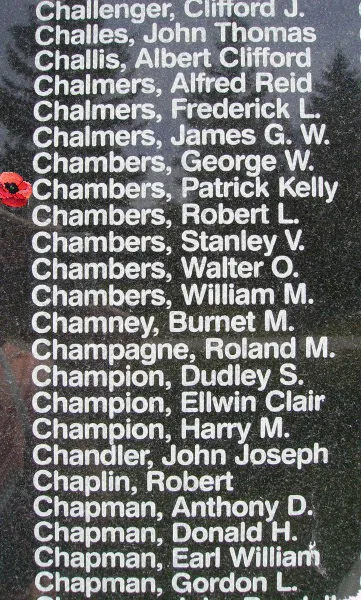
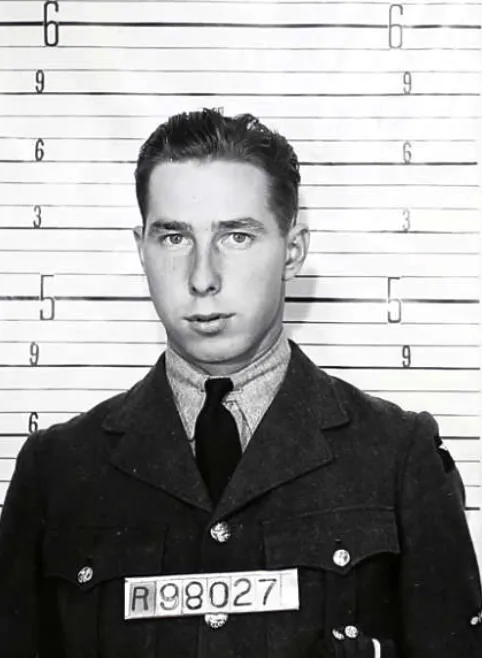
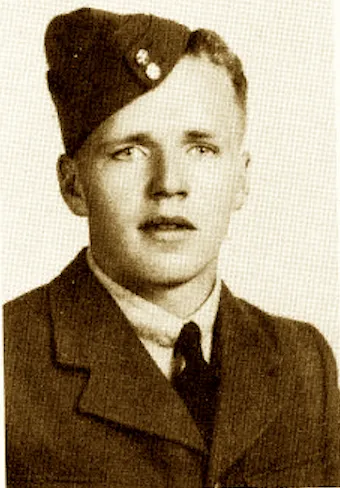
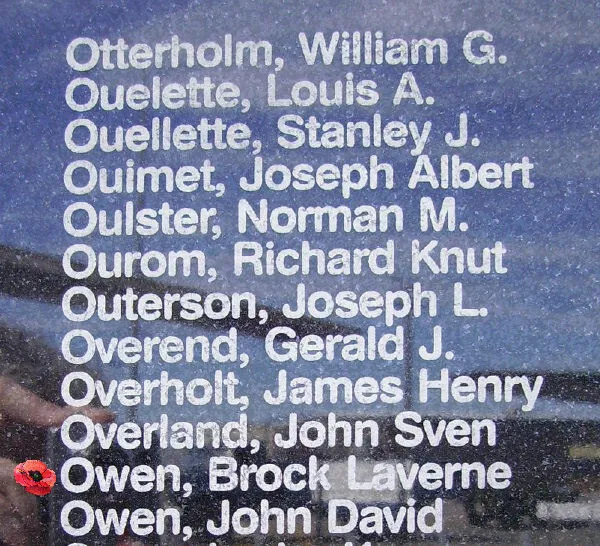
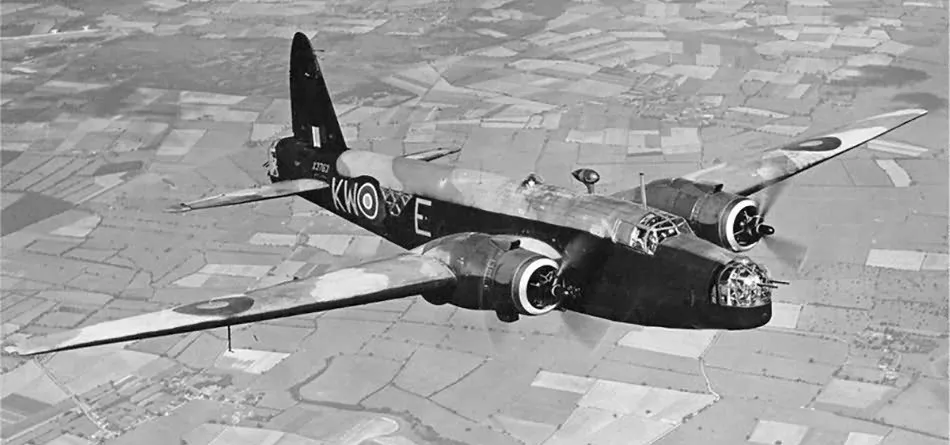
Wellington aircraft HZ 481 was shot down at St Puond, Belgium during a night trip to Cologne, Germany. L.H.A. McCormick P.K. Chambers, B.L. Owen, B.H. Garoutte, and R.F. Moore were killed. These airmen had all been slightly injured on April 16, 1943 when their 427 Squadron Wellington aircraft had engine failure and made a forced landing at Clear Hill, Bedford, England.
 RAF Commands

 Long Beach, California, USA
 Canadian Virtual War Memorial
 Commonwealth War Graves Commission
 Finadagrave.com
 Library and Archives Canada Service Files (may not exist)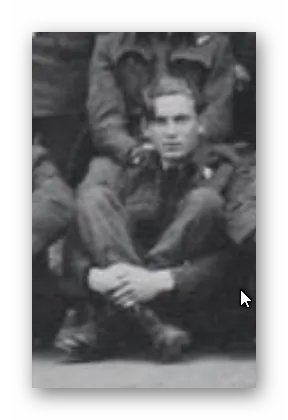

 Wikipedia Vickers Wellington
 RCAF - Vickers Wellington
 YouTube Vickers Wellington documentary