McCormick, Lee Henry Alexander (Warrant Officer 2nd Class)
Killed in Action 1943-July-04
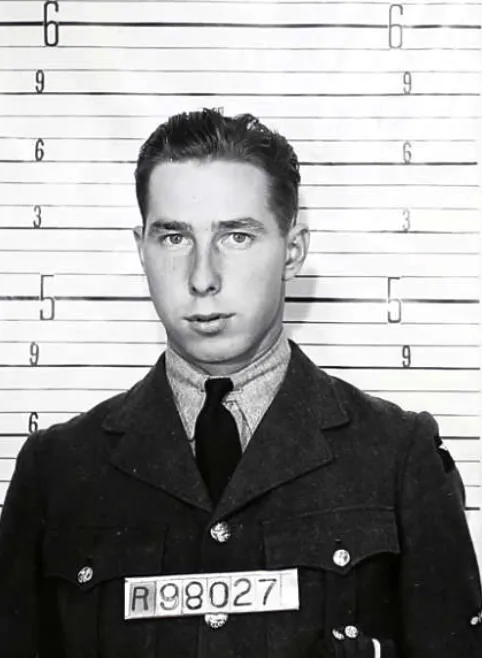

Birth Date: 1919-September-27
Born:
Parents:
Spouse:
Home: Leamington, Ontario
Enlistment:
Enlistment Date: unkown date
Service
RCAF
Unit
432 (B) Sqn- Squadron
Saeviter Ad Lucem Ferociously toward the light
Base
Rank
Warrant Officer 2nd Class
Position
Wireless Air Gunner
Service Numbers
R/98027
Home
 Leamington, Ontario
Target
Cologne Germany
Temporary Burial
German Military Cemetery Atst Puond
Remains were later exhumed from this location and reburied
 Canadian Virtual War Memorial
 Commonwealth War Graves Commission
 Finadagrave.com
 Library and Archives Canada Service Files (may not exist)
Crew or Other Personnel
Wellington HZ481

Mission
Wellington B. Mk. X HZ481
Bombing Cologne Germany 1943-July-03 to 1943-July-04
432 (B) Sqn (RCAF) RAF Skipton-on-Swale
Battle of the Ruhr
653 aircraft - 293 Lancasters, 182 Halifaxes, 89 Wellingtons, 76 Stirlings, 13 Mosquitoes. 30 aircraft - 9,Halifaxes, 8 Lancasters, 8 Wellingtons, 5 Stirlings - lost, 4.6 per cent of the force.
The aiming point for this raid was that part of Cologne situated on the east bank f the Rhine. Much industry was located there. Pathfinder ground marking was accurately maintained by both the Mosquito Oboe aircraft and the backers-up, allowing the Main Force to carry out another heavy attack on Cologne. 20 industrial remises and 2,200 houses were completely destroyed. 588 people were killed, approximately 1,000 were injured and 72,000 bombed out.
'l'hls night saw the first operations of' a new German unit, .Jagdgeschwader 300, equipped with single-engined fighters using the Wilde Sau (Wild Boar) technique. In this, a German pilot used any form of illumination available over a city being bombed - searchlights, target indicators, the glow of fires on the ground - to pick out a bomber for attack. Liaison with the local Flak defences was supposed to ensure that the Flak was limited to a certain height above which the Wild Boar fighter was free to operate. R.A.F. crews were not used to meeting German fighters over a target city and it was some time before the presence of the new danger was realized. The reports on this night from 4 bombers that they had been fired on over the target by other bombers were almost certainly the result of Wild Boar attacks. The new German unit claimed 12 bombers shot down over Cologne but had to share the 12 available aircraft found to have crashed with the local Flak, who also claimed 12 successes.
source: The Bomber Command War Diaries, Martin Middlebrook and Chris Everitt
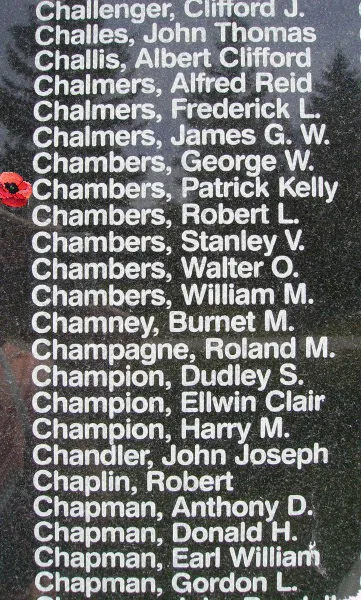
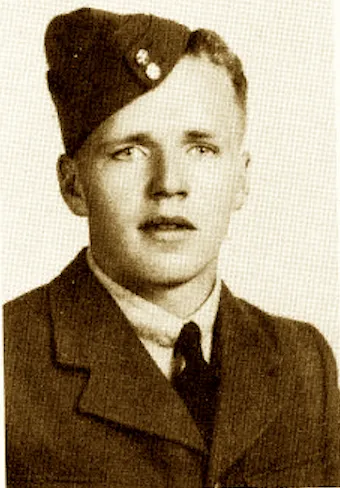
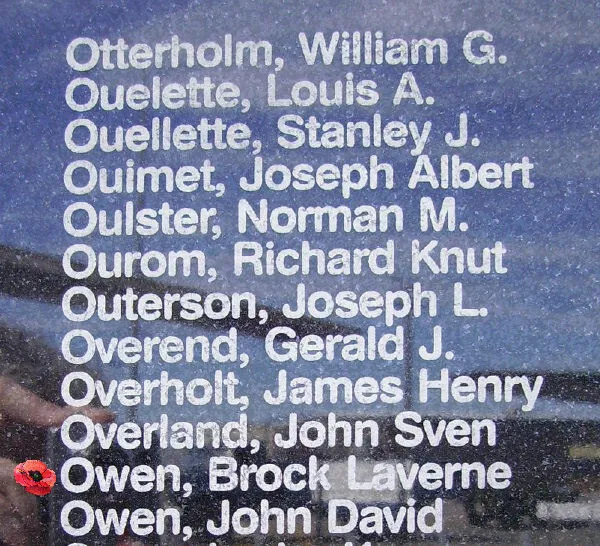
Wellington aircraft HZ 481 was shot down at St Puond, Belgium during a night trip to Cologne, Germany. L.H.A. McCormick P.K. Chambers, B.L. Owen, B.H. Garoutte, and R.F. Moore were killed. These airmen had all been slightly injured on April 16, 1943 when their 427 Squadron Wellington aircraft had engine failure and made a forced landing at Clear Hill, Bedford, England.
Wellington serial: HZ481
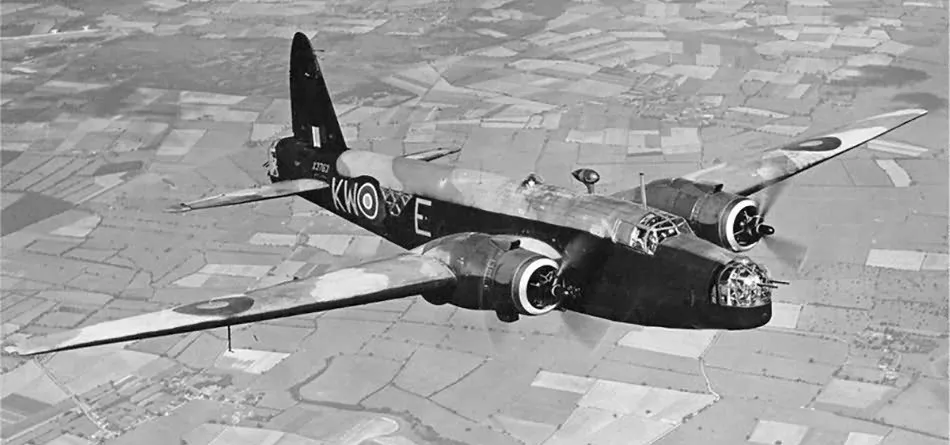
Source: Harold A Skaarup Web Page
Vickers Wellington B. Mk. III (Serial No. X3763), coded KW-E, No. 425 'Alouette' (B) Squadron, RCAF, late summer of 1942
Vickers Wellington B. Mk. III (Serial No. X3763), coded KW-E, No. 425 'Alouette' (B) Squadron, RCAF, late summer of 1942
The Vickers Wellington was a British twin-engined, long-range medium bomber. It was designed during the mid-1930s at Brooklands in Weybridge, Surrey. Led by Vickers-Armstrongs' chief designer Rex Pierson, a key feature of the aircraft is its geodetic airframe fuselage structure, which was principally designed by Barnes Wallis. Development had been started in response to Air Ministry Specification B.9/32, issued in the middle of 1932, for a bomber for the Royal Air Force. This specification called for a twin-engined day bomber capable of delivering higher performance than any previous design.
The Wellington was used as a night bomber in the early years of the Second World War, performing as one of the principal bombers used by Bomber Command. During 1943, it started to be superseded as a bomber by the larger four-engined "heavies" such as the Avro Lancaster. The Wellington continued to serve throughout the war in other duties, particularly as an anti-submarine aircraft.
It holds the distinction of having been the only British bomber that was produced for the duration of the war, and of having been produced in a greater quantity than any other British-built bomber. The Wellington remained as first-line equipment when the war ended, although it had been increasingly relegated to secondary roles. The Wellington was one of two bombers named after Arthur Wellesley, 1st Duke of Wellington, the other being the Vickers Wellesley.
In August 1936, an initial order for 180 Wellington Mk I aircraft, powered by a pair of 1,050 hp (780 kW) Bristol Pegasus radial engines, was received by Vickers; it had been placed so rapidly that the order occurred prior to the first meeting intended to decide the details of the production aircraft. In October 1937, another order for a further 100 Wellington Mk Is, produced by the Gloster Aircraft Company, was issued; it was followed by an order for 100 Wellington Mk II aircraft with Rolls-Royce Merlin X V12 engines. Yet another order was placed for 64 Wellingtons produced by Armstrong Whitworth Aircraft. With this flurry of order and production having been assured by the end of 1937, Vickers set about simplifying the manufacturing process of the aircraft and announced a target of building one Wellington per day.
A total of 180 Wellington Mk I aircraft were built; 150 for the RAF and 30 for the Royal New Zealand Air Force (RNZAF) (which were transferred to the RAF on the outbreak of war and used by 75 Squadron). In October 1938, the Mk I entered service with 9 Squadron. The Wellington was initially outnumbered by the Handley Page Hampden (also ordered by the Ministry to B.9/32) and the Armstrong Whitworth Whitley (to B.34/3 for a 'night' bomber) but outlasted both rival aircraft in service. The Wellington went on to be built in 16 separate variants, in addition to two training conversions after the war. The number of Wellingtons built totalled 11,462 of all versions, a greater quantity produced than any other British bomber. On 13 October 1945, the last Wellington to be produced rolled out. Wikipedia
 Wikipedia Vickers Wellington
 RCAF - Vickers Wellington
 YouTube Vickers Wellington documentary
Unit Desciption
432 (B) Sqn Saeviter Ad Lucem ("Leaside")
History of the Squadron during World War II (Aircraft: Wellington X, Lancaster II, Halifax III, VII)
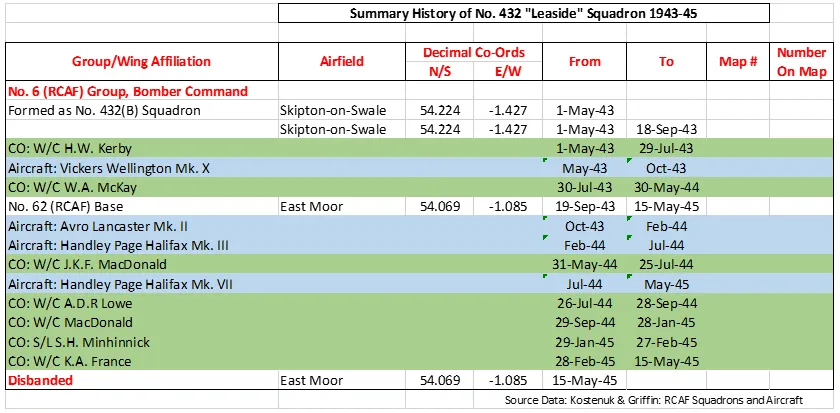
The Squadron was the twelfth RCAF bomber squadron to be formed overseas in WWII. It was formed on May 1, 1943 at Skipton-on-Swale, Yorkshire, UK as a unit of No 6 (RCAF) Group of RAF Bomber Command: indeed, it was the first bomber squadron to be formed directly into No 6 Group. Using the squadron identification letters QO it flew Vickers Wellington Mk X medium bombers until it moved to East Moor, Yorkshire on 19th September 1943, when it re-equipped with Avro Lancaster Mk II aircraft. East Moor was part of No 62 (RCAF) Base. The squadron re-equipped with Handley Page Halifax Mk III aircraft in February 1944, and with Halifax Mk VII in July of that year, and continued with them until the squadron was disbanded at East Moor on May 15, 1945.
In the course of operations the squadron flew 246 missions, involving 3130 individual sorties, for the loss of 73 aircraft. 8980 tons of bombs were dropped. Awards to squadron members included 2 DSOs, 119 DFCs,1 Bar to DFC, 1 CGM, 20 DFMs and 1 Croix de Guerre (France). Battle Honours were: English Channel and North Sea 1943, Fortress Europe 1943-44, France and Germany 1944-45, Biscay Ports 1944, Ruhr 1943-45, Berlin 1943-44, German Ports 1943-45, Normandy 1944, Rhine, Biscay 1943.Moyes, Kostenuk and Griffin
Squadron History (Bomber Command Museum PDF)
Maps for Movements of 432 Squadron 1943-45
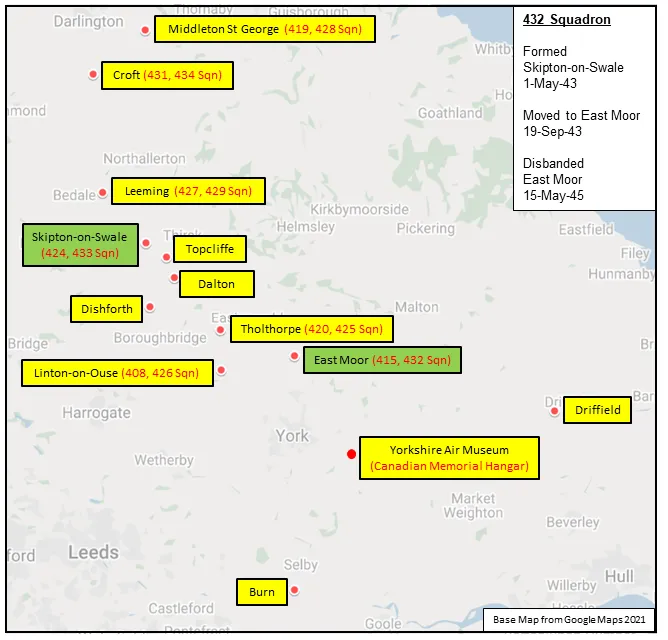
MAP 1: 432 Squadron Bases 1943-45 (marked in green). Right-click on image to display enlarged in new tab
432 Squadron History Summary 1943-45
History of the Squadron Post-WWII (Aircraft: Canuck)
The squadron was re-formed at Bagotville, Quebec as an All-Weather Fighter unit on 1 October 1954. The squadron flew Avro CF-100 Canuck aircraft on North American Air Defence until it was disbanded on 15 October 1961.
Wellington HZ481 B. Mk. X - Bombing Cologne Germany - 1943-07-03 to 1943-07-04
Squadron: 432 (B) Sqn (RCAF)
Start Date: 1943-07-03
Completion Date: 1943-07-04
Mission: Bombing
Operation: Battle of the Ruhr
Target City: Cologne Germany
Target Specific:
Base: RAF Skipton-on-Swale
Take Off Time:
Squadron Code: QO W
Radio Code:
Return Base:
Return Time:
Crash City: V
Crash Specifics:
Crash Latitude: 0.00000000
Crash Longitude: 0.00000000
Crash Reason:
Flak Battery:
Enemy Claim:
War Diary Unavailable
6 Bomber Group July 3/4 1943
42 Halifaxes from 408, 419, 427, and 428 Squadrons were joined by 34 Wellingtons 429, 431, and 432 Squadrons on an attack at Cologne. The crews were over the target at between 16,000 and 21,000 feet, releasing 205,000 lbs of incendiaries and 104,000 lbs of high explosives. According to reports, bombing was accurate and serious damage was caused. Richard Koval (6bombergroup.ca)
653 aircraft - 293 Lancasters, 182 Halifaxes, 89 Wellingtons, 76 Stirlings, 13 Mosquitoes. 30 aircraft - 9,Halifaxes, 8 Lancasters, 8 Wellingtons, 5 Stirlings - lost, 4.6 per cent of the force.
The aiming point for this raid was that part of Cologne situated on the east bank f the Rhine. Much industry was located there. Pathfinder ground marking was accurately maintained by both the Mosquito Oboe aircraft and the backers-up, allowing the Main Force to carry out another heavy attack on Cologne. 20 industrial remises and 2,200 houses were completely destroyed. 588 people were killed, approximately 1,000 were injured and 72,000 bombed out.
'l'hls night saw the first operations of' a new German unit, .Jagdgeschwader 300, equipped with single-engined fighters using the Wilde Sau (Wild Boar) technique. In this, a German pilot used any form of illumination available over a city being bombed - searchlights, target indicators, the glow of fires on the ground - to pick out a bomber for attack. Liaison with the local Flak defences was supposed to ensure that the Flak was limited to a certain height above which the Wild Boar fighter was free to operate. R.A.F. crews were not used to meeting German fighters over a target city and it was some time before the presence of the new danger was realized. The reports on this night from 4 bombers that they had been fired on over the target by other bombers were almost certainly the result of Wild Boar attacks. The new German unit claimed 12 bombers shot down over Cologne but had to share the 12 available aircraft found to have crashed with the local Flak, who also claimed 12 successes.
source: The Bomber Command War Diaries, Martin Middlebrook and Chris Everitt
Wellington aircraft HZ 481 was shot down at St Puond, Belgium during a night trip to Cologne, Germany. L.H.A. McCormick P.K. Chambers, B.L. Owen, B.H. Garoutte, and R.F. Moore were killed. These airmen had all been slightly injured on April 16, 1943 when their 427 Squadron Wellington aircraft had engine failure and made a forced landing at Clear Hill, Bedford, England.
