 Toronto, Ontario
1 Wireless School, Mount Hope, Ontario. Harvard - FE515 and Norseman aircraft collided.
Aitken, Andrew (Flying Officer)
Killed in Flying Accident 1945-August-05
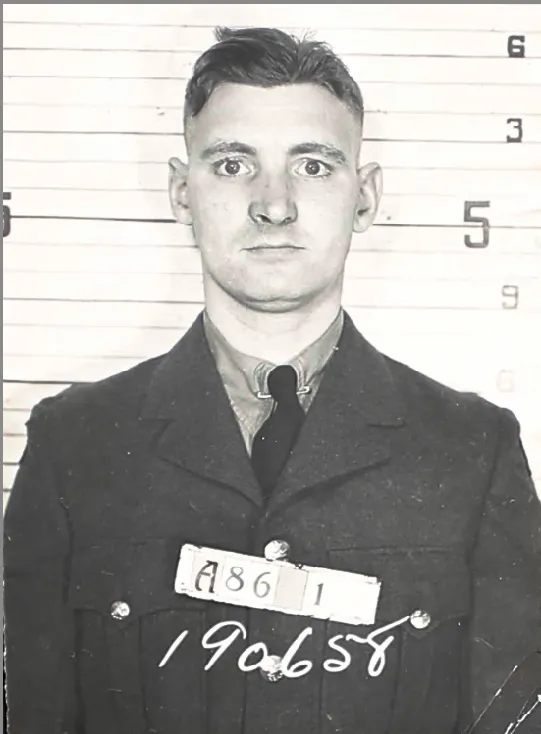

Birth Date: 1917
Born:
Parents: Son of Duncan C. Aitken and Janet Aitken, of Toronto, Ontario.
Spouse: Husband of Elizabeth Aitken, of Toronto, Ontario.
Home: Toronto, Ontario
Enlistment:
Enlistment Date: unkown date
Service
RCAF
Unit
1 WS- Wireless School
Base
RCAF Stn. Mount Hope, Ontario (Hamilton)
Rank
Flying Officer
Position
Pilot
Service Numbers
J/41868
 Canadian Virtual War Memorial
 Commonwealth War Graves Commission
 Library and Archives Canada Service Files (may not exist)
This incident involved multiple aircraft:
- Norseman Mk. IVW Serial: 2455
- Harvard Mk. IIB Serial: FE515
All the above aircraft in the above list are referenced in this report.
Crew or Other Personnel
Harvard FE515
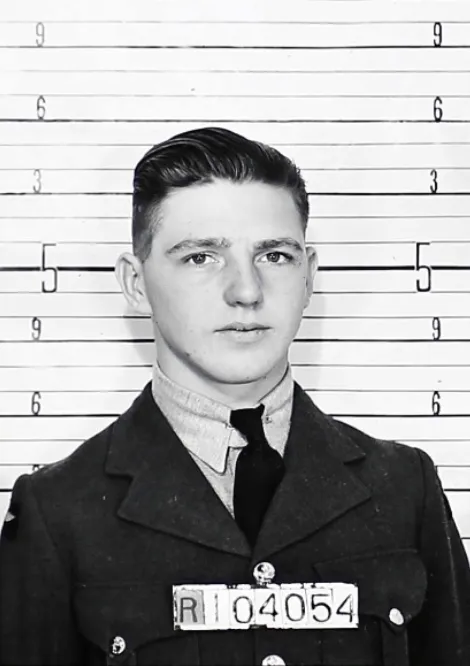
Accident Card - North American Harvard Mk. IIB serial:FE515
This accident involved 2 aircraft on 1945-August-05. They are: Harvard IIB s/n FE515, Norseman IV s/n 2455.
This accident involved 4 people. Aitken A, Campbell , Foster , Hazelton
This accident had 4 fatalities. Flying Officer Andrew Aitken RCAF Killed in Flying Accident service no:J/41868 Harvard FE515, Flying Officer Hugh Campbell RCAF Killed in Flying Accident service no:J/85420 Harvard FE515,Pilot Officer John Elwood Foster RCAF Killed in Flying Accident service no:J/51497 Norseman 2455, Pilot Officer William Messinger Hazelton RCAF Killed in Flying Accident service no:J/51498 Norseman 2455
Harvard serial: FE515
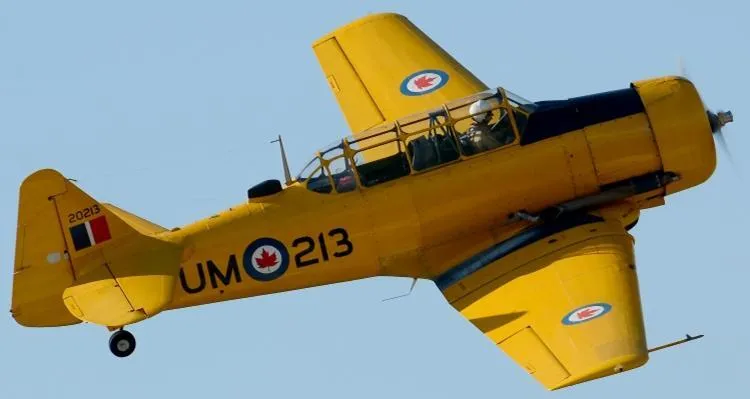
North American Harvard Mk. IV
Canadian Warplane Heritage Museum
Canadian Warplane Heritage Museum
The North American Harvard appeared in 1937, in response to a US Air Corps proposal for an advanced trainer. The first of 50 Harvard Mk. Is ordered by the Canadian Government were delivered to RCAF Sea Island, BC in July 1939. By early 1940, the Mk. II was being assembled in California with an all metal fuselage replacing the original tube and fabric structure. 1200 Mk. IIs were supplied from US sources, until Canadian built Harvards started being produced in 1941.
In August 1938, Noorduyn Aviation of Montreal farsightedly signed an agreement with North American, to build the Harvard under licence. When the British Commonwealth Air Training Plan (BCATP) came into being in December 1939, Noorduyn received its first orders and went on to produce 2,800, comprised of 1,500 AT-16 (paid for by the US), 1,200 Harvard IIB and 100 Harvard TT, (paid for by Canada) January 1941 to October 1945., Harvard Mk. IIBs were used as advanced trainers with the BCATP at fifteen Service Flying Training Schools across the nation. They helped pilots make to the transition from low powered primary trainers, like Fleet Finch or the de Havilland Tiger Moth, to high performance front line fighters such as the Spitfire.
At the end of WW II, although the RCAF retained the Harvard as a trainer, a large number of them were sold off to civilian operators. The RCAF soon regretted this, for by 1949 the Cold War with the Soviet Union was in full swing and the RCAF urgently needed trainers again. 100 T-6J Texans were leased temporarily from the USAAF and a further 270 Harvards, the Mk. IV version, were ordered from Canadian Car & Foundry, Thunder Bay. Post war, Canadian Car and Foundry produce 285 aircraft for the USAAF. The RCAF used the Harvard Mk. IV for a further fifteen years, before finally retiring it in 1966.
A total of 20,110 Harvards were built between 1938 and 1954, 3,355 of them in Canada. Countless numbers of privately owned Harvards are still flying today.
Canadian Warplane Heritage Museum's Harvard Mk. IV was built by Canadian Car & Foundry, Thunder Bay, Ontario in late 1951. The aircraft saw service at four RCAF flying schools across the nation until it was sold to a civilian owner in 1965. It was the third aircraft to join the Museum after Dennis Bradley, Alan Ness and John Weir donated it in 1973. Canadian Warplane Heritage Museum
 Harvard Advanced Trainer
 Wikipedia Harvard Advanced Trainer
 Harold A Skaarup Web Page
Aircraft Images
Norseman 2455
Norseman Mk. IVW 2455
Delivered to the RCAF August 12, 1940 as aircraft No. 2455 and assigned to No. 1 Wireless School, St. Hubert, Quebec. It was put into Reserve Storage with No. 3 Training Command on December 17, 1942. On March 10, 1943, it was assigned to Eastern Air Command, On November 10, 1943 it was involved in a category “A” crash at Megantic, Quebec while it was with 167 Squadron. Returning on a freight run from Dayton, Ohio, the aircraft overshot the runway on landing, and running off the end, flipped on its back injuring 4 occupants. It was assigned to Depot No. 9 on November 11, 1943 before being assigned to Noorduyn Aviation on December 22, 1943. It was repaired by Noorduyn Aviation and on April 4, 1944 assigned to No. 3 Training Command where it was put into Reserve Storage. On July 25, 1944 it was transferred to No. 6 Repair Depot for installation of wireless equipment, then on October 18, 1944 to No. 1 Training Command. On January 15, 1945 it was assigned to No. 1 Air Command. On August 5, 1945 back with No. 1 Wireless School, it was involved in a fatal collision at Mt. Hope Airport, Ontario with Harvard IIB FE 515 while in the circuit. With two crewmembers in each, both aircraft crashing to the ground, and consumed by fire, 3 were killed outright, with the fourth succumbing to their injuries later in hospital. On August 9, 1945 it was assigned back to No. 6 Repair Depot, before reduced to “Spares and Produce” on September 12, 1945. Source - Peter Hill
(Previously reported as also having been used by No. 121 (K) Squadron at RCAF Station Dartmouth, NS,c:1943-1945 but not confirmed).
{{link,RCAF,https://heritage.canadiana.ca/view/oocihm.lac_reel_c5937/85,Court of Inquiry into Accident 1945-08-05}}1940-08-12 Taken on Strength 2019-08-20
1943-November-10 Accident: 167 Squadron Loc: Megantic Names: Evans | Kuchman | Maria | Phelan
1945-August-05 Accident: 1 Wireless School Loc: Runway Names: Aitken | Campbell | Foster | Hazelton
1945-09-12 Struck off Strength struck off reported as reduced to spares, and as sold. 2019-08-20
Harvard FE515
Harvard Mk. IIB FE515
1942-10-13 Taken on Strength 2022-02-07
1945-August-05 Accident: 1 Wireless School Loc: Runway Names: Aitken | Campbell | Foster | Hazelton
1945-09-11 Struck off Strength 2022-02-07
Unit Desciption
1 WS (1 Wireless School)
Trainees in the "Wireless Air Gunner" (WAG) stream spent 24 weeks at a Wireless Schoo learning the theory and application of wireless communications. This included signalling with lights and flags as well as radio. Their "WAG" training was completed with four weeks at a Bombing & Gunnery School.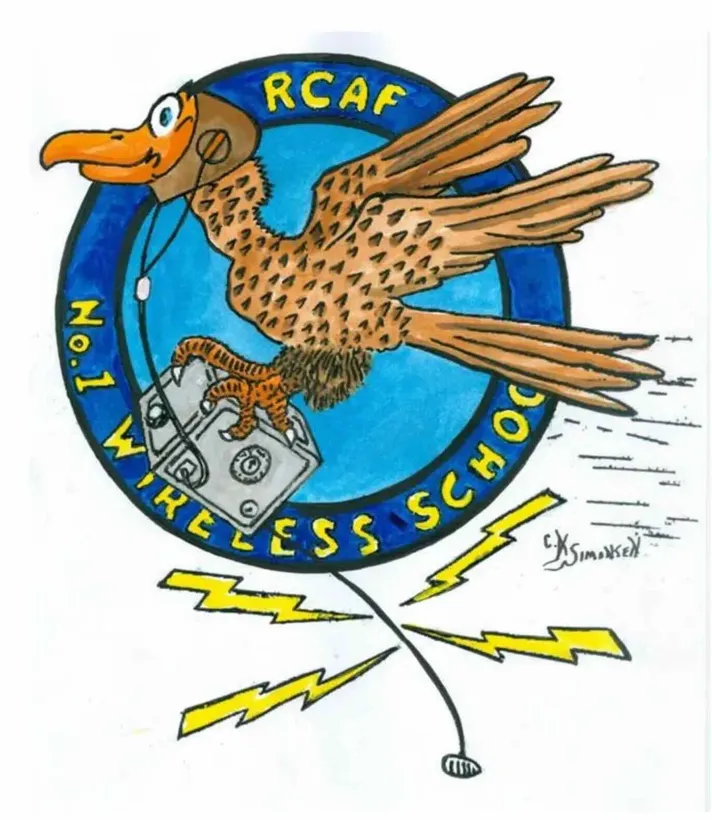
NO1 WS Logo Montreall
 RCAF.info - RCAF Station Montreal QC - 1 WS