Spouse: Husband of Mavis Doreen (nee Fulton) Murphy
Home:
Enlistment:
Enlistment Date: unkown date
Service
RCN
Unit
825 (TB) Sqn- Squadron (RN FAA)
Base
RNAS Eglinton
Rank
Captain
Position
Pilot
Service Numbers
unknown
Captain Vincent John Murphy (RCN) went on to have a very distinguished naval career, retiring in 1969. He went on to serve with the Department of Indian Affairs & Northern Development in British Columbia and later at the University of British Columbia until his final retirement in 1985. Captain Murphy passed away 2011-09-30 and is buried at Sunnyside Lawn Cemetery, Surrey, Metro Vancouver Regional District, British Columbia, Canada
Reconnaissance 1947-November-04 to 1947-November-04
825 (TB) Sqn (RN FAA) RNAS Eglinton
Squadron Steward James Willard MacDonald (RCN) was killed when Fairey Firefly FR Mk 4 aircraft TW 736 in which he was a passenger crashed at Mayoghill near Carvagh, County Londonderry, Northern Ireland. The pilot , Lieutenant Vincent John Murphy (RCN) was unable to control the aircraft in an inverted spin but managed to bale. Squadron Steward MacDonald was unable to escape before the Firefly crashed into a boggy field, exploding on impact near Mayoghill East of Garvagh, Northern Ireland. His body was not recovered at the time but remains recovered in July 2026 were identified as 803 Naval Air Squadron Steward James Willard MacDonald (HMCS Warrior) in November 2026. 803 Naval Air Squadron was temporarily assigned to Royal Naval Air Station Eglinton, Northern Ireland at the time of the crash 1947-11-04
Hands to Flying Stations, A Recollective History of Canadian Naval Aviation, Volume One 1945-1954 by Stuart E Soward, page 102
Fairey Firefly Mk. VI
Canadian Warplane Heritage Museum
The Firefly was designed by Fairey Aviation, UK, in 1940 to meet a British Admiralty requirement for a carrier borne, fighter reconnaissance aircraft. The Firefly prototype first flew in December 1941 from Fairey's Great West Aerodrome, (now Heathrow Airport). Successful flight trials were completed by the end of 1942 and the first production aircraft, Mk. Is were delivered to the Royal Navy in March 1943.
Fireflies went into squadron service in October 1943 and later saw action in July 1944 against the German battleship Tirpitz, in Norway, when flying from HMS Indefatigable. From January 1945 onwards, the main area of operations for the Firefly was the Far East. Flying from HMS Indefatigable and HMS Implacable, they fought against the Japanese in Sumatra, the Caroline Islands and in the waters surrounding Japan. Later, Fairey Fireflies served with the Royal Navy and the Royal Australian Navy, during the Korean War.
A total of 64 Fairey Fireflies served with the Royal Canadian Navy (RCN), between 1946 and 1952. Based at Dartmouth, NS, they were flown from the aircraft carriers HMCS Warrior and HMCS Magnificent by No. 825 and 826 Squadrons. The Mk. V anti submarine version was ordered in 1949 to meet a NATO role for the RCN in anti submarine warfare. Firefly Mk. Vs operated in this role until late 1950, when they were replaced by Grumman Avengers.
Manufacture of the Fairey Firefly ceased in April 1956, after 1,702 aircraft had been produced. About 20 Fireflies survive.
Canadian Warplane Heritage Museum
Firefly (Fairey) TW736 - Reconnaissance - 1947-11-04 to 1947-11-04
Squadron: 825 (TB) Sqn (RN FAA)
Start Date: 1947-11-04
Completion Date: 1947-11-04
Mission: Reconnaissance
Operation: unspecified
Target City:
Target Specific:
Base: RNAS Eglinton
Take Off Time:
Squadron Code:
Radio Code:
Return Base:
Return Time:
Crash City: Northern Ireland
Crash Specifics: near Mayoghill East of Garvagh, County Londonderry
Crash Latitude: 0.00000000
Crash Longitude: 0.00000000
Crash Reason:
Flak Battery:
Enemy Claim:
War Diary Unavailable
6 Group Unavailable
Squadron Steward James Willard MacDonald (RCN) was killed when Fairey Firefly FR Mk 4 aircraft TW 736 in which he was a passenger crashed at Mayoghill near Carvagh, County Londonderry, Northern Ireland. The pilot , Lieutenant Vincent John Murphy (RCN) was unable to control the aircraft in an inverted spin but managed to bale. Squadron Steward MacDonald was unable to escape before the Firefly crashed into a boggy field, exploding on impact near Mayoghill East of Garvagh, Northern Ireland. His body was not recovered at the time but remains recovered in July 2026 were identified as 803 Naval Air Squadron Steward James Willard MacDonald (HMCS Warrior) in November 2026. 803 Naval Air Squadron was temporarily assigned to Royal Naval Air Station Eglinton, Northern Ireland at the time of the crash 1947-11-04
Hands to Flying Stations, A Recollective History of Canadian Naval Aviation, Volume One 1945-1954 by Stuart E Soward, page 102
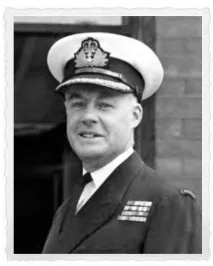

 Royal Canadian Navy (RCN) Officers 1939-1945
 Finadagrave.com

 Firefly
