Footprints on the Sands of Time, RAF Bomber Command Prisoners of War in Germany 1939-45 by Oliver Clutton-Brock, page 279


Birth Date: 1920-January-16
Born: Coventry, England
Parents:
Spouse:
Home:
Enlistment:
Enlistment Date: unkown date

Service
RAFVR
Unit
207 (B) Sqn- Squadron (RAF)
Semper Paratus Always prepared
Base
RAF Bottesford
Rank
Flying Officer
Position
Pilot
Service Numbers
114248
Prev: 741869
PoW: 1417
 Hamburg Germany
Footprints on the Sands of Time, RAF Bomber Command Prisoners of War in Germany 1939-45 by Oliver Clutton-Brock, page 279
207 City of Leicester Squadron (Semper paratus), RAF Bottesford. Manchester Mk I aircraft L 7309 EM-O was lost on an operation against targets in Hamburg, Germany. The bomber was shot down by night fighter pilot Oberleutnant Rudolf Schoenert of 5/NJG2 but also claimed by heavy flak battery Mobile Flak Abteilung 252 and crashed in a field near the Jevers Luftwaffe base at Sandelermons, Jever, Niedersachsen, Germany
Sergeant James Wilfred Cadman (RAFVR) was killed in action
The balance of this crew survived to become Prisoners of War: Warrant Officer Class 1 Emmanuel George Robert Bestel (RCAF), Sergeant Geoffrey Ernest Allen (RAFVR), Flying Officer Gerald Bryan Dawkins DFM (RAFVR), Flight Lieutenant Patrick James Edwards (RAFVR) and Sergeant John Mercer (RAFVR)
 Royal Air Force Serial and Image Database
Crash of an Avro 679 Manchester I near Jever AFB: 1 killed I Bureau of...
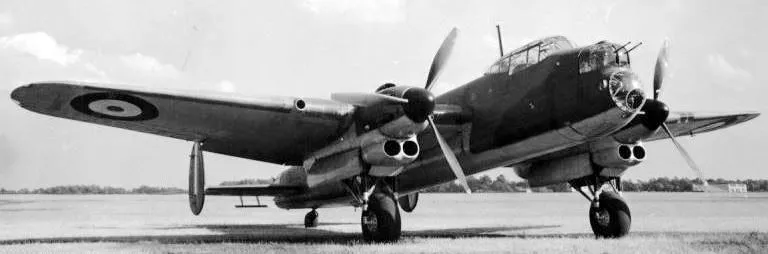
The Avro 679 Manchester was a British twin-engine medium bomber developed and manufactured in the United Kingdom. While not being built in great numbers, it was the forerunner of the famed and vastly more successful four-engined Avro Lancaster. Avro designed the Manchester to replace its inventory of twin-engine bombers. It first flew on 25 July 1939, and entered squadron service in November 1940, just over twelve months after the outbreak of the war. Operated by both RAF and the RCAF, the Manchester proved to be underpowered and unreliable, and production was terminated in 1941. However, the Manchester was redesigned into a four-engined heavy bomber, the Avro Lancaster, powered by Rolls-Royce Merlin engines.
200 airframes completed as true Manchesters were issued to front line RAF squadron's,. Of these, a total 77 aircraft were lost on operations and an additional 20 were lost in various accidents with those squadrons. An additional 24 aircraft were lost during training flights with non-operational units, such as those being used by Heavy Conversion Unit (HCU) Flights. Combined losses therefore, were 121 or 60.50 percent of the original 200 aircraft. From those losses, 33 were directly due to engine failures - 12 with the squadrons, 21 with training units. Another 28 aircraft lost during operations, were thought to have been caused due to engine failure. As the airframes and engines could not be examined, these are listed as "Probably Lost Due To Enemy Action". Harold Skaarup web page
War Diary Unavailable
6 Group Unavailable
207 City of Leicester Squadron (Semper paratus), RAF Bottesford. Manchester Mk I aircraft L 7309 EM-O was lost on an operation against targets in Hamburg, Germany. The bomber was shot down by night fighter pilot Oberleutnant Rudolf Schoenert of 5/NJG2 but also claimed by heavy flak battery Mobile Flak Abteilung 252 and crashed in a field near the Jevers Luftwaffe base at Sandelermons, Jever, Niedersachsen, Germany
Sergeant James Wilfred Cadman (RAFVR) was killed in action
The balance of this crew survived to become Prisoners of War: Warrant Officer Class 1 Emmanuel George Robert Bestel (RCAF), Sergeant Geoffrey Ernest Allen (RAFVR), Flying Officer Gerald Bryan Dawkins DFM (RAFVR), Flight Lieutenant Patrick James Edwards (RAFVR) and Sergeant John Mercer (RAFVR)
Royal Air Force Serial and Image Database
Crash of an Avro 679 Manchester I near Jever AFB: 1 killed I Bureau of...


 Manchester
 Wikipedia Manchester Bomber
