 Worthing, Sussex.
1916-07-20: Carmichael was flying n a Short 184 seaplane, and attempted a landing at Calshott Naval Air Station. In the approach he hit the mast of a transport ship and crashed on its deck. Both Carmichael and Flight Sub Lieutenant William Ross Wallace a passenger on the aircraft, were killed.. (See the record for Wallace for details of the accident)
Carmichael, Ian Neil (Flt sub-Lieutenant)
Killed in Flying Accident 1916-July-20


Birth Date: 1894-October-29
Born: Hong Kong
Parents: Hugh Fletcher Carmichael & mother not mentioned
Spouse: unmarried
Home: Worthing, Sussex.
Enlistment:
Enlistment Date: unkown date
Service
RNAS
Unit
(CS) Stn Flight (RNAS)
Base
Naval Air Station Calshot
Rank
Flt sub-Lieutenant
Position
Pilot
Service Numbers
Crew or Other Personnel
184 8556


184 serial: 8556
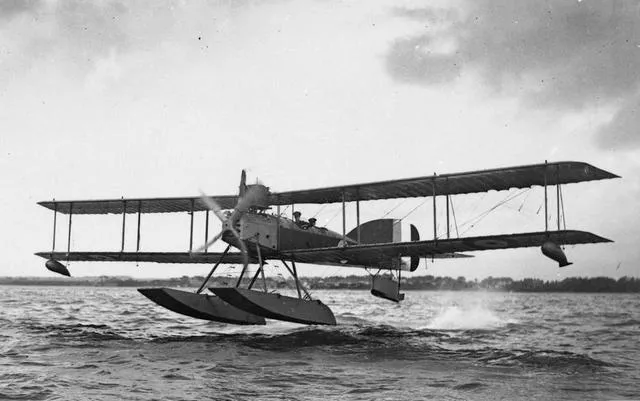
Source Imperial War Museums
Short Type 184
Short Type 184
The Short Admiralty Type 184, often called the Short 225 after the power rating of the engine first fitted, was a British two-seat reconnaissance, bombing and torpedo carrying folding-wing seaplane designed by Horace Short of Short Brothers. It was first flown in 1915 and remained in service until after the armistice in 1918. A Short 184 was the first aircraft to sink a ship using a torpedo, and another was the only British aircraft to take part in the Battle of Jutland.
The aircraft was fitted with a radio transmitter and receiver, which was powered by a wind-driven generator mounted on a hinged arm so that it could be folded back when not being used, and other equipment carried included a basket of carrier pigeons, intended to be used as a back-up for the radio in the event of forced landings.
Initial trials revealed a lack of longitudinal control, and the single-acting ailerons caused problems when taxying downwind, so the two prototypes were fitted with lengths of bungee cord attached to control horns on the upper aileron surface to return the aileron to the neutral position. This only produced a marginal improvement, so ailerons were then added to the lower wings, these being fitted to all the aircraft built apart from the two prototypes. These were linked by cables to the upper ailerons, and the bungee cord to return the ailerons was rigged between the top of the rear interplane struts and the lower ailerons. Wikipedia
 Short Type 184