436 Elephant Squadron (Onus Portamus). Dakota aircraft KN 208 was carrying a full load of supplies for the British 14th Army when the aircraft broke cloud in a small valley. Unable to gain height a crash landing was attempted in a shallow Chaung running through a small clearing in the jungle. FS Smith, F/Os A.R. Harrison, W.J. Friesen, and W.C. Campbell were all killed when the Dakota crashed into the trees.
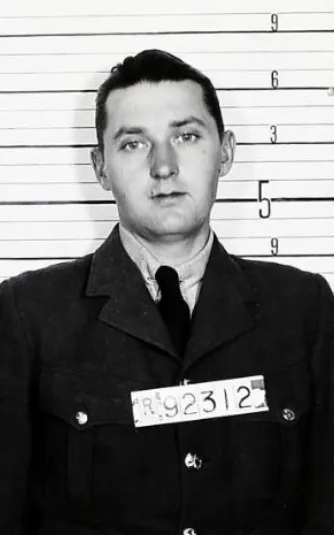
Smith, Sidney Herbert Lodington (Flight Sergeant)
Killed in Action 1945-July-07
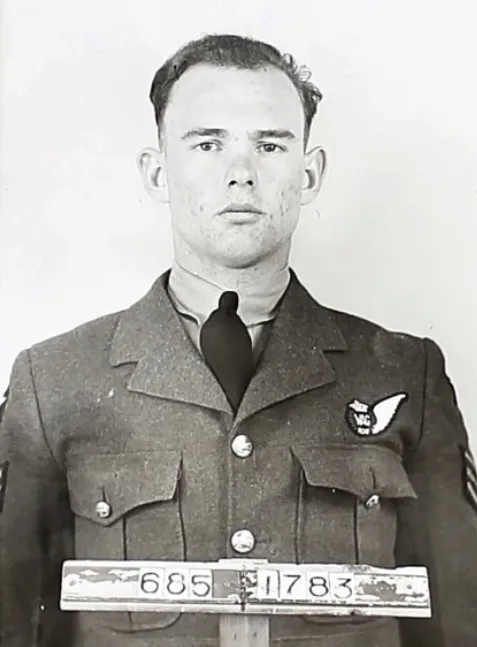

Birth Date: 1923-March-10
Born:
Parents: Son of Arthur Lodington Smith and Phyllis Lodington Smith, of Cupar, Saskatchewan, Canada.
Spouse:
Home: Cupar, Saskatchewan
Enlistment:
Enlistment Date: unkown date
Service
RCAF
Unit
436 Sqn- Squadron
Onus Portamus We carry the load
Base
Rank
Flight Sergeant
Position
Wireless Air Gunner
Service Numbers
R/203685
Home
 Cupar, Saskatchewan
 Canadian Virtual War Memorial
 Commonwealth War Graves Commission
 Finadagrave.com
 Library and Archives Canada Service Files (may not exist)
Crew or Other Personnel
Dakota KN208
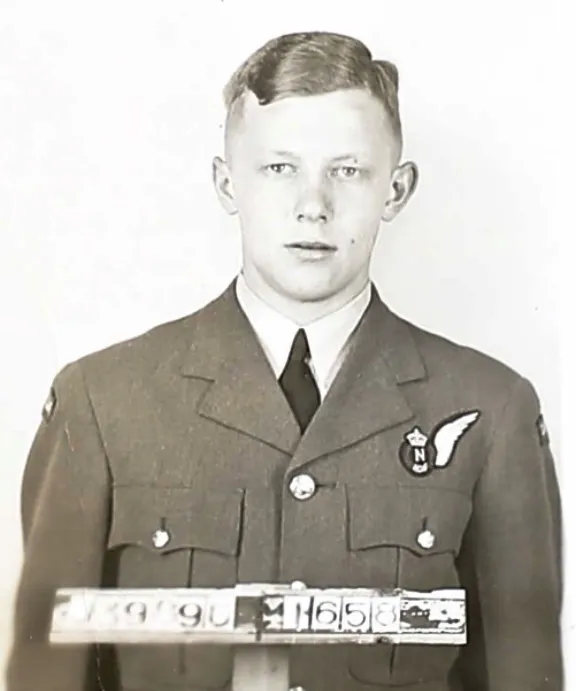
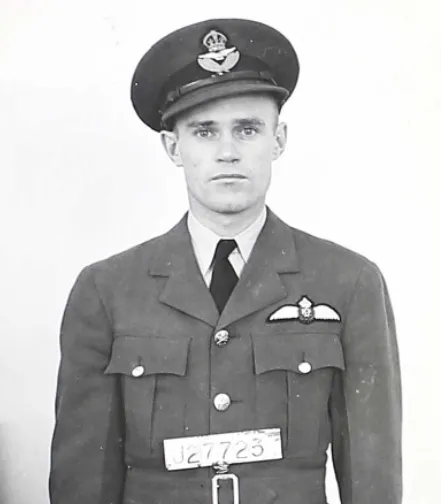
Dakota serial: KN208
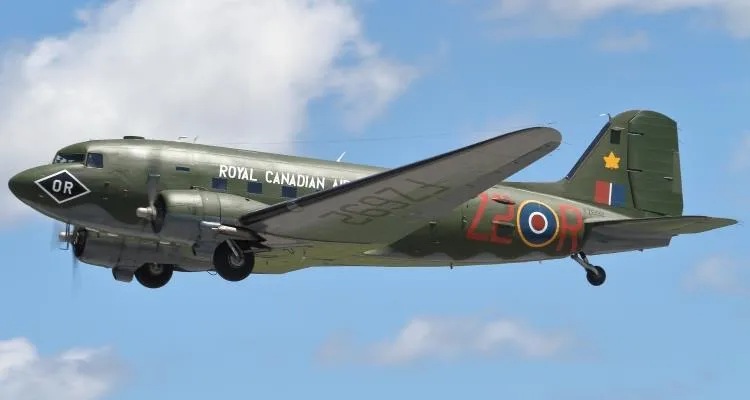
Douglas C-47 Dakota
Canadian Warplane Heritage Museum
Canadian Warplane Heritage Museum
Development of the Douglas DC-3 started in early 1935 with the prototype flying by the end of the year. The first production aircraft was delivered to American Airlines in July 1936 and soon orders were pouring in from US and overseas airlines. The US Air Corps became interested in the DC-3 and ordered a military version, called the C-47 or Dakota. It had many capabilities, including dropping paratroops and supplies, evacuating the wounded, troop transportation and glider towing. Eventually, about 10,000 C-47s were built for the US military.
During WW II, the Royal Air Force received about 1,930 Dakotas and they became the RAF's main wartime transport aircraft. The RCAF took delivery of its first Dakota in March 1943, and at its peak had 169 on strength. Within Canada, they were operated by four transport squadrons and several ferry squadrons.
Overseas, Dakotas equipped RCAF 437 Squadron in Europe and RCAF 435 and 436 Squadrons in South East Asia. 437 Squadron was formed in England September 1944, where it supported the British and Canadian Armies fighting in Europe. Its most important actions involved glider towing for the airborne landings at Arnhem and the Rhine crossing at Wesel.435 and 436 Squadrons were formed in India in October 1944. They flew Dakotas in support of the British 14th Army in Burma where they dropped supplies to the British troops fighting the Japanese in the jungle.
At the end of WW II, all three squadrons were transferred back to England to provide air transport for the Canadian occupation forces in Germany. Dakotas continued in service with the Canadian Armed Forces until 1989, when 402 Squadron, based in Winnipeg, retired the last of them. Of the nearly 13,000 DC-3s built, many are still in service today, over 75 years after the aircraft's first flight.
The Museum's Dakota was built for the USAAF and was delivered to the Royal Air Force in February 1944 as FZ692 and the Royal Canadian Air Force 437 Squadron in September 1944. It was later renumbered as 12945 as part of the Canadian Armed Forces where it served with 424 Squadron for Search & Rescue at CFB Trenton. It performed JATO ignition in flight at the 1970 Canadian National Exhibition Air Show on the Toronto waterfront.
After it was struck off strength by the Canadian Armed Forces in 1973, the aircraft ended up with Environment Canada, where it was used for mineral and environmental surveys. C-GRSB was donated to the Canadian Warplane Heritage Museum in May 2014.
FZ692 has been restored to the paint scheme it would have worn at the end of World War II with 437 Squadron RCAF. FZ692 flew 208 operational trips with 437 Squadron and 16 with 233 Squadron for a total of 224. It ended up flying hundreds of individual legs between airfields in Europe. FZ692 participated in two major airborne operations, Normandy and the Rhine Crossing. It carried 298 casualties to medical aid and repatriated 456 prisoners of war. It carried over 5,100 passengers to destinations around Europe and carried over two hundred tons of freight (414,368 lbs). CWHM
 C-47 Skytrain
 Wikipedia C-47 Skytrain
 Harold A Skaarup Web Page
 CWHM Flightlines
Unit Desciption
436 Sqn Onus Portamus ("Elephant")
History of the Squadron during World War II (Aircraft: Dakota III, IV)
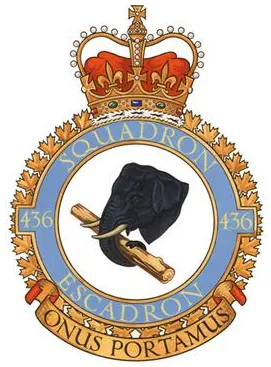
No 436 was the 33rd RCAF squadron formed overseas in WWII. It was the 2nd transport squadron and the first formed in India. It was inaugurated on August 20, 1944 at Gujrat, Punjab, India . It flew Dakota aircraft in support of the British 14th Army in northern Burma, and was known as “Canucks Unlimited”. After cessation of hostilities in the Far East, the squadron relocated to Down Ampney, Gloucstershire, England , where it provided transport services in Britain and Europe for Canadian units. It was finally disbanded at Odiham, Hampshire on June 22, 1946.
Overall, in Burma the squadron flew 1906 sorties, airlifted 29,000 tons of freight and supplies, 15,000 troops, passengers and casualties. Casualties were 3 aircraft, 4 aircrew killed. An additional 6983 operational hours were flown in England. Awards gained by the squadron were 1 DSO, 26 DFCs, 1 AFM, 3 BEMs and 11 MiD. Battle Honours: Burma 1945.Wikipedia, Kostenuk and Griffin
Maps for Movements of 436 Squadron 1944-46
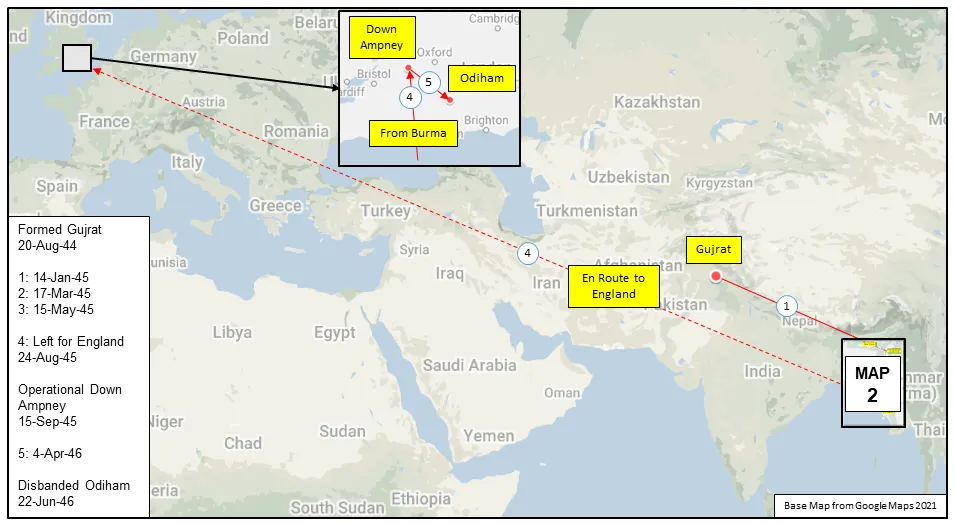
MAP 1: 436 Squadron Movements 1944-46 (right-click on image to display enlarged in new tab)
|
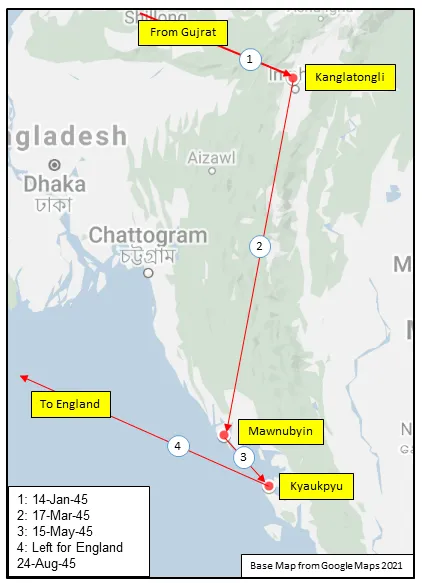
MAP 2: 436 Squadron Movements in India and Burma 1945 (detail of Map 1)
|
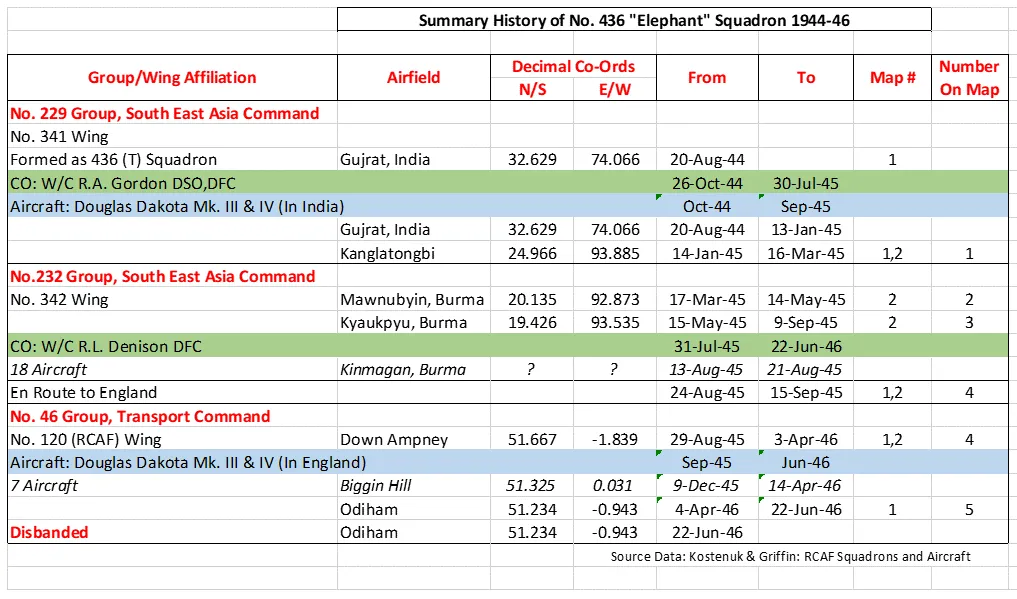
436 Squadron History Summary 1944-46
 Voices from the Past: Burma Memories 25:39
History of the Squadron Post-WWII (Aircraft: Boxcar, Hercules)
The squadron was re-formed at RCAF Station Dorval on 1 April 1949, flying Fairchild C-119 Flying Boxcar transport aircraft. In 1955 it helped move No. 1 Fighter Wing from England to France, and also carried out emergency airlifts of supplies to No.1 Air Division in Europe. It moved to RCAF Station Downsview on 1 July 1956, RCAF Station Uplands in August 1964. The squadron replaced its Boxcars with Lockheed C-130E Hercules in 1965: these were later replaced by CC-130J Super Hercules aircraft which are currently operated by the squadron. Its final move was to CFB Trenton on 11 August 1971.
436 Transport Squadron now provides tactical and strategic airlift capabilities for the Canadian Armed Forces. The unit has operated aircraft from Afghanistan, sent aircraft and personnel to support Operation MOBILE during the 2011 military intervention in Libya and deployed its Hercules assets in support of Operation IMPACT.