Teer, Leonard Herbert (Pilot Officer)
Killed in Flying Accident 1944-February-17


Birth Date: 1921-May-11
Born: Metropolitan Borough of South Tyneside, Tyne and Wear, England
Parents: Son of Herbert Campbell Teer and Minnie Miriam (nee Savage) of South Shields, County Durham, England
Spouse:
Home: South Shields, County Durham, England
Enlistment:
Enlistment Date: unkown date
Service
RAFVR
Unit
36 (OT) OTU- Operational Training Unit (RAF)
Base
RCAF Station Greenwood, Nova Scotia
Rank
Pilot Officer
Position
Navigator
Service Numbers
154644
 South Shields, County Durham, England
 Commonwealth War Graves Commission
 Finadagrave.com
Crew or Other Personnel
Mosquito KB109
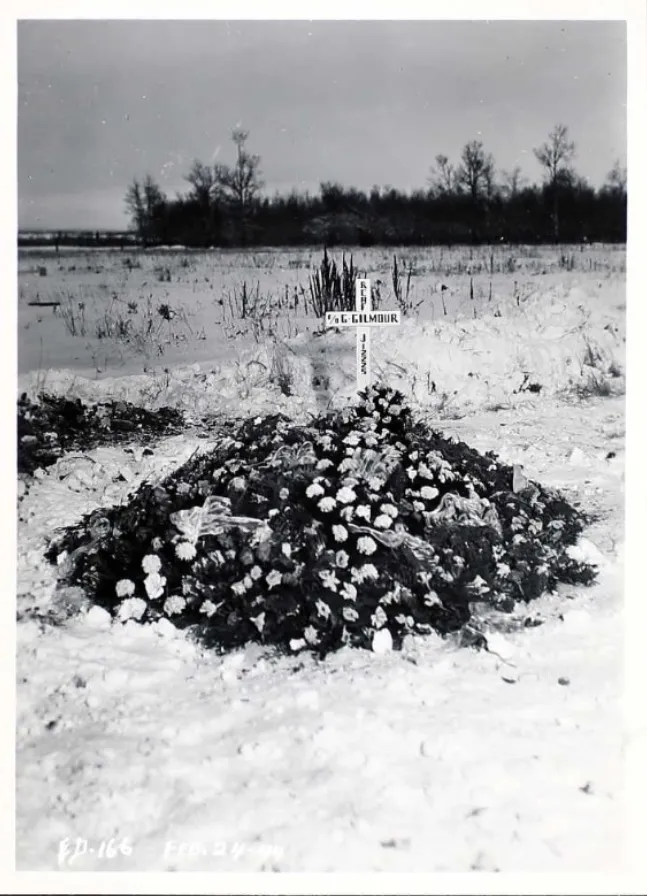

Accident Card - de Havilland Mosquito B.Mk. XX serial:KB109
This accident involved 1 aircraft on 1944-February-17. Mosquito BXX s/n KB109.
This accident involved 2 people. Gilmour RG, Teer LH
This accident had 2 fatalities. Pilot Officer Leonard Herbert Teer RAF Killed in Flying Accident service no:154644 Mosquito KB109, Flying Officer Richard George Gilmour RCAF Killed in Flying Accident service no:J/12225 Mosquito KB109
Mission
Mosquito B.Mk. XX KB109
Operational 1944-February-17 to 1944-February-17
36 (OT) OTU (RAF) RCAF Station Greenwood, Nova Scotia
36 Operational Training Unit, RCAF Station Greenwood, Nova Scotia. Canadian-built Mosquito aircraft KB 109 broke up in mid-air during a six-plane formation flying training exercise and crashed one mile west of Auburn, Nova Scotia.
Pilot, Flying Officer Richard George Gilmour (RCAF) and Navigator, Pilot Officer Leonard Herbert Teer (RAFVR) were both killed in this flying accident
Flying Officer Gilmour had thirty three flying hours on Mosquito aircraft at the time of this accident. The Accident Investigation concluded that the most likely cause of the crash was structural failure due to excessive speed in a dive
Quietus Last Flight, Accident Proneness in WWII, Wartime Aviation Stories on the Canadian Home Front by Anne Gafiuk, Chapter 12
 Royal Air Force Serial and Image Database
Roll of Honour (Training Casualties) - No 36 Operational Training Unit...
Royal Canadian Air Force operations record book... - Image 1244 - Heritage
Mosquito serial: KB109
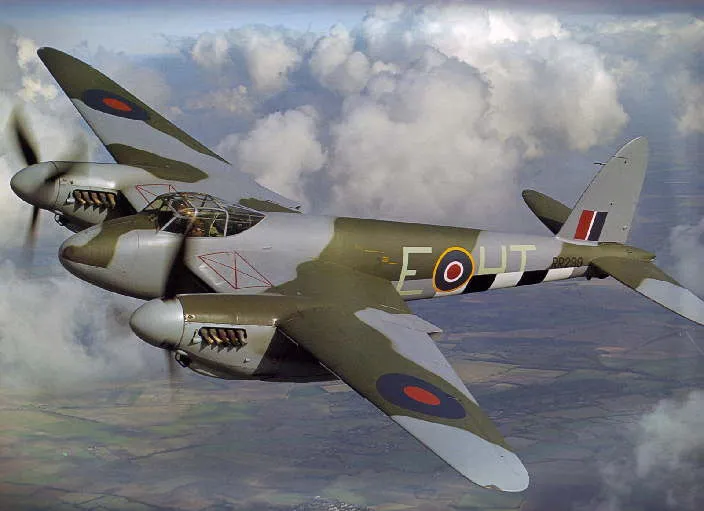
(British Aerospace photo) (Source Bomber Command Museum of Canada)
The de Havilland DH.98 Mosquito was a British twin-engine shoulder-winged multi-role combat aircraft, introduced during the Second World War. It was one of few operational front-line aircraft of the era whose frame was constructed almost entirely of wood. Nicknamed The Wooden Wonder, it was affectionately as the "Mossie" to its crews. The total number of DH98 Mosquito aircraft built was 7,781, the type serving with the main Allied air forces, including both the United States and Russia.
When Mosquito production began in 1941 it was the fastest propeller driven operational aircraft in the world. The first variant was an unarmed, high-speed, high-altitude photo-reconnaissance aircraft. Originally conceived as an unarmed fast bomber, the Mosquito's use evolved during the war into many roles including low to medium-altitude daytime tactical bomber, high-altitude night bomber, pathfinder, day or night fighter, fighter-bomber, intruder, and maritime strike aircraft. It was also used by the British Overseas Airways Corporation (BOAC) as a fast transport to carry small high-value cargoes to, and from, neutral countries, through enemy-controlled airspace. The crew of two, pilot and navigator, sat side by side, but a single passenger could ride in the aircraft's bomb bay when necessary.
The Mosquito FB Mk. VI was often flown in special raids, such as Operation Jericho, an attack on Amiens Prison in early 1944, and precision attacks against military intelligence, security and police facilities (such as Gestapo headquarters). On the 10th anniversary of the Nazi' seizure of power in 1943, a morning Mosquito attack knocked out the main Berlin broadcasting station while Hermann Goering was speaking, putting his speech off the air. Goering later said: "It makes me furious when I see the Mosquito. I turn green and yellow with envy. There is nothing the British do not have. They have the geniuses and we have the nincompoops."
The Mosquito flew with the RCAF and other air forces in the European, Mediterranean and Italian theatres. After the end of the Second World War Spartan Air Services flew 10 ex-RAF Mosquitoes, mostly B.35's plus one of only six PR.35's built, for high-altitude photographic survey work in Canada. There are approximately 30 non-flying Mosquitos around the world with five airworthy examples, four in the United States, and one in Canada. Harold Skaarup web page and Wikipedia
 Mosquito
 BAE Systems (formerly De Havilland)
 Wikipedia Mosquito
 USAAF F-8 Mosquito Serial Numbers
 Mosquitos shipped to Taiwanese Airforce
Aircraft Images
Mosquito KB109
Mosquito B.Mk. XX KB109
1943-09-29 Taken on Strength 2022-02-07
1944-February-17 Accident: 36 Operational Training Unit Loc: Auburn Kings Co Nova Scotia Names: Gilmour | Teer
1944-03-28 Struck off Strength 2022-02-07
Unit Desciption
36 (OT) OTU (36 Operational Training Unit)
The Operational Training Unit (OTU) was the last stop for aircrew trainees. They spent 8 to 14 weeks learning to fly operational aircraft (Hawker Hurricane or Fairey Swordfish, e.g.). The instructors had experience in actual operations, and often were posted to OTUs after their operational tour.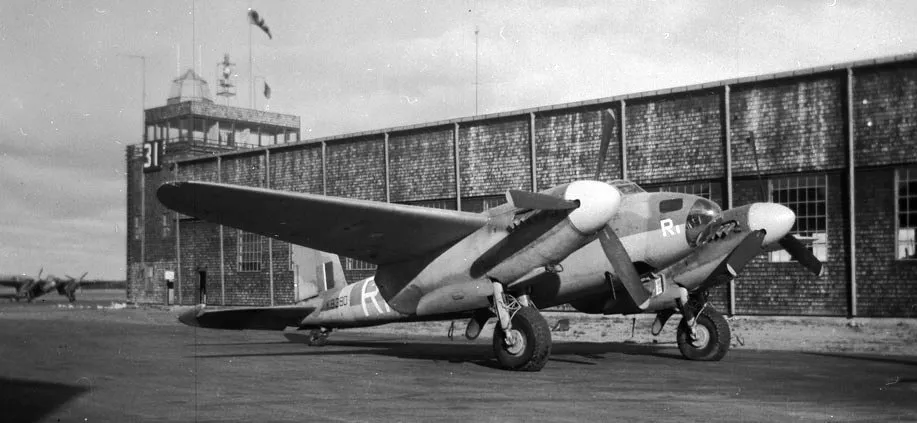
DH Mosquito
More information on the Air Force Station at Greenwood, Nova Scotia can be found at:
 RCAF.info - Greenwood, Nova Scotia
Greenwod Military Aviation Museum Video History Of Greenwood
Mosquito KB109 B.Mk. XX - Operational - 1944-02-17 to 1944-02-17
Squadron: 36 (OT) OTU (RAF)
Start Date: 1944-02-17
Completion Date: 1944-02-17
Mission: Operational
Operation: unspecified
Target City:
Target Specific:
Base: RCAF Station Greenwood, Nova Scotia
Take Off Time: 12:45:00
Squadron Code:
Radio Code:
Return Base:
Return Time:
Crash City: Canada
Crash Specifics: one mile west of Auburn, Nova Scotia
Crash Latitude: 0.00000000
Crash Longitude: 0.00000000
Crash Reason: structural
Flak Battery:
Enemy Claim:
War Diary Unavailable
6 Group Unavailable
36 Operational Training Unit, RCAF Station Greenwood, Nova Scotia. Canadian-built Mosquito aircraft KB 109 broke up in mid-air during a six-plane formation flying training exercise and crashed one mile west of Auburn, Nova Scotia.
Pilot, Flying Officer Richard George Gilmour (RCAF) and Navigator, Pilot Officer Leonard Herbert Teer (RAFVR) were both killed in this flying accident
Flying Officer Gilmour had thirty three flying hours on Mosquito aircraft at the time of this accident. The Accident Investigation concluded that the most likely cause of the crash was structural failure due to excessive speed in a dive
Quietus Last Flight, Accident Proneness in WWII, Wartime Aviation Stories on the Canadian Home Front by Anne Gafiuk, Chapter 12
Royal Air Force Serial and Image Database
Roll of Honour (Training Casualties) - No 36 Operational Training Unit...
Royal Canadian Air Force operations record book... - Image 1244 - Heritage
