T.B.8 (Total: 34, Canadian: 1, Group 0)
Bristol T.B.8
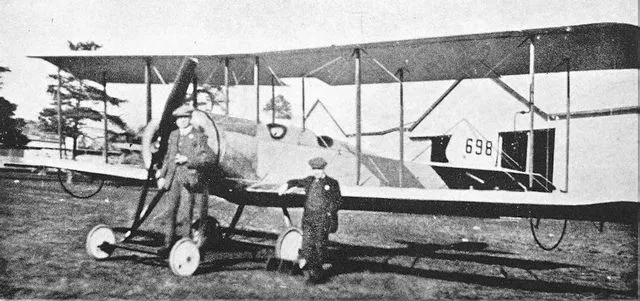
Source Wikipedia
The Bristol T.B.8, or Bristol-Coanda T.B.8 was an early (1913–14) British biplane built by the Bristol Aeroplane Company, which was produced in significant numbers (54 were built) for the time. While mainly used as a trainer, T.B.8s were briefly used as bombers at the start of the First World War by the Royal Naval Air Service (RNAS).
Henri Coandă, chief designer of the Bristol Aeroplane Company, developed the T.B.8 as a biplane development of his earlier Bristol-Coanda Monoplane to meet an order from the British Admiralty, the first aircraft, a conversion of a Bristol-Coanda monoplane, flying on 12 August 1913.This aircraft was tested with both wheeled undercarriage and floats.
The T.B.8 was a single engined, two seat biplane, with two bay wings and a slender fuselage. While early T.B.8s used wing warping, later production aircraft were fitted with ailerons. They were normally fitted with a distinctive four wheel undercarriage. T.B.8s were powered by a variety of rotary engines, including Gnome and Le Rhône engines with power ranging from 50 hp Gnomes to 100 hp Gnome Monosoupape engines. T.B.8s were produced both by conversion of Coanda Monoplanes, and by new production.
One T.B.8 was fitted with a prismatic Bombsight in the front cockpit and a cylindrical bomb carrier in the lower forward fuselage capable of carrying twelve 10 lb (4.5 kg) bombs, which could be dropped singly or as a salvo as required. This aircraft was displayed at the Paris Salon de l'Aéronautique and evaluated by the French military before being purchased by the RNAS.
The Bristol T.B.8 was considered too slow for frontline operations, and was relegated to training operations, serving until 1916. Wikipedia
 Bristol T.B.8
T.B.8 serial 1220
s/n 1220
1220
Known Units:
Ordered by RFC, transferred to RNAS.last update: 2026-August-19
