 Penticton, BC
The 135 Squadron ORB notes he flew a mission on 28 Mar 1945 from which he did not return: "Eleven aircraft with the CO leading went to bomb and straffe to godowns and rail station at Gyobingauke. Rhubarbed road and rail from there to Prome. W/O Whiskin is missing from this flight, and was last seen at 700 feet near Prome".
Whiskin, Dennis Richard (Warrant Officer)
Killed in Action 1945-March-28


Birth Date: unkown date
Born:
Parents:
Spouse:
Home: Penticton, BC
Enlistment:
Enlistment Date: unkown date
Service
RAFVR
Unit
135 (F) Sqn- Squadron (RAF)
Pennas Ubique Monstramus We show our wings everywhere
Base
Rank
Warrant Officer
Position
Pilot
Service Numbers
1314711
Thunderbolt serial: HD158
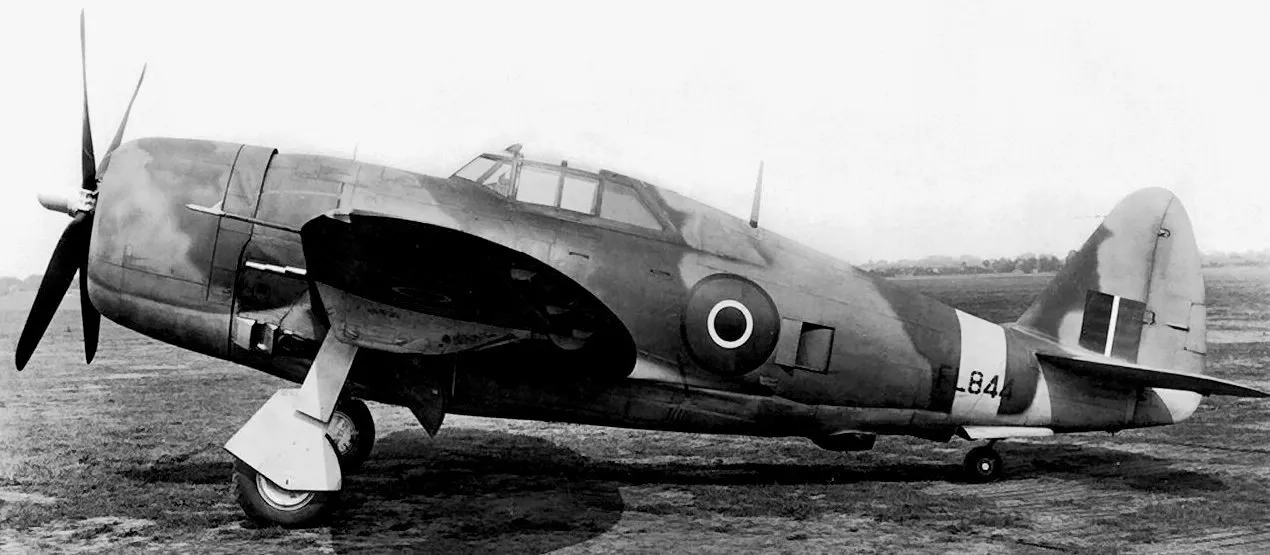
Source: Harold A Skaarup Web Page (RAF Photo)
Republic P-47 Thunderbolt Mk. I & II flown by Canadians in RAF service
Republic P-47 Thunderbolt Mk. I & II flown by Canadians in RAF service
The Republic P-47 Thunderbolt is a World War II-era fighter aircraft produced by the American aerospace company Republic Aviation from 1941 through 1945. Its primary armament was eight .50-caliber machine guns, and in the fighter-bomber ground-attack role it could carry five-inch rockets or a bomb load of 2,500 lb (1,100 kg). When fully loaded, the P-47 weighed up to eight tons, making it one of the heaviest fighters of the war. The Thunderbolt was effective as a short-to medium-range escort fighter in high-altitude air-to-air combat and ground attack in both the European and Pacific theatres. The P-47 was designed around the powerful Pratt & Whitney R-2800 Double Wasp 18-cylinder radial engine which also powered two U.S. Navy/U.S. Marine Corps fighters, the Grumman F6F Hellcat and the Vought F4U Corsair. An advanced turbo-supercharger system ensured the aircraft's eventual dominance at high-altitude, while also influencing its size and design.
The P-47 was one of the main United States Army Air Forces (USAAF) fighters of World War II, and also served with other Allied air forces, including those of France, the United Kingdom, and the Soviet Union. Mexican and Brazilian squadrons fighting alongside the USAAF also flew the P-47.
The armored cockpit was relatively roomy and comfortable and the bubble canopy introduced on the P-47D offered good visibility. Nicknamed the "Jug" owing to its appearance if stood on its nose, the P-47 was noted for its firepower, as well as its ability to resist battle damage and remain airworthy. Wikipedia
 Wikipedia Republic P-47 Thunderbolt
 Harold A Skaarup Web Page