King, Gerald James ()

Survived 1916-November-21

Male Head

Birth Date: 1895-May-03

Born:

Parents:

Spouse:

Home:

Enlistment:

Enlistment Date: unkown date

Service

RAF

Unit

32 (F) Sqn- Squadron (RFC)

Base

France

Rank

Position

pilot

Service Numbers

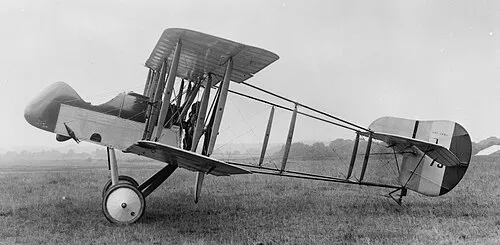
1915-10-22: Reserve Aircraft Park, Farnborough, England; Executive Officer. 1916-08-13: posted to 32Sqn, RFC. 1916-10-01: King was OK in DH-2, 7892; when he was shot down by hostile aircraft near Hedauville, on line patrol. 1916-11-21: King was OK in DH-2, A-2566; when he force-landed 700 yards behind the front line due to engine failure and was shelled by enemy, during line patrol. 1917-02-05: to be Flt. Cmdr & Capt.

DH. 2 serial: A2566

Airco_DH 2_ExCC
Wikipedia Airco_DH 2
- First flight in July 1915, retired 1918 - introduced to front line service in February, 1916 - the first effectively armed, British single-seat fighter - pusher (rear engine) form used because Brits did not yet have an effective interupter gear design to allow firing machine guns through the whirling propeller without hitting the blades. fuel tank - centre section of the upper wing, gravity fed - for their single seat fighter aircraft the brits adopted the French designed Gnome/Le Rhone monosoupape rotary engines vs.the early German fighters with an in-line Mercedes. Applied until intro of Bristol F2B Fighter-Bomber-Recon aircraft - single .303 Lewis gun, with top mounted, replaceable, 47 round ammunition pans - gun was post mounted in fornt of the pilot and could be fixed or allowed to swivel and elevate - depress, later fixed only (aim the plane - aim the gun), 4 extra ammo pans carried in slots on inside of fuselage tub - over time gun improved with cross-hair ring site - rings allowed pilots to calculate deflection and 'lead' a target - fire rate of 700-800 rounds per minute - basic form: a wooden airframe, which was wire-braced and covered by doped fabric across most areas, except for the nacelle nose and upper decking. Both the upper and lower wings had ailerons fitted. - equipped 7 squadrons by late 1916 - rotary engine allowed for torque turning to the right - no inline engined aircraft could compete with it - DH.2 was the answer to the Fokker Scourge, the 'Eindekker' (monoplane), which did have a synchronized machine gun. (why the Brits and French didn't simply copy the German design, I have never figuered out!) - Germans brought in the Halberstadt D.2 and Albatross D.1 in late 1916, which outclassed the DH-2 in all regards. General characteristics Crew: 1 Length: 25 ft 2/2 in (7.684 m) Wingspan: 28 ft 3 in (8.61 m) Height: 9 ft 6/2 in (2.908 m) Wing area: 249 sq ft (23.1 m2) Empty weight: 943 lb (428 kg) Gross weight: 1,441 lb (654 kg) Powerplant: 1 × Gnôme Monosoupape 9-cylinder rotary engine, 100 hp (75 kW) Propellers: 2-bladed Integral fixed pitch wooden propeller Performance Maximum speed: 93 mph (150 km/h, 81 kn) at sea level Endurance: 2 hours, 45 minutes Service ceiling: 14,000 ft (4,300 m) Time to altitude: 24 minutes, 45 seconds to 10,000 ft (3,000 m) Armament Guns: One × .303 in (7.7 mm) Lewis gun Rockets: Two examples were equipped with Le Prieur rockets for attacking observation balloons Wikipedia

Wikipedia Airco DH 2

DH. 2 A2566

airhistory.org.uk/rfc

Type: Airco D.H.2 Built by: Airco /Hendon Contract: 87/A/386 (dated 24-07-1916) Taken on charge: 1916 Struck off charge: 21-11-1916 History: At Hendon allot EF 25.08.16