 Doynton, St. Georges, Bermuda (parents)
1917-08-14: Brown died in MF S.11 'Shorthorn', B-4657; when he lost control avoiding another machine on the aerodrome, while looping too close to the ground and then trying to zoom over the disabled machine.
Brown, Ewart Cudemore (Lieutenant)
Killed in Flying Accident 1917-August-14


Birth Date: 1893-May-18
Born: St. Georges, Bermuda
Parents: Van Ordall Swainson Brown & Florence Mary Cudemore
Spouse: unmarried
Home: Doynton, St. Georges, Bermuda (parents)
Enlistment:
Enlistment Date: unkown date
Service
RFC
Unit
48 (OT) TS- Training Squadron (RFC)
Base
Waddington England
Rank
Lieutenant
Position
pilot
Service Numbers
410987
S.11 Shorthorn serial: B4657
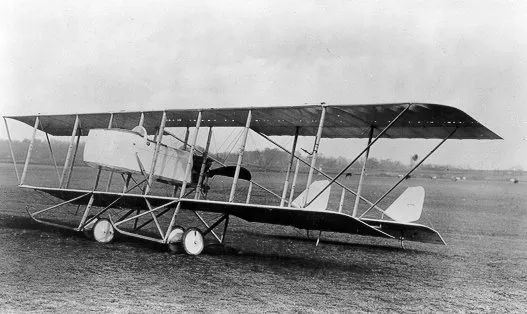
Maurice Farman MF 11 Shorthorn circa 1915
Source Wikipedia
The Maurice Farman MF.11 Shorthorn is a French aircraft developed before World War I by the Furman Aviation Works. It was used as a reconnaissance and light bomber during the early part of World War I, later being relegated to training duties.
A pusher configuration unequal-span biplane like the earlier Farman MF.7, the MF.11 differed in lacking the forward-mounted elevator, the replacement of the biplane horizontal tail surfaces with a single surface with a pair of rudders mounted above it, and the mounting of the nacelle containing crew and engine in the gap between the two wings. The aircraft was also fitted with a machine gun for the observer, whose position was changed from the rear seat to the front in order to give a clear field of fire.
The MF.11 served in both the British and French air services on the Western Front in the early stages of the war. It flew the first bombing raid of the war when, on 21 December 1914, an MF.11 of the Royal Naval Air Service attacked German artillery positions around Ostend, Belgium.
The MF.11 was withdrawn from front-line service on the Western Front in 1915 but continued to be used by the French in Macedonia and the Middle East, while the British also used it in the Dardanelles and Africa. The Australian Flying Corps (AFC), provided with the MF.11 by the British Indian Army, operated it during the Mesopotamian campaign of 1915–16.
Following its withdrawal from frontline service, the MF.11 continued to be used by the British in flight schools where it became known as the Rumpty (or Rumpety). Despite its archaic looks, the MF.11 was regarded as a good aircraft for trainee pilots as its sturdy build meant that bad landings rarely caused damage to the undercarriage. The Maurice Farman Shorthorn was the aircraft in which Biggles, Capt W.E. Johns' fictional character, first took to the air in "Biggles Learns To Fly". Wikipedia
 MF.11 Shorthorn
S.11 Shorthorn B4657
airhistory.org.uk/rfc
Type: Maurice Farman S.11 Shorthorn Built by: Airco /Hendon Engine: 80Ren Contract: 87/A/109 Contract status: up to 4850?