 South Qu'appelle, Saskatchewan
Boyce enlisted in the Fort Gary Horse, CEF as a private. He was wounded in France in August, 1915. After experience in the trenches in France for over a year he was selected for officer training. After recovering from his wound he also suffered bouts of extended tonsillitis and influenza. He transferred to the RFC as a Lieutenant in October, 1917, and after flight training was posted to 62 Sqn. RFC.
He was shot down 1918-03-12 over Clary, Nord, France, the 29th victim of Lothar von Richtoffen, on one of his first flights, but survived the crash to be made POW. He was repatriated 1918-12-04.
Boyce, Henry Basil Pridden (Lieutenant)
Prisoner of War 1918-March-12


Birth Date: 1893-April-01
Born: South Qu'appelle, Saskatchewan
Parents: Frank H. Boyce, no mention of his mother.
Spouse:
Home: South Qu'appelle, Saskatchewan
Enlistment: Valcartier, Quebec
Enlistment Date: 1914-September-21
Service
RAF
Unit
62 (FR) Sqn- Squadron (RFC)
Base
Rank
Lieutenant
Position
pilot
Service Numbers
15232
F.2 (Bristol) serial: B1251
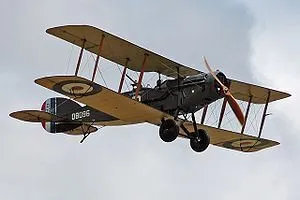
Bristol F.2b Fighter serial D8096 (Source Wikipedia)
The Shuttleworth Collection's Bristol F.2B Fighter
The Shuttleworth Collection's Bristol F.2B Fighter
The Bristol F.2 Fighter was a British two-seat biplane fighter and reconnaissance aircraft of the First World War developed by Frank Barnwell at the Bristol Aeroplane Company. It is often simply called the Bristol Fighter, other popular names include the "Brisfit" or "Biff".
Although the type was intended initially as a replacement for the pre-war Royal Aircraft Factory B.E.2c reconnaissance aircraft, the new Rolls-Royce Falcon V12 engine gave it the performance of a two-seat fighter.
Despite a disastrous start to its career, the definitive F.2B version proved to be a manoeuvrable aircraft that was able to hold its own against single-seat fighters; its robust design ensured that it remained in military service into the 1930s. Some surplus aircraft were registered for civilian use and civilian versions proved popular.
Perhaps one of the best known flying aces to use the type was Canadian Andrew Edward McKeever, and his regular observer L.F. Powell.[18] By the end of 1917 McKeever had accumulated 30 shoot-downs of enemy aircraft, while Powell had achieved eight aerial kills, while operating the Fighter. McKeever later became a flying instructor stationed in England before becoming the commanding officer of No. 1 Squadron of the newly formed Royal Canadian Air Force (RCAF), where he continued to use the Fighter as his personal aircraft, which was later transferred to Canada Wikipedia
 Bristol F 2b Fighter
 Wikipedia Bristol F 2b Fighter
 Harold A Skaarup Web Page
F.2 (Bristol) F.2B B1251
airhistory.org.uk/rfc
Type: Bristol F.2b Fighter Built by: British & Colonial/Filton Constructor's number: 2419 Contract: 87/A/552 Contract status: addnl a/c total 502 Taken on charge: 11-1917 Struck off charge: 12-03-1918