 Victoria, B.C.
1919-04-22: HP F-3748 O/400 bomber failed to clear building adjacent to the field on take-off. Maj Thomas Archibald Batchelor (British), Cpl Edgar Ward (British), ChMech Horace Henry Heales (British), Capt Reginald Adkins (British)all died in the crash. 2Lt Edward Albert Westall (British)and Sergeant Arthur Noel Smith (British)were both injured, but survived.
Whiteside, Arthur Barlow (Captain)
Killed in Flying Accident 1919-April-23


Birth Date: 1891-December-13
Born: Inverness, Quebec
Parents: Rev. Arthur Whiteside & ?wife's name not found?
Spouse: unmarried
Home: Victoria, B.C.
Enlistment: Valcartier, Quebec; CAMC, No.1 Gen. Hospital
Enlistment Date: 1914-September-23

Service
RAF
Unit
102 (B) Sqn- Squadron (RAF)
Tentate Et Perficite Attempt and achieve
Base
2 School of Nav and Bomb Dropping, Andover, England
Rank
Captain
Position
Pilot
Service Numbers
50009
 Canadian Virtual War Memorial
O/400 serial: F3748
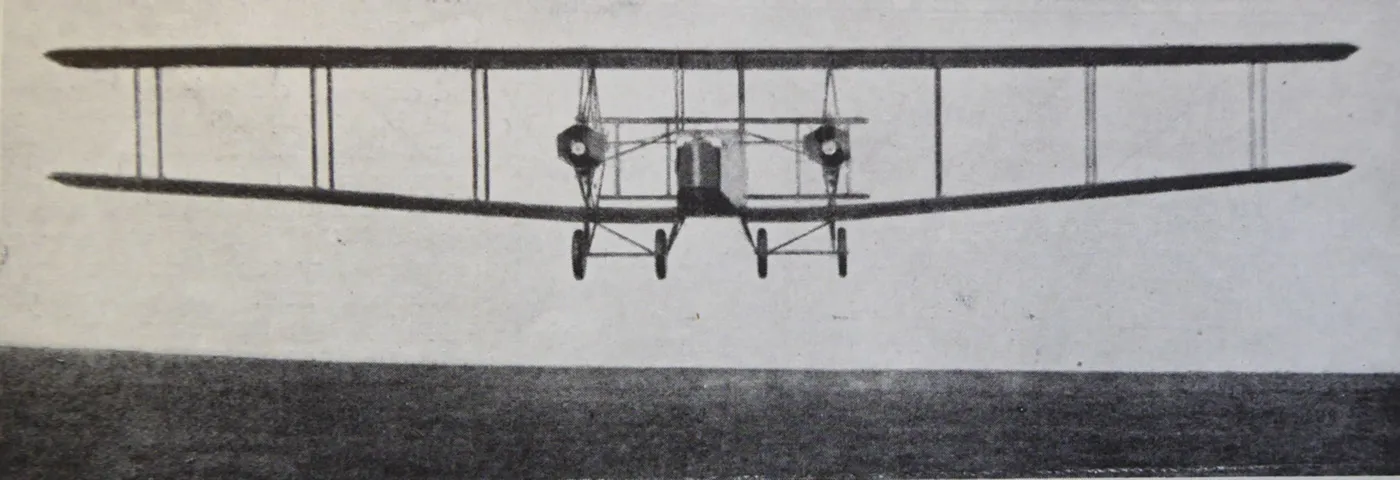
Handley Page O/400
Source History of War.org
The Handley Page Type O was a biplane bomber used by Britain during the First World War. When built, the Type O was one of the largest aircraft in the world. There were two main variants, the Handley Page O/100 (H.P.11) and the Handley Page O/400 (H.P.12).
The Handley Page O/400 was one of the first purpose built heavy bombers. The design order was issued by the Admiralty for the RNAS at the end of 1914, but the O/400 did not enter active service until March 1918, when it was used against German U-boat bases. It was then used against Germany shipping and ports, and had an increasing impact as the number of aircraft in operation increased. In addition to service on the western front, one O/400 was sent to the Aegean, where it operated against the Turks for three months before engine failure forced it out of action, and another was sent to Palestine to help General Allenby, again against the Turks, where its size made as much impact as its bombs. When the RNAS and RFC merged to form the RAF, the O/400 became its standard heavy bomber, but despite efforts to turn the O/400 into a transport plane, they had all gone out of service by the summer of 1923. Wikipedia
 Handley Page
O/400 F3748
airhistory.org.uk/rfc
Type: Handley Page O/400 Built by: Handley Page Contract: 35A/1052/C887 (dated 27-05-1918) Contract status: only 11 blt Taken on charge: 01-1919
Unit Desciption
102 (B) Sqn Tentate Et Perficite (Ceylon)
No. 102 Squadron RFC was formed in August 1917 and served on the Western Front in WWI as a night bomber unit equipped with FE2b aircraft. It continued in this night bomber role until the cessation of hostilities. The squadron was disbanded on July 3, 1919. It was re-formed on October 1, 1935 as a bomber unit, at Worthy Down, Hampshire, where it remained until it moved to Finningley, Yorkshire in September, 1936. Further moves were to Honington, Suffolk in July of 1937, and to Driffield, Yorkshire in July 1938. The squadron originally flew Handley Page Heyford aircrft, but re-equipped with Armstrong Whitworth Whitleys before the outbreak of WWII. While the squadron remained based at Driffield, detachments were sent to Villeneuve, France between October 1939 and February 1940. There were also detachments seconded to Coastal Command at Kinloss, Scotland in November and December 1939.
The squadron's first operation was on the second night of the war, when it dropped leaflets over the Ruhr in Germany. The first bombing attack was on the night of 12/13 December 1939, when a seaplane was attacked at its base at Sylt, Germany. When Italy entered the war on 10/11 June, 1940, the squadron flew from Jersey airport in the Channel Islands to attack Turin. Between August and September 1940 the squadron was based at Leeming, Yorkshire.
The squadron was seconded to Coastal Command from September to October 1940, flying from Prestwick, Scotland. It moved to Linton-on-Ouse, Yorkshire in October and November of 1940, and then to Dalton, Yorkshire in November 1941. In June of 1942 the squadron moved to Topcliffe, Yorkshire and in August moved to Pocklington, from which it flew until the end of hostilities, as a member of No. 4 Group of Bomber Command. From December 1941 until the end of the war, the squadron flew Handley Page Halifax aircraft. Although most of their missions were bombing sorties, the squadron also transported 134,280 gallons of petrol to Belgium to help fuel the Second Army in September/October 1944.
One of the remarkable airmen who flew with the squadron was P/O Leonard Cheshire, later G/C and VC holder. His aircraft P5005 N-Nuts was very badly holed on an attack to an oil refinery at Wesseling, Germany on the night of 12/13 November 1940. The aircraft suffered a huge hole on the port fuselage, but Cheshire was able to stabilize it and brought the aircraft home, to be awarded an immediate DSO. Overall in the course of the war, the squadron dropped 14,118 tons of bombs and laid 1865 mines. Among the awards gained by squadron personnel were 5 DSOs, 115 DFCs, 2 Bars to DFC and 34 DFMs.
The squadron was transferred to Transport Command on May 7, 1945 and was disbanded on February 28, 1946.