Purvis, James Albert (Flying Officer)
Killed in Flying Accident 1954-May-02


Birth Date: 1929-March-15
Born: Toronto, Ontario
Parents: Son of William and Ada Purvis of Toronto, Ontario.
Spouse: Husband of Helen (nee Peters) William of Toronto, Ontario. Brother of Joyce, William, Burton and Carol.
Home: Toronto, Ontario
Enlistment: Toronto, Ontario
Enlistment Date: 1953-October-27
Service
RCAF
Unit
411 Sqn- Squadron
Inimicus Inimico Hostile to an Enemy
Base
Rank
Flying Officer
Position
Pilot
Service Numbers
100180
 Canadian Virtual War Memorial
Vampire serial: 17038
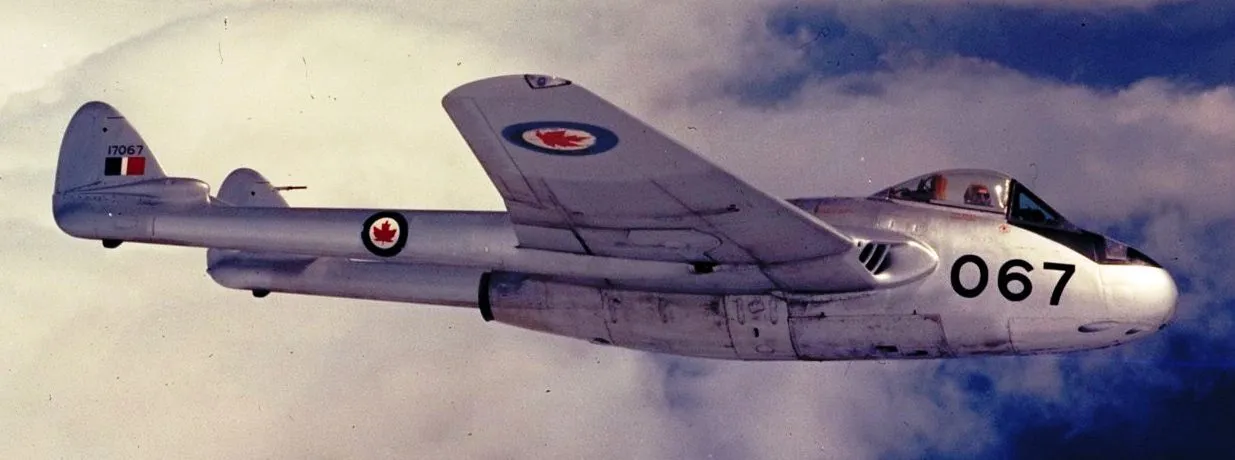
Source: Harold A Skaarup Web Page (DND Photo via James Craik)
de Havilland DH.100 Vampire, RCAF (Serial No. 17067), No. 411 "County of York" Squadron (Auxiliary), Toronto, Ontario
de Havilland DH.100 Vampire, RCAF (Serial No. 17067), No. 411 "County of York" Squadron (Auxiliary), Toronto, Ontario
The de Havilland Vampire is a British jet fighter which was developed and manufactured by the de Havilland Aircraft Company. It was the second jet fighter to be operated by the RAF, after the Gloster Meteor, and the first to be powered by a single jet engine.
Development of the Vampire as an experimental aircraft began in 1941 during the Second World War, to exploit the revolutionary innovation of jet propulsion. From the company's design studies, it was decided to use a single-engine, twin-boom aircraft, powered by the Halford H.1 turbojet (later produced as the "Goblin"). Aside from its propulsion system and twin-boom configuration, it was a relatively conventional aircraft. In May 1944 it was decided to produce the aircraft as an interceptor for the Royal Air Force (RAF). In 1946 the Vampire entered operational service with the RAF, only months after the war had ended.
The Vampire quickly proved to be effective and was adopted as a replacement of wartime piston-engined fighter aircraft. During its early service it accomplished several aviation firsts and achieved various records, such as being the first jet aircraft to cross the Atlantic Ocean. The Vampire remained in front-line RAF service until 1953 when it was progressively reassigned to various secondary roles, such as ground attack and pilot training, for which specialist variants were produced. The RAF retired the Vampire in 1966 when its final role of advanced trainer was filled by the Folland Gnat. The Royal Navy had also adapted the type as the Sea Vampire, a navalised variant suitable for operations from aircraft carriers. It was the service's first jet fighter.
The Vampire was exported to a wide variety of nations and was operated worldwide in numerous theatres and climates. Several countries deployed the type in combat during conflicts, including the Suez Crisis, the Malayan Emergency, and the Rhodesian Bush War. By the end of production, almost 3,300 Vampires had been manufactured, a quarter of these having been manufactured under licence in several other countries.
The layout of the DH.100 used a single jet engine installed in an egg-shaped fuselage which was primarily composed of plywood for the forward section and aluminium throughout the aft section. It was furnished with conventional mid-mounted straight wings; air brakes were installed on the wings to slow the aircraft, a feature that had also been incorporated in the Meteor. Armament comprised four 20 mm Hispano Mk V cannon located underneath the nose; from the onset of the design phase, even when the aircraft was officially intended to serve only as an experimental aircraft, the provision for the cannon armament had been included.
In 1946, a single Vampire F.1 began operating on an evaluation basis in Canada at the Winter Experimental Establishment in Edmonton. The Vampire F.3 was selected as one of two types of operational fighters for the Royal Canadian Air Force (RCAF) and was first flown in Canada on 17 January 1948 where it went into service as a Central Flying School training aircraft at RCAF Station Trenton. Operating a total of 86 aircraft, the Vampire F.3 became the first jet fighter to enter RCAF service in any significant numbers.
The Vampire had the function of introducing Canadian fighter pilots not only to jet propulsion, but also to other amenities such as cockpit pressurisation and the tricycle landing gear arrangement. It proved to be a popular aircraft, being easy to fly and often considered a "hot rod". In Canadian service, the Vampire served in both operational and air reserve units (400, 401, 402, 411, 438 and 442 squadrons). During the late 1950s, the type was retired and was replaced in RCAF service by the Canadair Sabre. Wikipedia
After retirement, 26 of the surplus RCAF Vampires were sold to the Formetal Division of Fliteways Inc., West Bend, Wisconsin, USA in 1958. Another 4 airframes were to provide spares. Aerial Blight Control, also of West Bend, refurbished 15 Vampires for sale to the Mexican Air Force starting in 1959. The FAM operated the Vampires until about 1970. Several of the remaining Vampires purchased by Fliteways found their way to the US civil market. Some may now be found in museums in Mexico, the U.S. or Canada.
 Wikipedia de Havilland Vampire
 Harold A Skaarup Web Page
 YouTube de Havilland Vampire
 de Havilland Vampire - Kestrel Publications
Unit Desciption
411 Sqn Inimicus Inimico ("Grizzly Bear")
History of the Squadron during World War II (Aircraft: Spitfire Mks. IIA,VB, IXB, IXE, XVI, XIV)
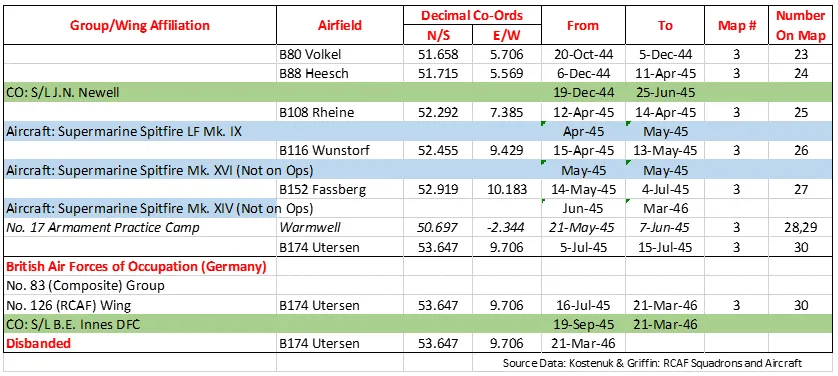
The squadron was the sixth of the RCAF's squadrons to be formed overseas in WWII. It was the fourth fighter squadron to be so formed. It was established at Digby, Lincolnshire, England  on June 16, 1941. It flew Spitfire aircraft in the defence of Great Britain, formed part of the Canadian Kenley Wing within No. 11 Group, Fighter Command, and after D-Day moved to France on June 19, 1944, in a fighter and ground support role. It then supported the Allied armies, moving through France, the Low Countries and Germany. It was one of four RCAF day fighter units retained in Germany as part of the British Air Forces of Occupation before being disbanded at Utersen, Germany on March 21, 1946.
In the course of hostilities, the squadron flew 10,747 sorties for the loss of 48 aircraft and pilots, of whom 4 were killed, 4 wounded, 19 presumed dead. The squadron claimed 84 enemy aircraft destroyed, 3 probably destroyed and 44 damaged. On the ground, they claimed 367 motor vehicles and 26 locomotives. The squadron had 5 aces (shot down 5 or more enemy aircraft), of which Flight Lieutenant R.J. Audet DFC & Bar accounted for 5 enemy aircraft within 2 minutes in a single sortie on Dec 29 1944. He was killed on March 5, 1945, by which time his score had mounted to 11.5, including 2 Me 262 jets. Other aces were: Flight Lieutenant H.C. Trainor DFC & Bar, Flight Lieutenant J.J. Boyle DFC, Squadron Leader E.G. Lapp DFC, and Flying Officer M.G. Graham DFC. Overall, the squadron was awarded 1 DSO, 2 MBE, 2 Bars to DFC, 19 DFCs and 1 MiD. Battle Honours were: Defence of Britain 1941-44, English Channel and North Sea 1942-43, Fortress Europe 1941-44: Dieppe, France and Germany 1944-45: Normandy 1944, Arnhem, Rhine. Wikipedia, Kostenuk and Griffin
Maps for Movements of 411 Squadron 1941-46
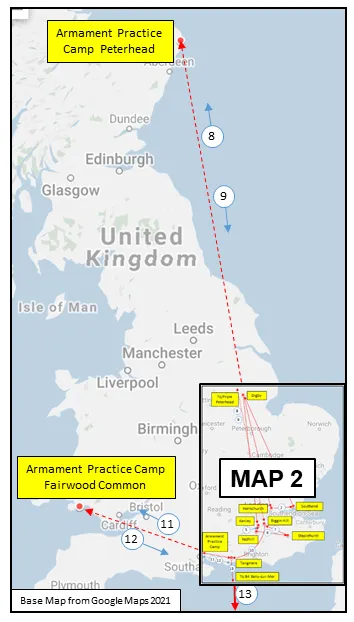
MAP 1: 411Squadron Movements 1941-44 (right-click on image to display enlarged in new tab)
|
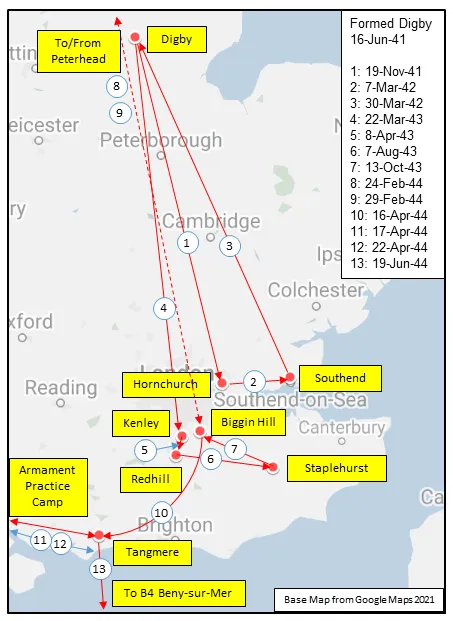
MAP 2: 411 Squadron Movements Detail of Map 1
|
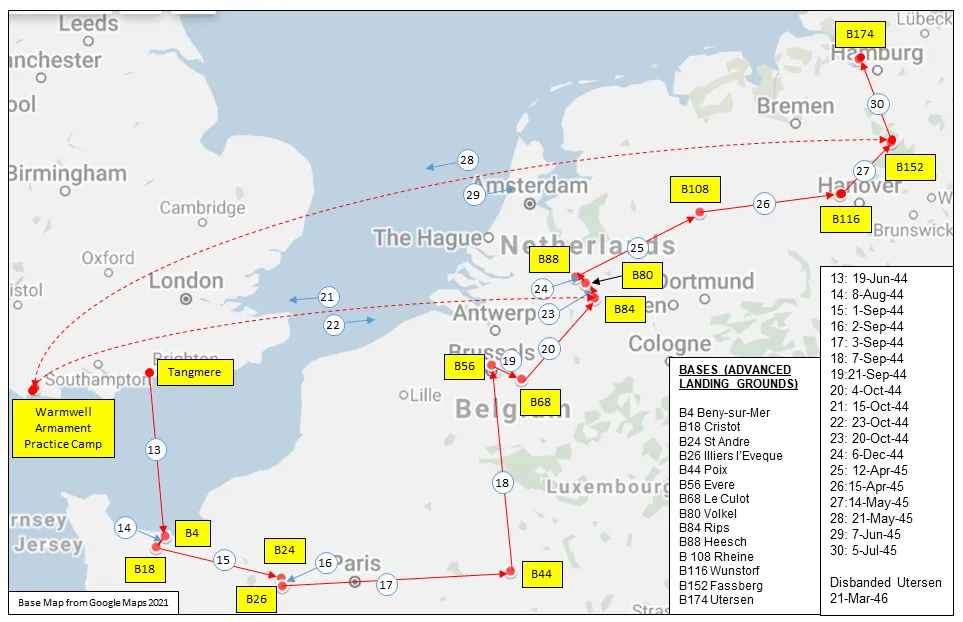
MAP 3: 411 Squadron Movements in Europe 1944-46
|
411 Squadron History Summary 1941-46
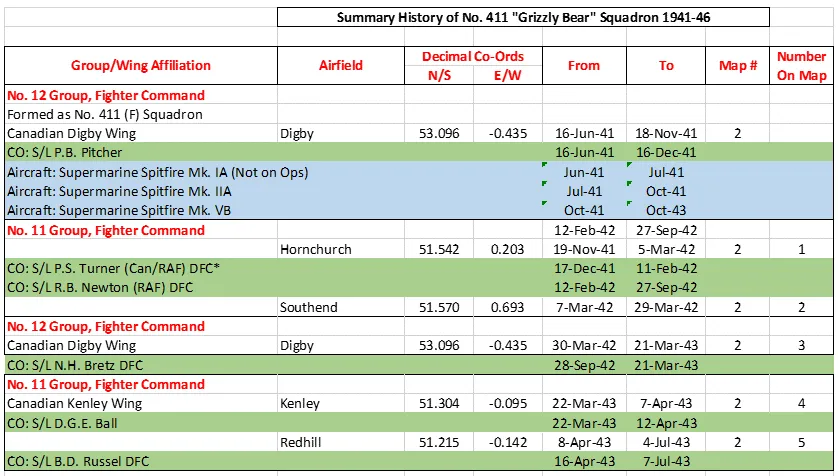
411 Squadron History Summary 1941-46 Page 2
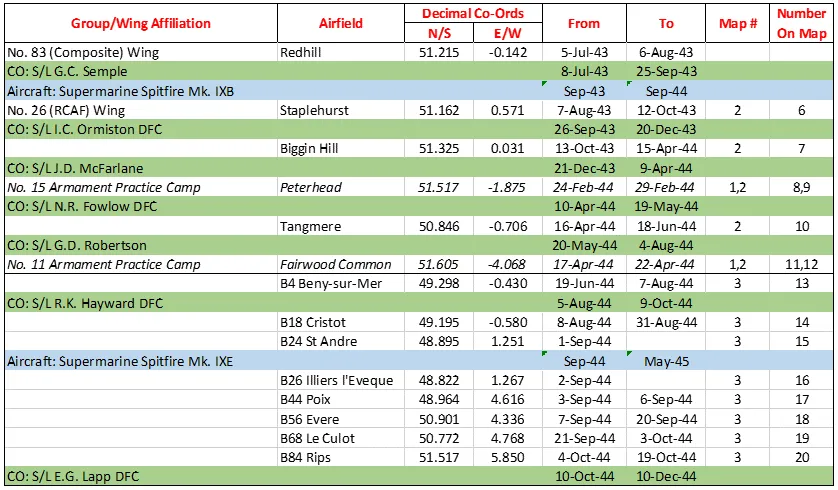
411 Squadron History Summary 1941-46 Page 3
History of the Squadron Post-WWII (Aircraft: Harvard II, Chipmunk, Vampire III, Silver Star, Sabre 5, Expeditor, Otter, Kiowa)
411 Squadron was reformed as an auxiliary fighter squadron at RCAF Station Downsview Ontario on 1 October 1950, and was known as the ‘County of York’ squadron. With North American Harvards and de Havilland Chipmunks as trainers the squadron operated the de Havilland Vampire III until 1956, then transitioned to the Canadair Sabre Mark V, with the Canadair Silver Star used as a trainer.
In October 1958, 411 was moved from Air Defence Command to Air Transport Command, and became a light transport squadron flying the Beech Expeditor C-45. The squadron adopted a Search and Rescue (SAR) role in spring of 1960 with the acquisition of the DHC-3 Otter. The Expeditor was retired in 1966.
On 1 February 1968 the squadron was integrated into the Canadian Armed Forces as No. 411 “County of York” Air Reserve Squadron. In 1969, 411 Squadron was transferred from Air Transport Command to 10 Tactical Air Group, and the squadron's primary role changed to the support of army operations. It continued to hold a secondary SAR role, and to do mapping surveys and sovereignty flights in the Canadian arctic. In 1981, the Otter was retired and the squadron transitioned to the CH-136 Kiowa (OH-58) helicopter, which it operated in a reconnaissance and tactical support role. The squadron finally disbanded on 1 Jan 1998.
RCAF Station Downsview