 Norwich Cemetery
1917-05-19: Kidder died during training in Henry Farman HF.20, A-1199; when it nose-dived to the ground and completely wrecked after Kidder switched the controls to 'Passenger'. 2Lt Jonah George Thompson (British), his instructor was unable to regain control of the aircraft before it hit the ground. He was also killed in the crash. This occurred at Mousehold Heath, Norwich, Norfolk.
Kidder, Milton Elroy (Second-Lieutenant)
Killed in Flying Accident 1917-May-19


Birth Date: 1890-August-22
Born: not found
Parents: Dr. E. Kidder, Cherryhinton Hospital, Cambridge
Spouse: unmarried
Home:
Enlistment:
Enlistment Date: unkown date
Service
RFC
Unit
9 RS Norwich England Sqn- Squadron (RFC)
Base
Norwich England
Rank
Second-Lieutenant
Position
pilot-trainee
Service Numbers
541592
 Canadian Virtual War Memorial
HF.20-HF.27 serial: A1199
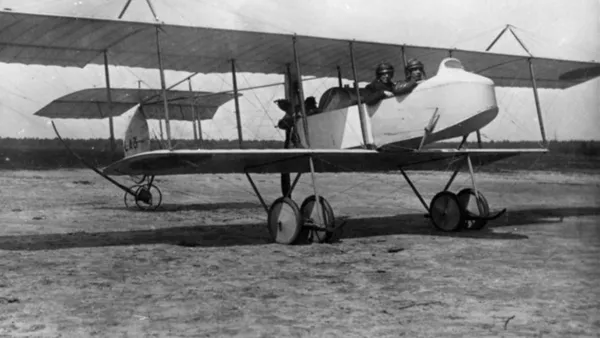
Farman HF20
Source Farman HF.20 - Nationaal Militair Museum
The Farman HF.20 was a significant early reconnaissance biplane that served as a foundational military aircraft for several nations during the onset of World War I. It was used by the French Army, Belgian Army, Serbian Army, Royal Flying Corps, Royal Naval Air Service.
The aircraft and its derivatives were a family of reconnaissance aircraft produced in France shortly before and during the First World War. It was a refined version of the Farman MF.11 "Shorthorn" that did away with the type's distinctive landing skids, and incorporated design features from Henri Farman's designs. It entered service with the French, Belgian and Serbian armies in 1913 (two aircraft conducted reconnaissance during the Siege of Scutari in the First Balkan War and one crashed), and with the British RFC and RNAS shortly after the outbreak of war. The type was also licence-built in the UK by Airco and Grahame-White.
The HF.20 was seriously underpowered, and a variety of engines were trialled in the hope of correcting this, none with much success. The problem was eventually solved only when an engine of twice the power of the original powerplant was fitted to the HF.27 variant, by which time the aircraft was already obsolete. Nevertheless, the performance of the HF.20 made it adequate for use on secondary fronts. Wikipedia
 HF.20
HF.20-HF.27 HF.20 A1199
airhistory.org.uk/rfc
Type: Henry Farman F.20 Built by: Grahame-Wight/Hendon Contract: 87/A/614 Taken on charge: 1916