Schneider (Total: 135, Canadian: 0, Group 0)
Sopwith Schneider
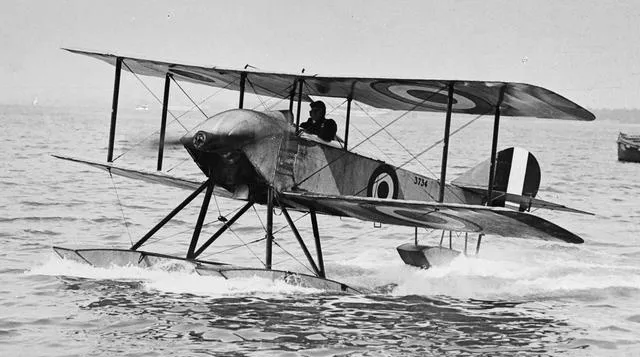
Sopwith Schneider (modified Sopwith Tabloid) at the Schneider Trophy in Monaco, 1914.
The Sopwith Tabloid and Sopwith Schneider (floatplane) were British biplanes, originally designed as sports aircraft and later adapted for military use. They were among the first successful types to be built by the Sopwith Aviation Company. The "Tabloid", so named because of its small size, caused a sensation when it made its first public appearance.
A floatplane variant was prepared in under a month and entered for the 1914 Schneider Trophy race where it was piloted by Howard Pixton. This aircraft won the competition against minimal opposition.
Production orders for both types were placed by the military, and although a few Gnome Lambda-powered Tabloids saw limited service in the early war years, some Schneiders were still in Naval service four years later, at the end of the First World War.
The first order, for twelve "Schneider" floatplane aircraft, was placed in November 1914 by the Royal Naval Air Service. Like the race winner, these were powered by the 100 hp (75 kW) Monosoupape and differed only in minor detail from the racer - most noticeably in the redesigned tail float. Later production aircraft were fitted with ailerons in place of wing-warping, and were fitted with a Lewis gun firing upwards through an opening in the wing centre-section, and development would lead to the Sopwith Baby. Wikipedia
 Wikipedia Sopwith Schneider