Parasol (Morane) (Total: 41, Canadian: 0, Group 0)
Morane Parasol (Morane)
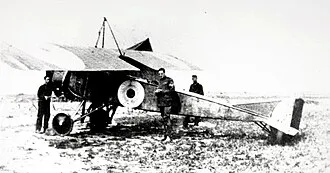
Wikipedia San Diego Air & Space Museum
The Morane-Saulnier L, or Morane-Saulnier Type L, or, officially, MoS-3, was a French parasol wing one- or two-seat scout aeroplane of the First World War. The Type L became one of the first successful fighter aircraft when it was fitted with a single machine gun that fired through the arc of the propeller, which was protected by armoured deflector wedges. Its immediate effectiveness in this role launched an arms race in fighter development, and the Type L was swiftly rendered obsolete. The original Type L used wing warping for roll control, but a later version designated Type LA was fitted with ailerons.
Built by Morane-Saulnier, large numbers of the Type L were ordered by the French Aviation Militaire at the outbreak of the war. In total about 600 Type Ls were built and, in addition to the French air force, they served with the Royal Flying Corps, Royal Naval Air Service and the Imperial Russian Air Service.
The type was also produced under license in Germany by Pfalz Flugzeugwerke as the unarmed A.I and A.II scouts (with 80 HP and 100 HP Oberursel engines respectively). About 60 were built for Bavarian air service. A few were later modified as the E.III fighters. A few Type Ls captured by Germany were fitted with a single German Spandau LMG 08 machine gun. These captured and converted aircraft are often mistaken for Pfalz E.IIIs.
About 450 aircraft were licence-built in Russia by Duks and Lebed works. The Morane-Saulnier L was also built under licence in Sweden with some minor improvements as the Thulin D.
In December 1914 the famous French aviator Roland Garros, then serving with Escadrille 23, worked with Raymond Saulnier to create a gun synchronizer, using the gas operated Hotchkiss light machine gun. However, the firing rate fluctuated too much for the synchronizer to function properly. As an interim measure, they then designed a "safety backup" in the form of braced "deflectors" (metal wedges) fitted to the rear surfaces of the propeller blades at the points where they could be struck by a bullet. Garros took his Type L fighter into combat with the deflectors in March 1915 and achieved immediate success, shooting down three German aircraft in April, a noteworthy feat at the time. The bullets that the French used were not likely to damage the harder steel of the wedges themselves. On 18 April 1915, Garros' deflector-equipped Type L force-landed behind German lines and was captured before he could destroy it.
About 50 Type Ls were delivered to Britain's Royal Flying Corps, which used them as reconnaissance aircraft during 1915, with a further 25 being operated by the Royal Naval Air Service. On 7 June 1915 one of these aircraft, flown by Flight Sub-Lieutenant Reginald Alexander John Warneford of 1 Squadron RNAS intercepted the Deutsches Heer-flown Zeppelin LZ.37, destroying it, the first Zeppelin to be destroyed in the air. Warneford received the Victoria Cross for this achievement.
Cecil Lewis served with the RFC's Squadron Number 3 in 1916 through the Somme offensive. He flew the Type LA "Parasol" (as it was known) operationally, for over three hundred hours and was awarded the Military Cross. Most of that flying was conducted on a single airframe, RFC serial 5133. Wikipedia
 Morane Parasol