Model 7 (Total: 13, Canadian: 1, Group 0)
Fleet Model 7
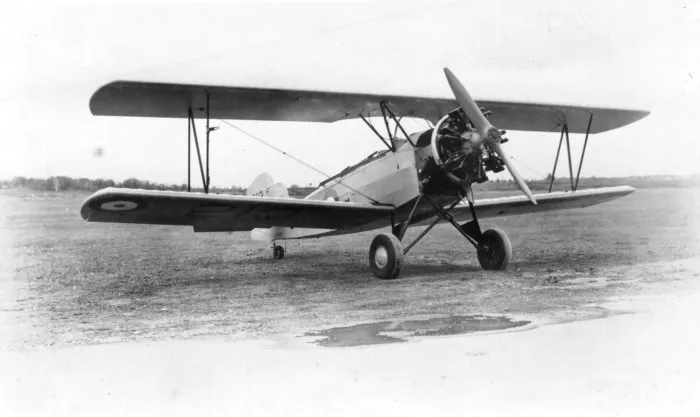
Source Shue Aero.com
The Fleet line of aircraft are a family of two-seat trainer and sports biplanes produced in the United States and Canada in the 1920s and 1930s. They all shared the same basic design and varied mainly in their powerplants.
The Model 7 Fawn holds a special place in the Fleet story. Named with the gentle elegance typical of interwar aircraft nomenclature, the Fawn was an open-cockpit two-seat primary trainer that saw meaningful production — between 64 and 71 examples — and served with several operators. The Fawn represented a maturation of the Fleet formula: a proven airframe, reliable powerplant (Kinner B-5 engine), and the kind of honest flying characteristics that instructors valued. For many pilots of the late 1920s and early 1930s, the Fawn was their first aircraft.
The Fleet Model 7B and Model 7C, known respectively as Fawn I and Fawn II were purchased by the RCAF as primary trainers. After years of reliable service, many were available for use in the British Commonwealth Air Training Plan during the Second World War while others remained as station "hacks." Wikipedia
 Fleet Fawn
Model 7 7B serial CF-CEQ
s/n CFCEQ
c/n 68
CF-CEQ
Known Units:
Loaned to London Flying Club. With Toronto Flying Club when registration transferred from DND to DOT. Registered to a private owner in 1942, but this registration was not taken up. Registered to T.B. Fawcett of Stoney Creek, Ontario on 8 January 1946. Several subsequent owners, mostly in north-west Ontario. Withdrawn from use by 14 April 1950, reported dismantled at that time. Certificate of Airworthiness re-issued in 1976, aircraft reported based at Windsor, Ontario in 1999.last update: 2026-November-04
1940-August-24 Ownership Transferred Registration transferred to Department of Transport 2019-08-20