Maple Leaf (Total: 1, Canadian: 0, Group 1)
Canada Car and Foundry Maple Leaf
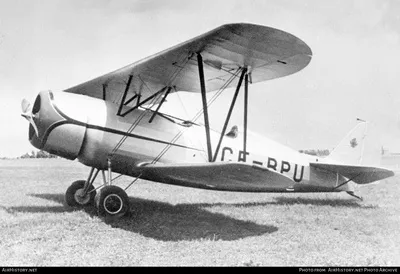
Source AirHistory.net Photo Archive
Ingenium Archives, CAVM Photograph Collection, CAVM-11663
In 1937, Canadian Car and Foundry obtained rights to the Wallace Trainer designed by Leland Stamford Wallace. The nearly-complete project was a biplane with two open cockpits, powered by a Kinner B-5 engine. Featuring welded steel-tube fuselage, ailerons and tail with a wing structure utilizing spruce spars and ribs, the aircraft was fabric covered, except for aluminum panelled cockpit and engine areas. Canadian Car and Foundry renamed it the Maple Leaf I.
In 1938, once the Maple Leaf I was complete, the new Chief Designer Elsie McGill began work on the Maple Leaf II, which, except for the use of the fin and rudder from the earlier aircraft, was a new design. A conventional structure based on welded steel tube fuselage and steel-tube tail, aluminum alloy ribs with wooden wings was employed. Designed around British design requirements for strength, the Maple Leaf II was intended to be fully aerobatic. In order to expedite development and to ensure no interruption in the ongoing Hawker Hurricane production lines, a number of components were "farmed out" to sub-contractors.
Although it was intended for use as a basic trainer for the Royal Canadian Air Force, it was rejected and the only completed airframe was sold to Mexico, the remaining nine aircraft were later built there. Wikipedia
 CCF Maple Leaf ll