F.E.8 (Total: 119, Canadian: 0, Group 0)
Royal Aircraft Factory F.E.8
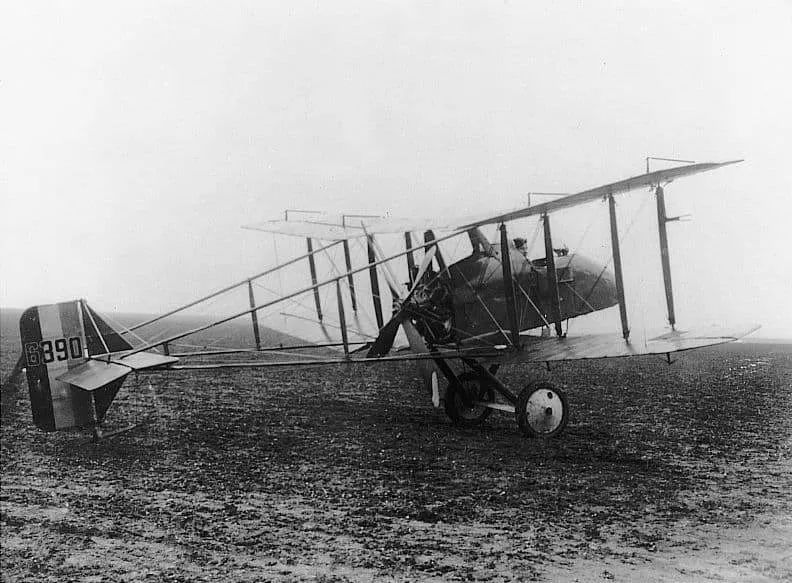
The Royal Aircraft Factory F.E.8 is a British single-seat fighter of the First World War designed at the Royal Aircraft Factory. It could not escape the drag penalty imposed by its tail structure and was no match for the Albatros fighters of late 1916.
The F.E.8 was an early British "scout" aircraft, designed from the outset as a single-seat fighter. In the absence of a synchronization gear to provide a forward firing machine gun for a tractor scout such as the S.E.2, it was given a pusher layout.Its first flight was made on 15 October 1915 and the test pilot was satisfied with the aircraft's handling. The aircraft was then armed with a single Lewis gun, which was originally fitted on a movable mount within the nose of the nacelle, with the machine gun's breech almost at the pilot's feet. This proved awkward in practice, and in production machines the gun was mounted directly in front of the pilot, in the manner of the D.H.2.
After a fairly good start, the F.E.8 units quickly ran into problems with the new German fighters. The only ace on the type was Edwin Benbow who was credited with shooting down a German fighter on 6 March 1917, probably that of Manfred von Richthofen, who force landed with a holed fuel tank and narrowly escaping incineration.
Just three days later, on 9 March, 40 Squadron was again involved with Jagdstaffel 11, when nine F.E.8 were engaged by five Albatros D.IIIs led by Richthofen. Four F.E.8s were shot down, four others badly damaged, and the survivor caught fire when landing. After this disaster No. 40 Squadron was re-equipped with Nieuport 17s but No. 41 kept their pushers until July 1917 – becoming the last single-seat pusher fighter squadron in France, using them for ground attack duties during the Battle of Messines. Wikipedia
 F.E.8