DH. 1 (Total: 4, Canadian: 1, Group 0)
Airco DH. 1
All Aero.com
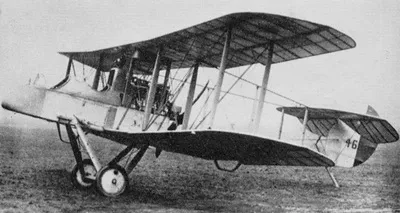
The Airco DH.1 was an early military biplane of typical "Farman" pattern flown by Britain's Royal Flying Corps during World War I. By the time the powerplant for which it was designed was sufficiently plentiful it was obsolete as an operational aircraft, and apart from a few examples sent to the Middle East it served as a trainer and Home Defence fighter.
Geoffrey de Havilland was one of the pioneering designers at the Royal Aircraft Factory and was partially or wholly responsible for most prewar "Factory" designs. When he left to become chief designer at The Aircraft Manufacturing Company (Airco) in 1914, his first design was strongly reminiscent of the F.E.2, one of the last designs on which he had worked at the Royal Aircraft Factory.
Like the F.E.2, the DH.1 was of pusher configuration, accommodating its pilot and observer in two open tandem cockpits in the nose. The observer's cockpit was stepped down below the pilot's and equipped with a machine gun.
The DH.1 saw operational service only in the Middle East theatre, where six Beardmore-powered DH.1As arrived in July 1916. These were used by No. 14 Squadron RFC as escorts for their B.E.2 reconnaissance aircraft. An Aviatik two-seater was claimed by a 14 Squadron D.H.1A on 2 August 1916 for the only known victory of the type. The last known action by a DH.1 was on 5 March 1917, when one was shot down during a bombing raid on Tel el Sheria. No. 14 Squadron became an R.E.8 unit in November 1917; it seems probable that the last operational DH.1 had gone before that date.
The other DH.1s served in training, with 43 aircraft allotted and Home Defence units in the United Kingdom receiving an additional 24 aircraft, finally being withdrawn from service in 1918. Wikipedia
 DH.1
DH. 1 serial A1611
s/n A1611
Savages Ltd.
A 1611
Known Units:
last update: 2026-August-19