Courier (Total: 1, Canadian: 1, Group 1)
Helio Courier
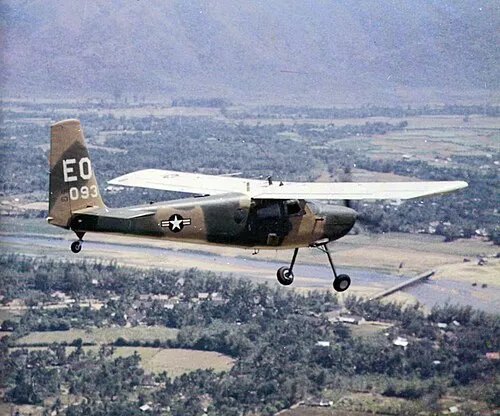
Source Wikipedia
The Helio Courier is a mid-weight, utility, piston-powered aircraft known for its exceptional short takeoff and landing (STOL) capabilities, making it ideal for rugged and remote environments. Production efforts aimed at meeting the needs of bush pilots and small aviation markets, missionary aviators and Alaskan air taxis.
It was designed in 1949 and produced by Helio Aircraft Company from 1954 to 1974. The design featured four leading-edge slats that deployed automatically, and large trailing-edge flaps. The engine was the 295 hp Lycoming GO-480, which had a gearbox that lowered the output RPM and allowed for the use of a large three-bladed propeller to further improve takeoff performance. Couriers were famous for their takeoffs, which often took only a few plane lengths and then climbed at very high angles. During airshow demonstrations, it was common for the aircraft to actually take off across a 100-to-200-foot-wide (30 to 61m) runway.
In 1955, components for three aircraft (c/ns 001-003) were made by Fleet Aircraft Canada, and shipped to Helio Aircraft at Canton,MA, where they were assembled into complete aircraft. The fourth set of components, c/n 004, was assembled by Fleet and registered CF-IBF. At this time Fleet encountered financial difficulties and the Helio agreement was cancelled, but two more aircraft sets of parts (c/n 005 and 006); rather than components, that were already built were sent to Helio for assembly. While Helio refered to c/n 001-006 as Canadian-made, actually CF-IBF was the only Helio completely constructed, assembled and flown in Canada.
Air America, the airline covertly owned by the CIA, flew Couriers into short, rough strips in Southeast Asia, and the US Air Force operated L-28 and U-10 aircraft with the 5th Air Commando Squadron in Vietnam. Wikipedia
 Helio Courier
Courier serial
c/n 004
Fleet Aircraft Ltd
Known Units:
Only completely Canadian built Courier. Evaluated by the Evaluation Planning Group, Army Headquarters, summer of 1956. Tested at Ottawa, Gagetown, and Wainwright. Wire laying tests at Gagetown 4 and 5 July 1956, flown by company pilot Oldand, and Lt. G. C. Walker.last update: 2025-November-19