320 (Total: 2, Canadian: 1, Group 0)
Short 320
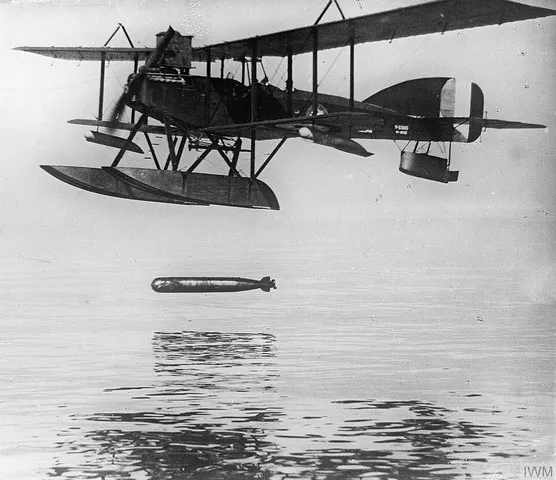
The Short Type 320 was a British two-seat reconnaissance, bombing and torpedo-carrying "folder" seaplane of the First World War. The Short Type 320 was designed to meet an official requirement for a seaplane to carry a Mark IX torpedo.
As with conventional biplane floatplanes, the torpedo was carried between the bottom of the fuselage and the floats. Unusually, the aircraft was flown from the rear cockpit, although this did cause a problem for an observer in the front seat. The observer had to stand on the coaming to use the machine-gun, which was level with the top wing. When a torpedo was carried, the aircraft could not fly with an observer at the same time.
In February 1917, 25 aircraft were ordered, and before the end of April 1917, examples were delivered to the Royal Naval Air Service in Italy. Two accidents with the aircraft, when the fuselage collapsed after the torpedo was released, delayed its use on operations. The cause was later found to be the method of securing the fuselage bracing wire.
In February 1918, due to the lack of operational experience, four aircraft were operated from Calshot for experiments with launching the torpedoes. The aircraft continued to be used as reconnaissance seaplanes until the end of the war. Wikipedia
 Short 320
320 serial 8319
s/n 8319
m/d Type B
8319
Known Units:
last update: 2026-August-19