Cooke, David Clifford (Flying Officer)
Killed in Action 1944-September-12
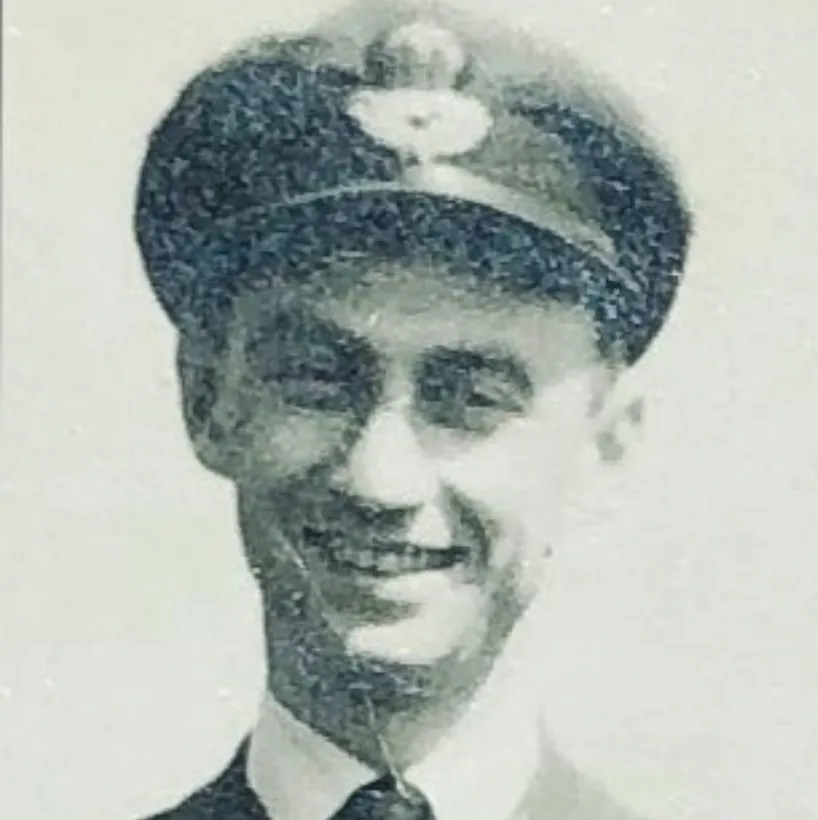

Birth Date: 1913
Born:
Parents: REVD. DAVID COOKE AND CLARA A. COOKE, OF FULWOOD, PRESTON, LANCASHIRE
Spouse: KATHLEEN COOKE.
Home:
Enlistment:
Enlistment Date: unkown date
Service
RAFVR
Unit
207 (B) Sqn- Squadron (RAF)
Semper Paratus Always prepared
Base
RAF Spilsby
Rank
Flying Officer
Position
Pilot
Service Numbers
162972
 Darmstadt Germany
Crew or Other Personnel
Lancaster LM261





Mission
Lancaster Mk.I LM261
Bombing Darmstadt Germany 1944-September-11 to 1944-September-12
207 (B) Sqn (RAF) RAF Spilsby
226 Lancasters and 14 Mosquitoes of 5 Group. 12 Lancasters lost, 5·3 per cent of the Lancaster force.
A previous 5 Group attack in August had failed to harm Darmstadt but, in clear weather conditions, the group's marking methods produced an outstandingly accurate and concentrated raid on this almost intact city of 120,000 people. A fierce fire area was created in the centre and in the districts immediately south and east of the centre. Property damage in this area was almost complete. Casualties were heavy. The deaths of 8,433 people were actually reported to police stations. This figure was made up of: German civilians - 1,766 men, 2,742 women and 2, children, 936 service personnel, 492 foreign workers and 368 prisoners of war. United States Strategic Bombing Survey,* which quotes these figures, adds that actual death figure may have been 5,000 more, because many deaths were not immediately reported by the 49,200 homeless people who were evacuated from Darmstadt most of whom did not return until after the war, if at all. A present-day Darmstadt city guide says: '12,300 dead, 70,000 homeless.'
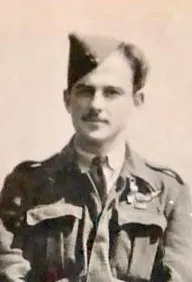
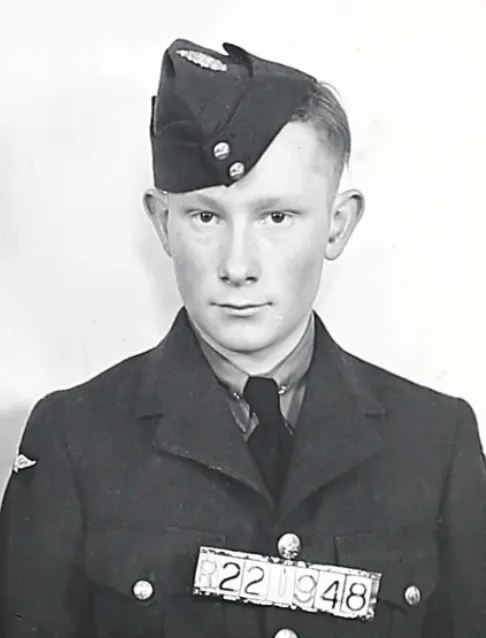
The Darmstadt raid, with its extensive fire destruction and its heavy casualties was held by the Germans to be an extreme example of R.A.F. 'terror bombing' and is still a sensitive subject because of the absence of any major industries in the city. Bomber Command defended the raid by pointing out the railway communications: passing through Darmstadt; the directive for the offensive against German communications had not yet been issued to Bomber Command, although advance notice of the directive may have been received. Darmstadt was simply one of Germany's medium-sized cities of lesser importance which succumbed to Bomber Command's improving area-attack techniques in the last months of the war when many of larger cities were no longer worth bombing. The Bomber Command War Diaries, Martin Middlebrook and Chris Everitt207 Squadron (Sernper Paratus). Lancaster aircraft LM 261 went down near Fosses, Belgium during a night raid against Darmstadt, Germany. F/Os E.J. Brian, R.B. Gowan, Pilot Officers J.J. Milne, W.L. Moxley,(RCAF), Warrant Officer J.M. Bingham (RAF), Flying Officer D.C. Cooke (RAF), and Sergeant A.H. Davies (RAF) were all killed.
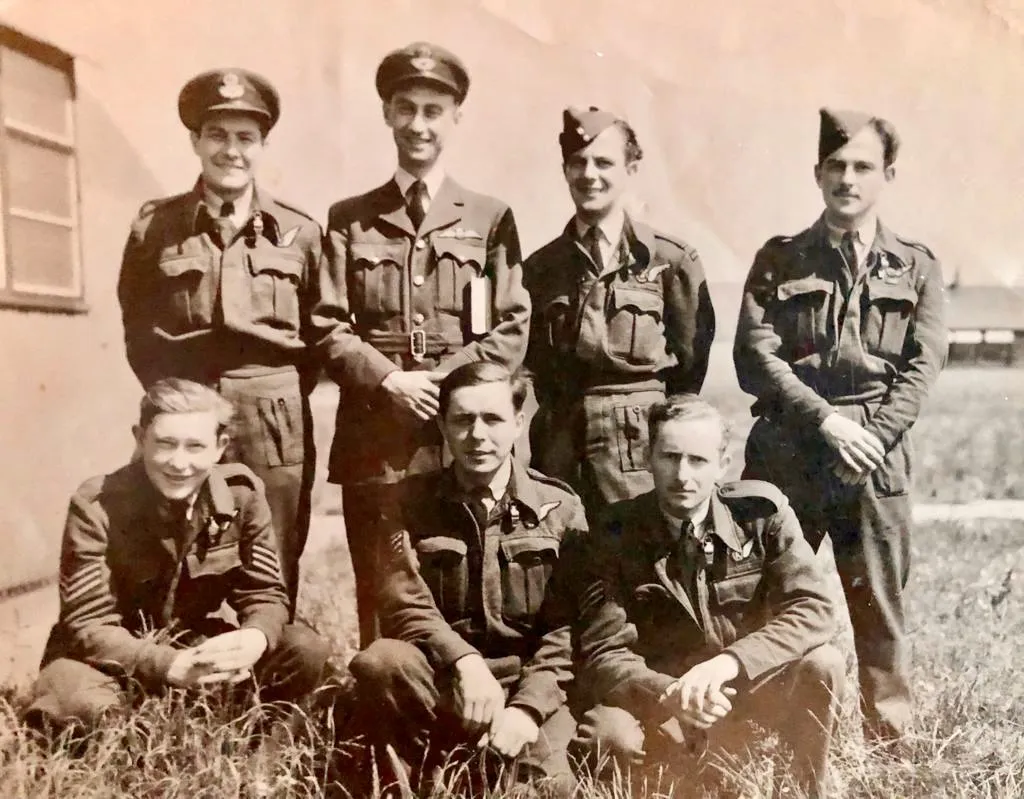
Crew of Lancaster LM261
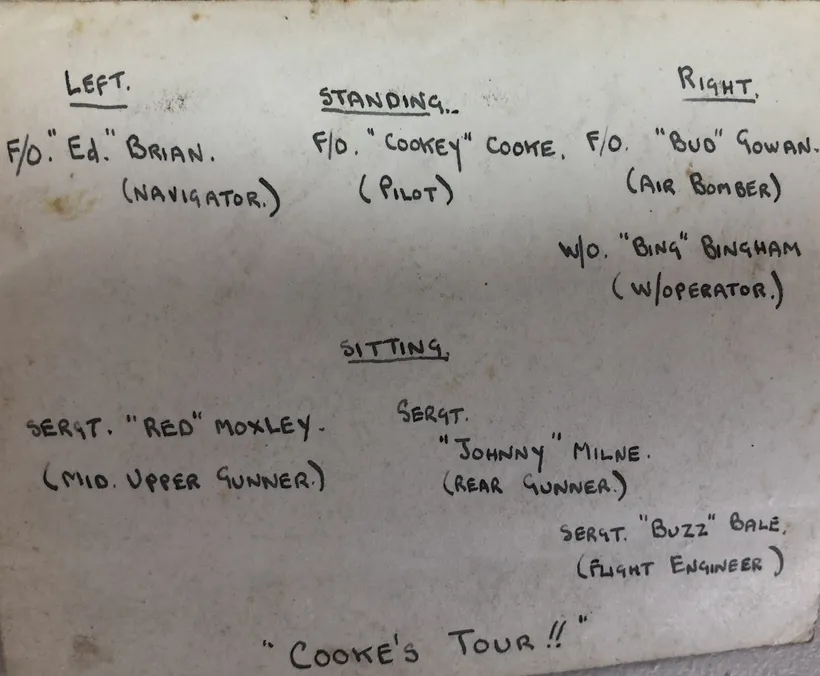
Flight Engineer Sgt Buzz BALE was replaced by Sgt Arthur DAVIES for this mission
Lancaster serial: LM261
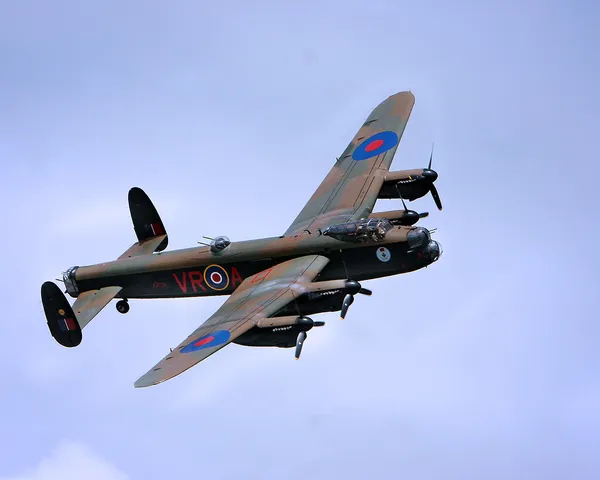
Avro Lancaster Mk. X RCAF Serial FM 213
Canadian Warplane Heritage Museum
Canadian Warplane Heritage Museum
The Avro Lancaster is a British Second World War heavy bomber. It was designed and manufactured by Avro as a contemporary of the Handley Page Halifax, both bombers having been developed to the same specification, as well as the Short Stirling, all three aircraft being four-engined heavy bombers adopted by the Royal Air Force (RAF) during the same wartime era.
The Lancaster has its origins in the twin-engine Avro Manchester which had been developed during the late 1930s in response to the Air Ministry Specification P.13/36 for a capable medium bomber for "world-wide use". Originally developed as an evolution of the Manchester (which had proved troublesome in service and was retired in 1942), the Lancaster was designed by Roy Chadwick and powered by four Rolls-Royce Merlins and in one version, Bristol Hercules engines. It first saw service with RAF Bomber Command in 1942 and as the strategic bombing offensive over Europe gathered momentum, it was the main aircraft for the night-time bombing campaigns that followed. As increasing numbers of the type were produced, it became the principal heavy bomber used by the RAF, the Royal Canadian Air Force (RCAF) and squadrons from other Commonwealth and European countries serving within the RAF, overshadowing the Halifax and Stirling. Wikipedia
 Lancaster Bomber
 Wikipedia
 Harold A Skaarup Web Page
Lancaster LM261 Mk.I - Bombing Darmstadt Germany - 1944-09-11 to 1944-09-12
Squadron: 207 (B) Sqn (RAF)
Start Date: 1944-09-11
Completion Date: 1944-09-12
Mission: Bombing
Operation: unspecified
Target City: Darmstadt Germany
Target Specific:
Base: RAF Spilsby
Take Off Time: 21:04
Squadron Code:
Radio Code:
Return Base:
Return Time:
Crash City:
Crash Specifics:
Crash Latitude: 0.00000000
Crash Longitude: 0.00000000
Crash Reason:
Flak Battery:
Enemy Claim:
War Diary Unavailable
6 Bomber Group September 11/12, 1944
18 Halifaxes from 424, 429, and 433 squadrons were ordered on a mining operation to Kiel Bay. The crews were over the garden at 15,000 feet, sowing68@1500 lb mines. Richard Koval (6bombergroup.ca)
226 Lancasters and 14 Mosquitoes of 5 Group. 12 Lancasters lost, 5·3 per cent of the Lancaster force.
A previous 5 Group attack in August had failed to harm Darmstadt but, in clear weather conditions, the group's marking methods produced an outstandingly accurate and concentrated raid on this almost intact city of 120,000 people. A fierce fire area was created in the centre and in the districts immediately south and east of the centre. Property damage in this area was almost complete. Casualties were heavy. The deaths of 8,433 people were actually reported to police stations. This figure was made up of: German civilians - 1,766 men, 2,742 women and 2, children, 936 service personnel, 492 foreign workers and 368 prisoners of war. United States Strategic Bombing Survey,* which quotes these figures, adds that actual death figure may have been 5,000 more, because many deaths were not immediately reported by the 49,200 homeless people who were evacuated from Darmstadt most of whom did not return until after the war, if at all. A present-day Darmstadt city guide says: '12,300 dead, 70,000 homeless.'
The Darmstadt raid, with its extensive fire destruction and its heavy casualties was held by the Germans to be an extreme example of R.A.F. 'terror bombing' and is still a sensitive subject because of the absence of any major industries in the city. Bomber Command defended the raid by pointing out the railway communications: passing through Darmstadt; the directive for the offensive against German communications had not yet been issued to Bomber Command, although advance notice of the directive may have been received. Darmstadt was simply one of Germany's medium-sized cities of lesser importance which succumbed to Bomber Command's improving area-attack techniques in the last months of the war when many of larger cities were no longer worth bombing. The Bomber Command War Diaries, Martin Middlebrook and Chris Everitt207 Squadron (Sernper Paratus). Lancaster aircraft LM 261 went down near Fosses, Belgium during a night raid against Darmstadt, Germany. F/Os E.J. Brian, R.B. Gowan, Pilot Officers J.J. Milne, W.L. Moxley,(RCAF), Warrant Officer J.M. Bingham (RAF), Flying Officer D.C. Cooke (RAF), and Sergeant A.H. Davies (RAF) were all killed.
Crew of Lancaster LM261
Flight Engineer Sgt Buzz BALE was replaced by Sgt Arthur DAVIES for this mission
