 Morrisburg, Ontario
 Flight Sergeant Casselman had been slightly injured on 1942-01-29 when a Bolingbroke aircraft suffered engine failure then crashed and burned two miles west of the aerodrome at 8 BR, Lethbridge, Alberta
Casselman, Donald John (Flight Sergeant)
Killed in Flying Accident 1943-April-24
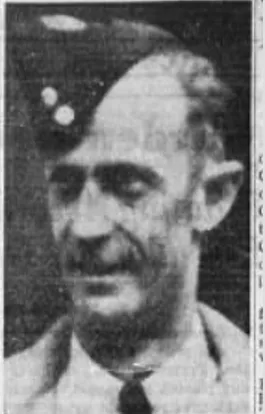

Birth Date: 1909-February-21
Born: Morrisburg, Stormont, Dundas and Glengarry United Counties, Ontario, Canada
Parents: Son of Lorne Michael Casselman & Lucy Ellen (nee Hanes) Casselman
Spouse: Husband of Winnifred Elizabeth (nee Ritchie) Casselman, of Montreal, Quebec
Home: Morrisburg, Ontario
Enlistment: Ottawa Ontario
Enlistment Date: 1939-October-26
Service
RCAF
Unit
8 (BR) Sqn- Squadron
Base
RCAF Sea Island, (Vancouver) BC
Rank
Flight Sergeant
Position
Aero Engine Mechanic
Service Numbers
R/53562
 Canadian Virtual War Memorial
 Commonwealth War Graves Commission
 Finadagrave.com
 Library and Archives Canada Service Files (may not exist)
Crew or Other Personnel
Bolingbroke 9072
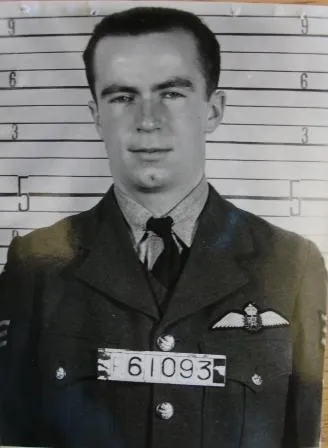
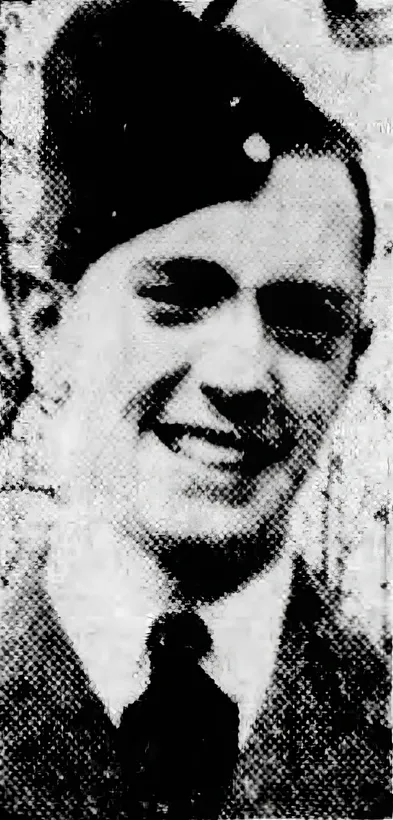
Accident Card - Bristol Bolingbroke Mk. IV serial:9072
This accident involved 1 aircraft on 1943-April-24. Bolingbroke IV s/n 9072.
This accident involved 4 people. Casselman DJ, Evernden JG, Irving JE, Sentell W
This accident had 4 fatalities. Corporal Walter Sentell RCAF Killed in Action service no:R/151882 Bolingbroke 9072, Corporal James Edward Irving RCAF Killed in Action service no:R/97750 Bolingbroke 9072, Flight Sergeant Donald John Casselman RCAF Killed in Action service no:R/53562 Bolingbroke 9072, Pilot Officer Jesse Gerald Evernden RCAF Killed in Action service no:J/14022 Bolingbroke 9072
Mission
Bolingbroke Mk. IV 9072
Operational 1943-April-24 to 1943-April-24
8 (BR) Sqn (RCAF) RCAF Sea Island, (Vancouver) BC
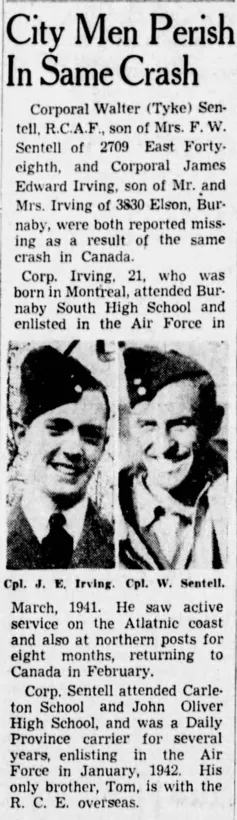
The Vancouver Province, May 1943
8 Squadron RCAF, Sea Island, British Columbia. Bolingbroke Mk IV aircraft 9072 crashed into the Fraser River one mile west of Mission, BC after striking a high tension wire during an aircraft familiarization flight. All four aircrew aboard the Bolingbroke were lost
Pilot Officer Jesse Gerald Evenden (RCAF), Flight Sergeant Donald John Casselman (RCAF) were all killed in this flying accident
Corporal Walter Sentell (RCAF) and Corporal James Edward Irving (RCAF) were missing, presumed killed in this flying accident. The missing have no known grave and are commemorated on the Ottawa Memorial
The accident investigation concluded the "unauthorized low flying" was the main cause for the crash
Quietus Last Flight, Accident Proneness in WWII, Wartime Aviation on the Canadian Home Front by Anne Gafiuk, Chapter 8
 Royal air Force serial and Image Database
Bolingbroke serial: 9072
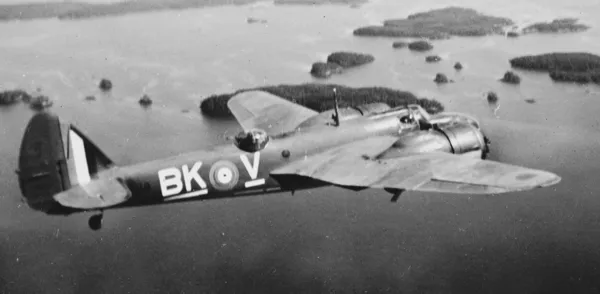
(Umeyou Photo)
Fairchild Bolingbroke Mk. IV, RCAF (Serial No. 9118), coded BK-V, No. 115 (Bomber Reconnaissance) Squadron, Patricia Bay, British Columbia, 1942.
Fairchild Bolingbroke Mk. IV, RCAF (Serial No. 9118), coded BK-V, No. 115 (Bomber Reconnaissance) Squadron, Patricia Bay, British Columbia, 1942.
The Bristol Fairchild Bolingbroke was a maritime patrol aircraft and trainer used by the Royal Canadian Air Force during the Second World War. Built by Fairchild-Canada, it was a license-built version of the Bristol Blenheim Mk IV bomber.
In 1935, the British Air Ministry issued Specification G.24/35 to procure a coastal reconnaissance/light bomber to replace the Avro Anson. Bristol proposed the Type 149, based on its Blenheim Mk I, with Bristol Aquila engines to give greater range. While the Air Ministry rejected this proposal, a Blenheim Mk I, retaining its Mercury VIII engines, was converted as a Type 149 (Blenheim Mk III) for the general reconnaissance role.The nose was lengthened to provide more room for the bombardier, with the upper left surface of the nose being scooped out to maintain pilot visibility during takeoff and landing.
The longer range also fulfilled a Canadian requirement for a maritime patrol aircraft. Consequently, Fairchild Aircraft Ltd. (Canada) of Quebec started production of the Blenheim Mk IV as the Bolingbroke (the originally intended name for the Blenheim IV). This type was nicknamed the "Bolly". After a small run of aircraft constructed to British specifications, as the Bolingbroke Mk I, Fairchild switched production to the Bolingbroke Mk IV with Canadian and American instruments and equipment. These versions also included anti-icing boots and a dinghy. One of the early Mk IV variants was the Bolingbroke Mk IVW which was powered by two 825 hp (615 kW) Pratt & Whitney SB4G Twin Wasp Junior engines. Incapable of maintaining altitude on one engine, the normal bomb load was reduced to 500 pounds on these aircraft to compensate for the low engine power. The most-produced variant was the Bolingbroke Mk IVT trainer, of which 457 were completed. A total of 626 Bolingbrokes were produced. Wikipedia
 Wikipedia Bolingbroke Bomber
 Bolingbroke Bomber WWII
 Bolingbroke - Kestrel Publications
Aircraft Images
Bolingbroke 9072
Bolingbroke Mk. IV 9072
Assigned to Western Air Command to replace Bolingbroke 9050 . First assigned to No. 8 (BR) Squadron at RCAF Station Sea Island, BC. On 24 Apr 1943, this a/c struck high-tension cables while low-flying and crashed into the Fraser River: The crew, Flying Officer J. Evernden, Flight Sergeant D. Casselman, Cpl J. Irving, and Cpl W. Sentell, all perished.1942-01-17 Taken on Strength Western Air Command 2019-08-20
1943-April-24 Accident: 8 Squadron Loc: Fraser River British Columbia Names: Casselman | Evernden | Irving | Sentell
1943-05-25 Struck off Strength Struck off, reduced to produce 2019-08-20
Bolingbroke 9072 Mk. IV - Operational - 1943-04-24 to 1943-04-24
Squadron: 8 (BR) Sqn (RCAF)
Start Date: 1943-04-24
Completion Date: 1943-04-24
Mission: Operational
Operation: unspecified
Target City:
Target Specific:
Base: RCAF Sea Island, (Vancouver) BC
Take Off Time:
Squadron Code: YO-
Radio Code:
Return Base:
Return Time:
Crash City: Canada
Crash Specifics: into the Fraser River one mile west of Mission, BC
Crash Latitude: 0.00000000
Crash Longitude: 0.00000000
Crash Reason: piloterror
Flak Battery:
Enemy Claim:
War Diary Unavailable
6 Group Unavailable
The Vancouver Province, May 1943
8 Squadron RCAF, Sea Island, British Columbia. Bolingbroke Mk IV aircraft 9072 crashed into the Fraser River one mile west of Mission, BC after striking a high tension wire during an aircraft familiarization flight. All four aircrew aboard the Bolingbroke were lost
Pilot Officer Jesse Gerald Evenden (RCAF), Flight Sergeant Donald John Casselman (RCAF) were all killed in this flying accident
Corporal Walter Sentell (RCAF) and Corporal James Edward Irving (RCAF) were missing, presumed killed in this flying accident. The missing have no known grave and are commemorated on the Ottawa Memorial
The accident investigation concluded the "unauthorized low flying" was the main cause for the crash
Quietus Last Flight, Accident Proneness in WWII, Wartime Aviation on the Canadian Home Front by Anne Gafiuk, Chapter 8
