 Guelph, Ontario
Leading Aircraftman Bates was originally memorialized on the Ottawa Memorial (Panel 1, Column 1) and he was declared to have no known grave
Bates, Theodore Scribner (Leading Aircraftman)
Killed in Flying Accident 1940-December-13
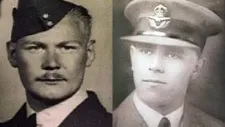

Birth Date: 1913-January-08
Born: Guelph, Ontario
Parents: Son of Theodore Arthur Thomas Bates and Grace Alida (nee Scribner) Bates of Guelph, Ontario. Brother of Thomas.
Spouse: Husband of Ruth Grace (nee Schultis) Bates, of Brantford, Ontario.
Home: Guelph, Ontario
Enlistment: Ottawa, Ontario
Enlistment Date: 1940-June-04
Service
RCAF
Unit
1 (OT) SFTS- Service Flying Training School
Base
Camp Borden, Ontario
Rank
Leading Aircraftman
Position
Pilot
Service Numbers
R/53927
 Canadian Virtual War Memorial
 Commonwealth War Graves Commission
 Finadagrave.com
This incident involved multiple aircraft:
- Nomad (Northrop) Serial: 3521
- Nomad (Northrop) Serial: 3512
All the above aircraft in the above list are referenced in this report.
Crew or Other Personnel
Nomad (Northrop) 3521


Accident Card - Northrop Nomad (Northrop) serial:3521
This accident involved 2 aircraft on 1940-December-13. They are: Nomad s/n 3521, Nomad s/n 3512.
This accident involved 2 people. Bates TS, Campbell EP
This accident had 4 fatalities. Sergeant Lionel Francis RAF Killed in Flying Accident service no:580278 Nomad (Northrop) 3512, Leading Aircraftman William James Phillip Gosling RCAF Killed in Flying Accident service no:R/60714 Nomad (Northrop) 3512,Leading Aircraftman Theodore Scribner Bates RCAF Killed in Flying Accident service no:R/53927 Nomad (Northrop) 3521, Flight Lieutenant Peter Campbell RAF Killed in Flying Accident service no:39219 Nomad (Northrop) 3521
Mission
Nomad (Northrop) 3521
Search 1940-December-13 to 1940-December-13
1 (OT) SFTS (RCAF) Camp Borden, Ontario, Canada
1 Service Flying Training School (SFTS), Camp Borden, Ontario. Nomad 3503 had gone missing after encountering poor weather conditions during a formation training flight with two other aircraft from Camp Borden on 12 December 1940. Nomad aircraft 3512 and 3521 were assigned the following day to execute a search along the projected flight path of the missing aircraft, in good flying conditions. They took off with experienced crews at 09:10 hours and were later spotted flying at about 700 feet over Lake Muskoka, flying in close formation when a mid-air collision caused both aircraft to crash into the lake
Leading Aircraftman Theodore Scribner Bates (RCAF) and Flight Lieutenant Peter Campbell (RAF) were both killed
The wreckage of Nomad 3521 was located in July 2010 using side-scan sonar. The Royal Canadian Navy's Fleet Diving Unit (Atlantic) recovered the remains and personal effects of Leading Aircraftman Bates and Flight Lieutenant Campbell in October 2012, as well as some parts of the aircraft. The main portion of the aircraft wreckage was recovered on October 29, 2014
In September 2013, both airmen were laid to rest side by side at Woodlawn Memorial Park Cemetery in Guelph, Ontario
Camp Borden Birthplace of the RCAF by 16 Wing page 115
 School Daily Diary Entry - 1940-12-13
 Royal Air Force serial and Image Database
 Recovering Nomad 3512: 72 Years Lost Beneath Lake Muskoka - YouTube
Nomad (Northrop) serial: 3521
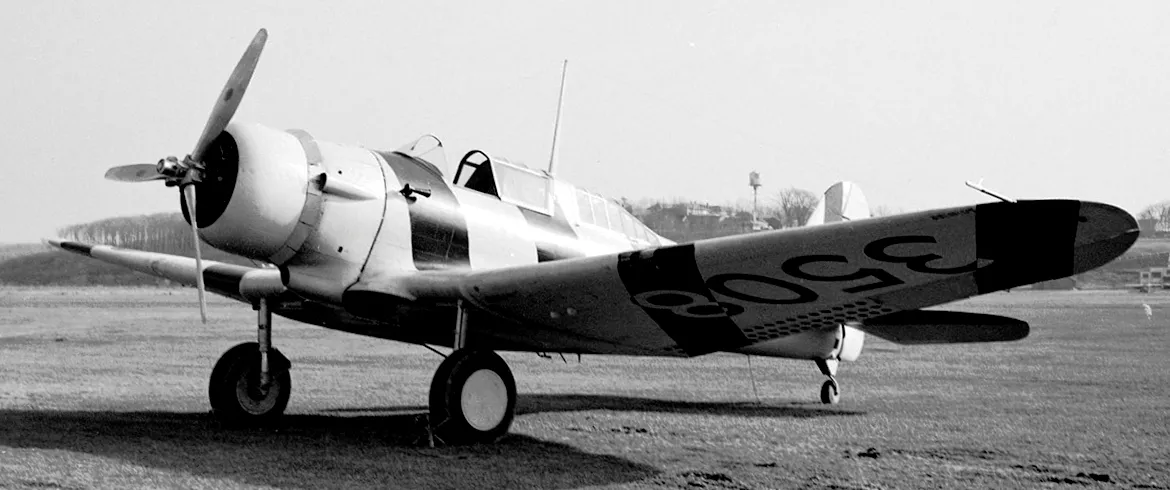
(DND Archives Photo, PL-6224)(Source Harold A Skaarup Web Page)
Northrop A-17A Nomad, RCAF (Serial No. 3508), painted with target towing stripes
, RCAF Station Rockcliffe, Ontario, 21 Nov 1941.
Northrop A-17A Nomad, RCAF (Serial No. 3508), painted with target towing stripes
, RCAF Station Rockcliffe, Ontario, 21 Nov 1941.
The Northrop A-17, a development of the Northrop Gamma 2F model, was a two-seat, single-engine, monoplane, attack bomber built in 1935 by the Northrop Corporation for the U.S. Army Air Corps. When in British Commonwealth service during World War II, the A-17 was called Nomad.
The Royal Canadian Air Force received 32 Nomads that had been part of a French order of 93 aircraft. When France fell in 1940, this order was taken over by Great Britain who transferred 32 of the aircraft to Canada where they were used as advanced trainers and target tugs as part of the British Commonwealth Air Training Plan. All were assigned to No. 3 Training Command RCAF.
Nomads were never used operationally overseas. Initially, the aircraft were used at Camp Borden to check out qualified civilian pilots who were offering their services to the air force. In 1941, the aircraft were modified to a target-towing configuration to allow for air-to-air gunnery training at various schools in Quebec and Ontario. In addition to being used by the RCAF in Canada, the Royal Norwegian Air Force trained some aircrew in exile on the A-17A at airports in Toronto and Muskoka. The RCAF Nomads were retired with the cessation of hostilities. The Nomads were not particularly outstanding aircraft, but they did provide reliable training service logging an average of approximately 3,000 flying hours each in their four and a half years of service. Wikipedia and Harold Skaarup web page
 Wikipedia Nomad Trainer
 Northrop Nomad - Kestrel Publications
Aircraft Images
Nomad (Northrop) 3521
Nomad (Northrop) 3521
Delivered marked as NX-N46. First assigned to No. 1 Service Flying Training School, Air Traffic Services, Camp Borden, Ontario. Category "A" accident on 13 Dec 1940 at Camp Borden, Ontario. Nomad #3503 had gone missing on a solo formation flight with two other a/c on 12 Dec 1940. Nomad a/c #'s 3512 and 3521 were assigned on 13 Dec 1940 in good flying conditions to execute a search along the projected flight path of the missing a/c. The a/c each took off with experienced crews at 09:10 hrs and were later spotted flying at about 700 ft over Lake Muskoka, while in close formation. The a/c then appear to have collided and both a/c crashed into the lake with the loss of both crews. The crewman on #3521 were Flight Lieutenant P. Campbell and Leading Aircraftman T.C. Bates. At the time of the crash, the total number of airframe hours was 918:05 hrs.Wreckage was not found until 2005. Plans were made to raise wreckage in 2007. Bodies recovered from wreckage in October 2012, by divers from Royal Canadian Navy's Fleet Diving Unit (Atlantic). Main wreckage recovered from lake bottom on 29 October 2014. RCAF serial was still clear, also marked "46" below serial on fuselage (part of company number and/or US civil registration it carried when delivered to Canada).
1940-08-13 Taken on Strength at Uplands, Ontario 2022-01-29
1940-December-13 Accident: 1 Service Flying Training School Loc: Lake Muskoka Names: Bates | Campbell
1940-12-13 Accident Category A 2022-01-29
1941-03-04 Struck off Strength written off 2022-01-29
Nomad (Northrop) 3512
Nomad (Northrop) 3512
Delivered marked as NX-N44. First assigned to No. 1 Service Flying Training School, Air Traffic Services, Camp Borden, Ontario. Category "A" accident on 13 Dec 1940 at Camp Borden, Ontario. Nomad #3503 had gone missing on a solo formation flight with two other a/c on 12 Dec 1940. Nomad a/c #'s 3512 and 3521 were assigned on 13 Dec 1940 in good flying conditions to execute a search along the projected flight path of the missing a/c. The a/c each took off with experienced crews at 09:10 hrs and were later spotted flying at about 700 ft over Lake Muskoka, while in close formation. The a/c then appear to have collided and both a/c crashed into the lake with the loss of both crews. The crewman on #3512 were Flight Sergeant L. Francis and Leading Aircraftman W.P. Gosling. At the time of the crash, the total number of airframe hours was 207:25 hrs.1940-08-26 Taken on Strength at Camp Borden, Ontario 2022-01-29
1940-December-13 Accident: 1 Service Flying Training School Loc: Lake Muskoka Names: Francis | Gosling
1940-12-13 Accident Category A 2022-01-29
1941-02-26 Struck off Strength written off 2022-01-29
Unit Desciption
1 (OT) SFTS (1 Service Flying Training School)
Graduates of the EFTS "learn-to-fly" program went on a Service Flying Training School (SFTS) for 16 weeks. For the first 8 weeks the trainee was part of an intermediate training squadron; for the next 6 weeks an advanced training squadron and for the final 2 weeks training was conducted at a Bombing & Gunnery School. The Service schools were military establishments run by the RCAF or the RAF.
There were two different types of Service Flying Training Schools. Trainees in the fighter pilot stream went to an SFTS like No. 14 Aylmer, where they trained in the North American Harvard or North American Yale. Trainees in the bomber, coastal or transport pilot stream went to an SFTS like No. 5 Brantford where they learned multi-engine technique in an Airspeed Oxford, Avro Anson or Cessna Crane.
Currently the site of CFB Borden. Heliport and grass strip remains. CYBN
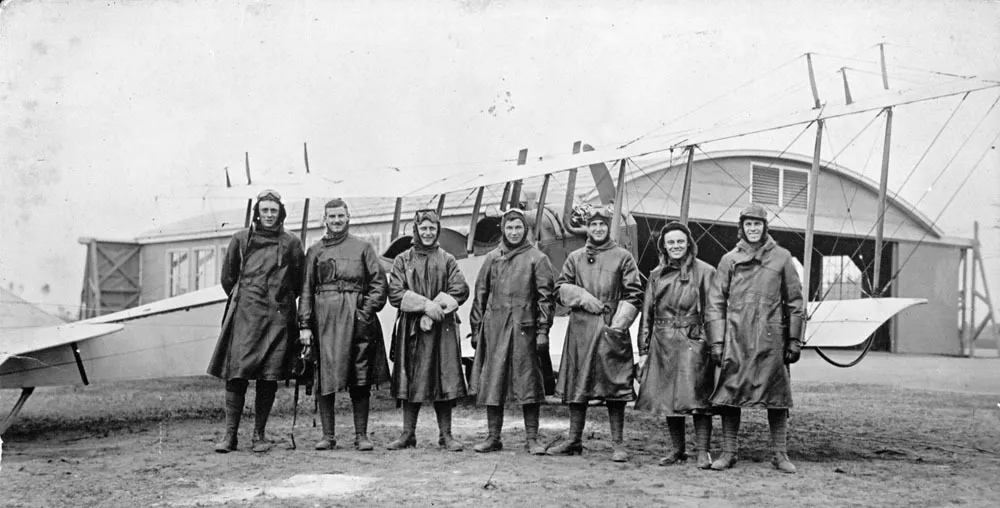
Camp Borden Class 1917
For more Information on RCAF Station Borden see here
 RCAF.info - RCAF Station Borden Ontario
RCAF.info - Relief Landing Field Edenvale Ontario
Nomad (Northrop) 3521 - Search - 1940-12-13 to 1940-12-13
Squadron: 1 (OT) SFTS (RCAF)
Start Date: 1940-12-13
Completion Date: 1940-12-13
Mission: Search
Operation: unspecified
Target City:
Target Specific:
Base: Camp Borden, Ontario, Canada
Take Off Time: 09:10:00
Squadron Code:
Radio Code:
Return Base:
Return Time:
Crash City: Canada
Crash Specifics: Lake Muskoka, Ontario
Crash Latitude: 0.00000000
Crash Longitude: 0.00000000
Crash Reason: midair
Flak Battery:
Enemy Claim:
War Diary Unavailable
6 Group Unavailable
1 Service Flying Training School (SFTS), Camp Borden, Ontario. Nomad 3503 had gone missing after encountering poor weather conditions during a formation training flight with two other aircraft from Camp Borden on 12 December 1940. Nomad aircraft 3512 and 3521 were assigned the following day to execute a search along the projected flight path of the missing aircraft, in good flying conditions. They took off with experienced crews at 09:10 hours and were later spotted flying at about 700 feet over Lake Muskoka, flying in close formation when a mid-air collision caused both aircraft to crash into the lake
Leading Aircraftman Theodore Scribner Bates (RCAF) and Flight Lieutenant Peter Campbell (RAF) were both killed
The wreckage of Nomad 3521 was located in July 2010 using side-scan sonar. The Royal Canadian Navy's Fleet Diving Unit (Atlantic) recovered the remains and personal effects of Leading Aircraftman Bates and Flight Lieutenant Campbell in October 2012, as well as some parts of the aircraft. The main portion of the aircraft wreckage was recovered on October 29, 2014
In September 2013, both airmen were laid to rest side by side at Woodlawn Memorial Park Cemetery in Guelph, Ontario
Camp Borden Birthplace of the RCAF by 16 Wing page 115
School Daily Diary Entry - 1940-12-13
Royal Air Force serial and Image Database
Recovering Nomad 3512: 72 Years Lost Beneath Lake Muskoka - YouTube
