Carpenter, Arthur Vincent (Sergeant)
Killed in Action 1941-November-08
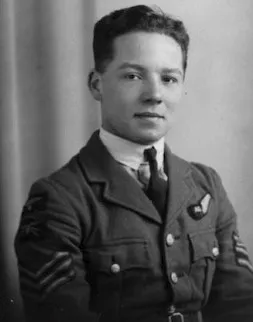

Birth Date: unkown date
Born:
Parents: ARTHUR HERBERT AND MABEL THERESA CARPENTER, OF MANCHESTER.
Spouse:
Home:
Enlistment:
Enlistment Date: unkown date
Service
RAFVR
Unit
51 (B) Sqn- Squadron (RAF)
Swift And Sure
Base
Dishforth
Rank
Sergeant
Position
Service Numbers
984207
 Berlin Germany
Crew or Other Personnel
Whitley Z9130
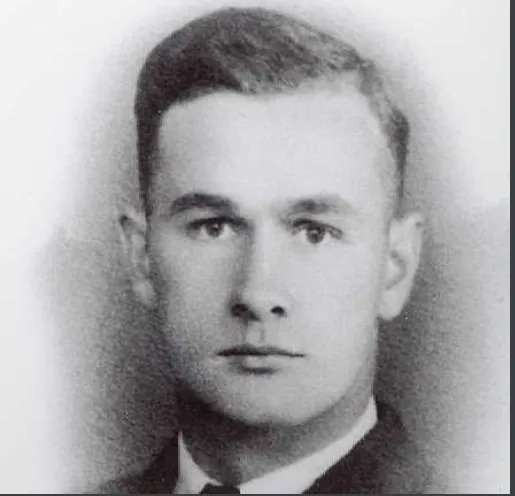

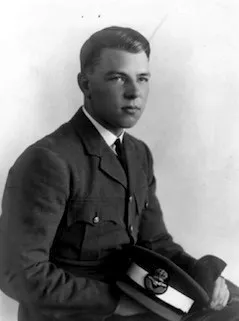

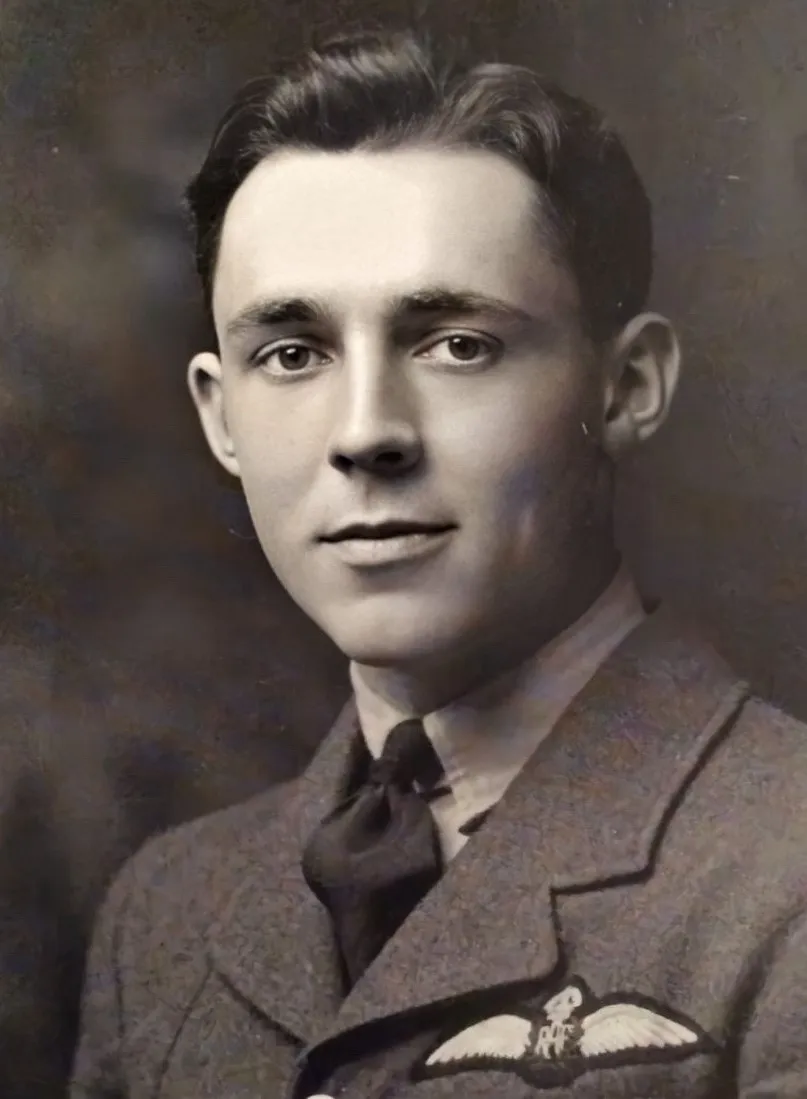
Mission
Whitley Mk. V Z9130
Bombing Berlin Germany 1941-November-07 to 1941-November-08
51 (B) Sqn (RAF) Dishforth
This raid on Berlin involved 169 aircraft - IOI Wellingtons, 42 Whitleys, 17 Stirlings, 9 Halifaxes - of I, 3 and 4 Groups. 21 aircraft- 10 Wellingtons, 9 Whitleys, 2 Stirlings -were lost, 12·4 per cent of those dispatched.
73 aircraft reached the general area of Berlin but could only claim fires on the outskirts of the city, with other results being 'unobserved'. Berlin reports scattered bombing in many areas. Premises hit by the 'bombing were: I industrial, 2 railway, 2 public utility (a gasometer at Staaken was burnt out), 2 official buildings, 30 houses, 16 wooden garden houses, and I farm building. The only buildings classed as 'destroyed' were 14 of the houses. Casualties were: 11 people killed, 44 injured, 637 people bombed out and receiving official help, with a further number going to the homes of relatives and friends. This was the last major raid on Berlin until January 1943. The Bomber Command War Diaries, Martin Middlebrook and Chris Everitt
.Whitley Mk V Z-9130 MH-F was carrying 1 x 1,000 lb., 3 x 500 lb., and 2 containers of 4 lb, incendiary bombs when it went down in the sea off the Frisian Islands as the result of enemy action
.Killed: Sergeant Arthur Vincent Carpenter RAF KIA Runnymede Memorial Panel 40. Sergeant William Martin Chambers RCAF R/61802 KIA Runnymede Memorial Panel 61. Squadron Leader Peter George Scott Dickenson RAF pilot KIA Sage War Cemetery grave 3. F. 7. Pilot Officer David Albert Simpson RCAF J/5309 KIA Sage War Cemetery grave 3. F. 6. POW: Sergeant Brian Stephen Walley RAF Stalag 383 Hohen Fels.
 Aircrew Remembered
Whitley serial: Z9130
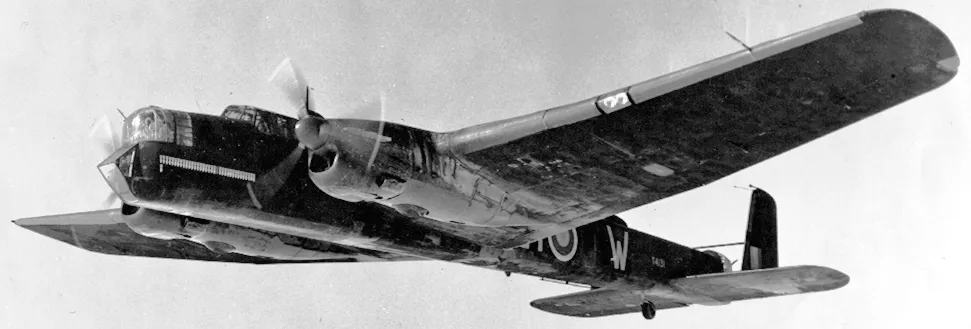
Source: Harold A Skaarup Web Page (RAF Photo)
The Armstrong Whitworth AW 38 Whitley was one of three British twin-engined, front line bomber types that were in service with the Royal Air Force (RAF) at the outbreak of the Second World War. Alongside the Vickers Wellington and the Handley Page Hampden, the Whitley was developed during the mid-1930s according to Air Ministry Specification B.3/34, which it was subsequently selected to meet. In 1937, the Whitley formally entered into RAF squadron service; it was the first of the three medium bombers to be introduced. Following the outbreak of war in September 1939, the Whitley participated in the first RAF bombing raid upon German territory and remained an integral part of the early British bomber offensive. In 1942 it was superseded as a bomber by the larger four-engined "heavies" such as the Avro Lancaster. Its front line service included maritime reconnaissance with Coastal Command and the second line roles of glider-tug, trainer and transport aircraft. The type was also procured by British Overseas Airways Corporation as a civilian freighter aircraft. The aircraft was named after Whitley, a suburb of Coventry, home of one of Armstrong Whitworth's plants.
John Lloyd, the Chief Designer of Armstrong Whitworth Aircraft, selected the Armstrong Siddeley Tiger IX radial engine to power the Whitley, which was capable of generating 795 hp (593 kW). One of the more innovative features of the Whitley's design was the adoption of a three-bladed two-position variable-pitch propeller built by de Havilland; the Whitley was the first aircraft to fly with such an arrangement. Lloyd was unfamiliar with the use of flaps on a large heavy monoplane, they were initially omitted from the design. To compensate, the mid-set wings were set at a high angle of incidence (8.5°) to confer good take-off and landing performance. Although flaps were included late in the design stage, the wing remained unaltered; as a result, the Whitley flew with a pronounced nose-down attitude when at cruising speed, resulting in considerable drag. The Whitley holds the distinction of having been the first RAF aircraft with a semi-monocoque fuselage, which was built using a slab-sided structure to ease production. This replaced the tubular construction method traditionally employed by Armstrong Whitworth, who instead constructed the airframe from light-alloy rolled sections, pressings and corrugated sheets.
The Whitley had a crew of five: a pilot, co-pilot/navigator, a bomb aimer, a wireless operator and a rear gunner. The pilot and second pilot/navigator sat side by side in the cockpit, with the wireless operator further back. The navigator, his seat mounted on rails and able to pivot, slid backwards and rotated to the left to use the chart table behind him after takeoff. The bomb aimer position was in the nose with a gun turret located directly above. The fuselage aft of the wireless operator was divided horizontally by the bomb bay; behind the bomb bay was the main entrance and aft of that the rear turret. The offensive armaments were stowed in two bomb bays housed within the fuselage, along with a further 14 smaller cells in the wing. Other sources state there were 16 "cells" total: two groups of 2 in the fuselage, and four groups of 3 in the wings, plus two smaller cells for parachute flares in the rear fuselage. Bomb racks capable of holding larger bombs were installed on the Whitley Mk III variant. Wikipedia
 Wikipedia Armstrong Whitworth Whitley
 YouTube Armstrong Whitworth Whitley
Whitley Z9130 Mk. V - Bombing Berlin Germany - 1941-11-07 to 1941-11-08
Squadron: 51 (B) Sqn (RAF)
Start Date: 1941-11-07
Completion Date: 1941-11-08
Mission: Bombing
Operation: unspecified
Target City: Berlin Germany
Target Specific:
Base: Dishforth
Take Off Time: 22;21
Squadron Code: MH-F
Radio Code:
Return Base:
Return Time:
Crash City: In the sea off the Frisian Islands
Crash Specifics:
Crash Latitude: 0.00000000
Crash Longitude: 0.00000000
Crash Reason:
Flak Battery:
Enemy Claim:
War Diary Unavailable
6 Group Unavailable
This raid on Berlin involved 169 aircraft - IOI Wellingtons, 42 Whitleys, 17 Stirlings, 9 Halifaxes - of I, 3 and 4 Groups. 21 aircraft- 10 Wellingtons, 9 Whitleys, 2 Stirlings -were lost, 12·4 per cent of those dispatched.
73 aircraft reached the general area of Berlin but could only claim fires on the outskirts of the city, with other results being 'unobserved'. Berlin reports scattered bombing in many areas. Premises hit by the 'bombing were: I industrial, 2 railway, 2 public utility (a gasometer at Staaken was burnt out), 2 official buildings, 30 houses, 16 wooden garden houses, and I farm building. The only buildings classed as 'destroyed' were 14 of the houses. Casualties were: 11 people killed, 44 injured, 637 people bombed out and receiving official help, with a further number going to the homes of relatives and friends. This was the last major raid on Berlin until January 1943. The Bomber Command War Diaries, Martin Middlebrook and Chris Everitt
.Whitley Mk V Z-9130 MH-F was carrying 1 x 1,000 lb., 3 x 500 lb., and 2 containers of 4 lb, incendiary bombs when it went down in the sea off the Frisian Islands as the result of enemy action
.Killed: Sergeant Arthur Vincent Carpenter RAF KIA Runnymede Memorial Panel 40. Sergeant William Martin Chambers RCAF R/61802 KIA Runnymede Memorial Panel 61. Squadron Leader Peter George Scott Dickenson RAF pilot KIA Sage War Cemetery grave 3. F. 7. Pilot Officer David Albert Simpson RCAF J/5309 KIA Sage War Cemetery grave 3. F. 6. POW: Sergeant Brian Stephen Walley RAF Stalag 383 Hohen Fels.
