Goldberg, Norman Myer (Sergeant)
Killed in Action 1944-May-23


Birth Date: 1922-May-13
Born: Liverpool, Metropolitan Borough of Liverpool, Merseyside, England
Parents: Son of Philip Goldberg and Rachel (nee Cohen) Goldberg, of Liverpool
Spouse:
Home: Liverpool, England
Enlistment: Padgate, Warrington, Cheshire, England
Enlistment Date: 1940
Service
RAFVR
Unit
49 (B) Sqn- Squadron (RAF)
Cave Canem Beware of the dog
Base
RAF Fiskerton
Rank
Sergeant
Position
Wireless Operator/Air Gunner
Service Numbers
1086976
Home
 Liverpool, England
Target
Brunswick Germany
Temporary Burial
Geestemunde Cemetery, Bremerhaven, Germany, near crash site
Remains were later exhumed from this location and reburied
 Commonwealth War Graves Commission
 Finadagrave.com
Crew or Other Personnel
Lancaster NE125



Mission
Lancaster Mk.III NE125
Bombing Brunswick Germany 1944-May-22 to 1944-May-23
49 (B) Sqn (RAF) RAF Fiskerton
49 Squadron (Cave Canem) RAF Fiskerton. Lancaster III aircraft NE 125 EA-K was coned by searchlights and shot down by a combination of flak battery 2/Flakschienw Abt 269 (o) Werfer 24 and night fighter pilot Oberleutnant Karl-Heinz Seeler of 5/JG302 during operations against targets in Brunswick, Germany. The Lancaster crashed in a peat-bog 1km South of Hagen, Germany with the loss of the entire crew
Flying Officer William George Wesley Johnson (RCAF), Flying Officer Frederic Allan Newell Clifton (RAFVR), Flying Officer Francis Edward Sinden (RAFVR), Sergeant Norman Myer Goldberg (RAFVR), Sergeant Ernest George Jones (RAFVR), Pilot Officer Philip Rodney Graves-Hook (RAFVR), and Flight Sergeant George Henry Little (RAFVR) were all killed in action
Nachtjagd Combat Archive 1944 Part 3 12 May - 23 June by Theo Boiten, page 19
Lancaster serial: NE125
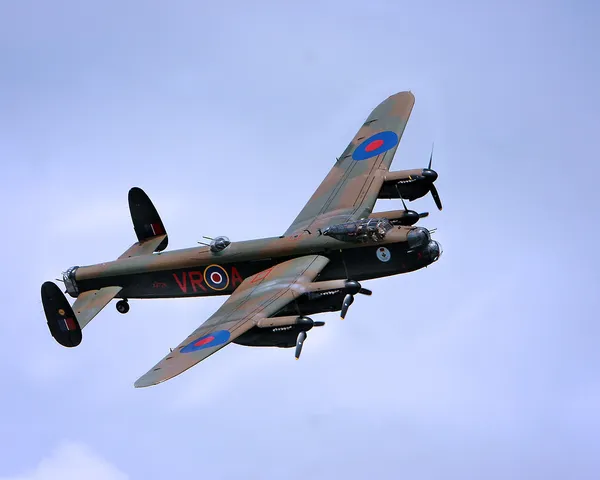
Canadian Warplane Heritage Museum
The Avro Lancaster is a British Second World War heavy bomber. It was designed and manufactured by Avro as a contemporary of the Handley Page Halifax, both bombers having been developed to the same specification, as well as the Short Stirling, all three aircraft being four-engined heavy bombers adopted by the Royal Air Force (RAF) during the same wartime era.
The Lancaster has its origins in the twin-engine Avro Manchester which had been developed during the late 1930s in response to the Air Ministry Specification P.13/36 for a capable medium bomber for "world-wide use". Originally developed as an evolution of the Manchester (which had proved troublesome in service and was retired in 1942), the Lancaster was designed by Roy Chadwick and powered by four Rolls-Royce Merlins and in one version, Bristol Hercules engines. It first saw service with RAF Bomber Command in 1942 and as the strategic bombing offensive over Europe gathered momentum, it was the main aircraft for the night-time bombing campaigns that followed. As increasing numbers of the type were produced, it became the principal heavy bomber used by the RAF, the Royal Canadian Air Force (RCAF) and squadrons from other Commonwealth and European countries serving within the RAF, overshadowing the Halifax and Stirling. Wikipedia
 Lancaster Bomber
 Wikipedia
Lancaster NE125 Mk.III - Bombing Brunswick Germany - 1944-05-22 to 1944-05-23
War Diary Unavailable
6 Bomber Group May 22/23, 1944
27 Lancasters from 408 and 419 Squadron were ordered on an attack at Dortmund. The crews were over the target at between 20,000 and 21,000 feet, releasing 104,000 lbs of high explosives and 51,000 lbs of incendiaries. According to reports, bombing fell into the south eastern sector with serious damage being caused.
2 Halifaxes from 428 Squadron were ordered on a mining operation to St. Malo. The crews were over the garden at 8,000 feet, sowing 4@1500 lb mines.
112 Halifaxes from 420, 424, 425, 426, 427, 429, 432, and 433 Squadrons were ordered on an attack of the rail yards at Le Mans. The crews were over the target at between 7,000 and 9,000 feet, releasing 826,000 lbs of high explosives. According to reports, bombing was accurate and severe damage was caused. Richard Koval (6bombergroup.ca)
49 Squadron (Cave Canem) RAF Fiskerton. Lancaster III aircraft NE 125 EA-K was coned by searchlights and shot down by a combination of flak battery 2/Flakschienw Abt 269 (o) Werfer 24 and night fighter pilot Oberleutnant Karl-Heinz Seeler of 5/JG302 during operations against targets in Brunswick, Germany. The Lancaster crashed in a peat-bog 1km South of Hagen, Germany with the loss of the entire crew
Flying Officer William George Wesley Johnson (RCAF), Flying Officer Frederic Allan Newell Clifton (RAFVR), Flying Officer Francis Edward Sinden (RAFVR), Sergeant Norman Myer Goldberg (RAFVR), Sergeant Ernest George Jones (RAFVR), Pilot Officer Philip Rodney Graves-Hook (RAFVR), and Flight Sergeant George Henry Little (RAFVR) were all killed in action
Nachtjagd Combat Archive 1944 Part 3 12 May - 23 June by Theo Boiten, page 19
 Royal Air Force Serial and Image Database
