Footprints on the Sands of Time, RAF Bomber Command Prisoners of War in Germany 1939-45 by Oliver Clutton-Brock, page 381
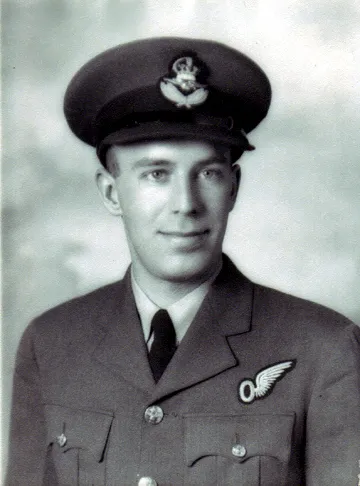
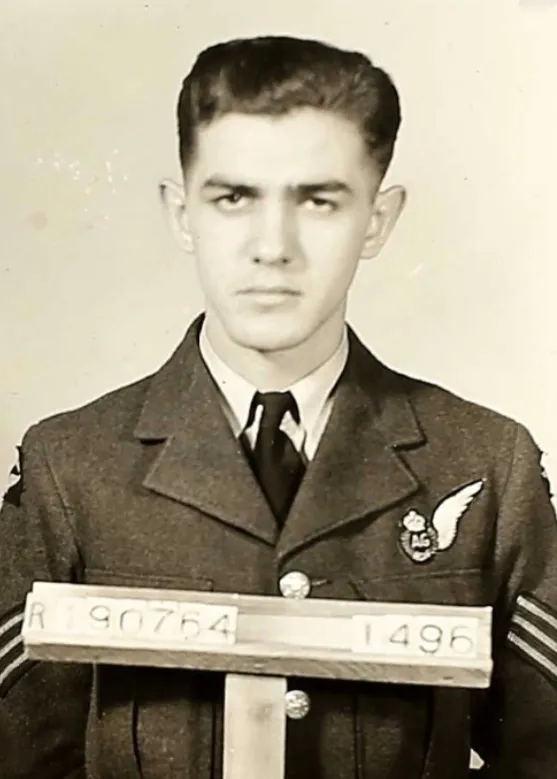
Phillips, Alfred Clarence (Sergeant)
Prisoner of War 1944-April-28


Birth Date: unkown date
Born:
Parents:
Spouse:
Home:
Enlistment:
Enlistment Date: unkown date
Service
RAFVR
Unit
432 (B) Sqn- Squadron
Saeviter Ad Lucem Ferociously toward the light
Base
RAF East Moor
Rank
Sergeant
Position
Flight Engineer
Service Numbers
1604824
PoW: 407
Target
 Montzen Belgium
Crew or Other Personnel
Halifax LW592

Mission
Halifax B/A.Mk.III LW592
Bombing Montzen Belgium 1944-April-27 to 1944-April-28
432 (B) Sqn (RCAF) RAF East Moor
144 aircraft- 120 Halifaxes, 16 Lancasters, 8 Mosquitoes-of 4, 6 and 8 Groups. The bombing force, particularly the second of the 2 waves, was intercepted by German fighters and 14 Halifaxes and I Lancaster were shot down. Only one part of the railway yards was hit by the bombing. The only Lancaster lost was that of Squadron Leader E. M. Blenkinsopp, a Canadian pilot of 405 Squadron who was acting as Deputy Master Bomber. Blen-kinsopp managed to team up with a Belgian Resistance group and remained with them until captured by the Germans in December 1944. He was taken to Hamburg to work as a forced labourer and later died in Belsen concentration camp 'of heart failure'. He has no known grave
.source: The Bomber Command War Diaries, Martin Middlebrook and Chris Everitt
Halifax BIII aircraft LW 592 QO-A missing during a raid to bomb the rail yards in Montzen, Belgium, shot down by night fighter pilot Oberleutnant Johannes Hager, Staffelkapitan of the 6/NJG 1 based at Saint-Dizier airfield in France. The Halifax crashed at Sur-les-Bois, Saint-Georges-sur-Meuse, province of Liege, Belgium
Flying Officer JW Burrows (RCAF) and Pilot Officer PE Driver (RCAF) were killed in action
Sergeant AC Phillips (RAFVR) survived and was taken as Prisoner of War
Pilot Officer HH Whaley (RCAF), Pilot Officer DC McDonald (RCAF), Pilot Officer DA McCoy (RCAF) and Flight Sergeant KJ Doyle (RCAF) survived and avoided capture as Evaders
There were three 432 Squadron Halifax III aircraft lost on this operation. Please see aircraft serials LK 807 QO-J and MZ 588 QO-W for additional information on these aircraft and crews
 Sur-les-Bois-Halifax III LW592 QO-A 432 Squadron-Halifax JD371 KN...
Halifax serial: LW592
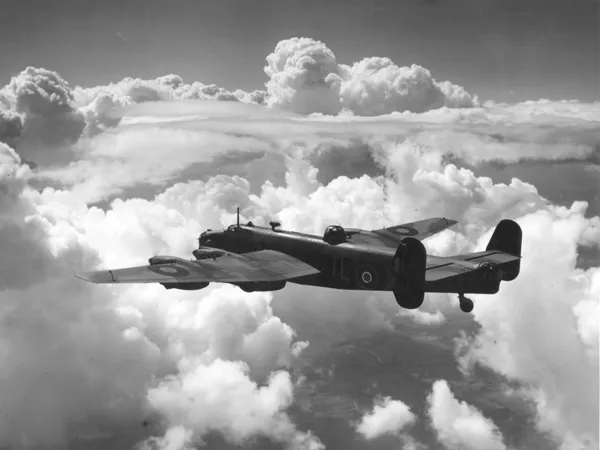
(RAF Photo, 1942)(Source Harold A Skaarup Web Page)
A Royal Air Force Handley Page Halifax Mk. II Series I (Serial No. W7676), coded TL-P, of No. 35 Squadron, RAF, based at Linton-on-Ouse, Yorkshire in the UK, being piloted by Flight Lieutenant Reginald Lane, (later Lieutenant-General, RCAF), over the English countryside. Flt Lt Lane and his crew flew twelve operations in W7676, which failed to return from a raid on Nuremberg on the night of 28/29 August 1942, when it was being flown by Flt Sgt D. John and crew.
The Handley Page Halifax is a British Royal Air Force (RAF) four-engined heavy bomber of the Second World War. It was developed by Handley Page to the same specification as the contemporary twin-engine Avro Manchester.
The Halifax has its origins in the twin-engine HP56 proposal of the late 1930s, produced in response to the British Air Ministry's Specification P.13/36 for a capable medium bomber for "world-wide use." The HP56 was ordered as a backup to the Avro 679, both aircraft being designed to use the underperforming Rolls-Royce Vulture engine. The Handley Page design was altered at the Ministry to a four-engine arrangement powered by the Rolls-Royce Merlin engine; the rival Avro 679 was produced as the twin-engine Avro Manchester which, while regarded as unsuccessful mainly due to the Vulture engine, was a direct predecessor of the famed Avro Lancaster. Both the Lancaster and the Halifax would emerge as capable four-engined strategic bombers, thousands of which would be built and operated by the RAF and several other services during the War.
On 25 October 1939, the Halifax performed its maiden flight, and it entered service with the RAF on 13 November 1940. It quickly became a major component of Bomber Command, performing routine strategic bombing missions against the Axis Powers, many of them at night. Arthur Harris, the Air Officer Commanding-in-Chief of Bomber Command, described the Halifax as inferior to the rival Lancaster (in part due to its smaller payload) though this opinion was not shared by many of the crews that flew it, particularly for the MkIII variant. Nevertheless, production of the Halifax continued until April 1945. The operational statistics from the Bomber Command War Room Manual, state 82,773 operational sorties 2,232 aircraft lost of which 1,833 were missing, in addition there were 365 anti submarine patrols with 4 aircraft lost. Halifax laid 9,572 mines according to the war manual, daily reports total 9,550 being 851x1000, 6,450x1500 and 2,248x1850 pound mines.. The Halifax was also flown in large numbers by other Allied and Commonwealth nations, such as the Royal Canadian Air Force (RCAF), Royal Australian Air Force (RAAF), Free French Air Force and Polish forces. Wikipedia
 Halifax Heavy Bomber WWII
 Wikipedia Halifax Bomber
 National Air Force Museum of Canada
Unit Desciption
432 (B) Sqn Saeviter Ad Lucem ("Leaside")
History of the Squadron during World War II (Aircraft: Wellington X, Lancaster II, Halifax III, VII)
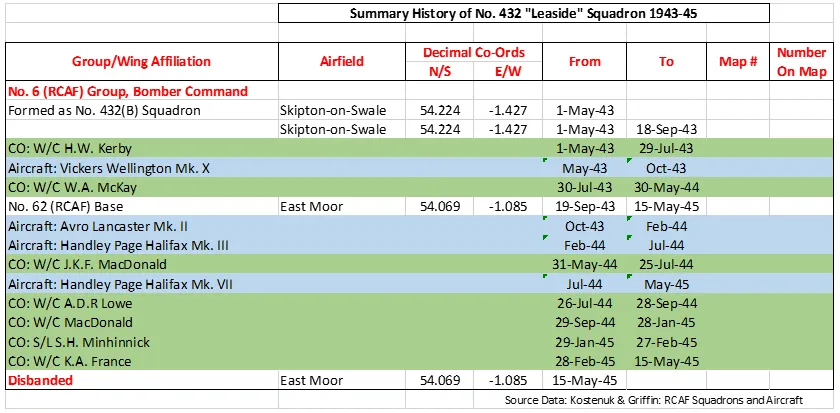
The Squadron was the twelfth RCAF bomber squadron to be formed overseas in WWII. It was formed on May 1, 1943 at Skipton-on-Swale, Yorkshire, UK as a unit of No 6 (RCAF) Group of RAF Bomber Command: indeed, it was the first bomber squadron to be formed directly into No 6 Group. Using the squadron identification letters QO it flew Vickers Wellington Mk X medium bombers until it moved to East Moor, Yorkshire on 19th September 1943, when it re-equipped with Avro Lancaster Mk II aircraft. East Moor was part of No 62 (RCAF) Base. The squadron re-equipped with Handley Page Halifax Mk III aircraft in February 1944, and with Halifax Mk VII in July of that year, and continued with them until the squadron was disbanded at East Moor on May 15, 1945.
In the course of operations the squadron flew 246 missions, involving 3130 individual sorties, for the loss of 73 aircraft. 8980 tons of bombs were dropped. Awards to squadron members included 2 DSOs, 119 DFCs,1 Bar to DFC, 1 CGM, 20 DFMs and 1 Croix de Guerre (France). Battle Honours were: English Channel and North Sea 1943, Fortress Europe 1943-44, France and Germany 1944-45, Biscay Ports 1944, Ruhr 1943-45, Berlin 1943-44, German Ports 1943-45, Normandy 1944, Rhine, Biscay 1943.Moyes, Kostenuk and Griffin
Squadron History (Bomber Command Museum PDF)
Maps for Movements of 432 Squadron 1943-45
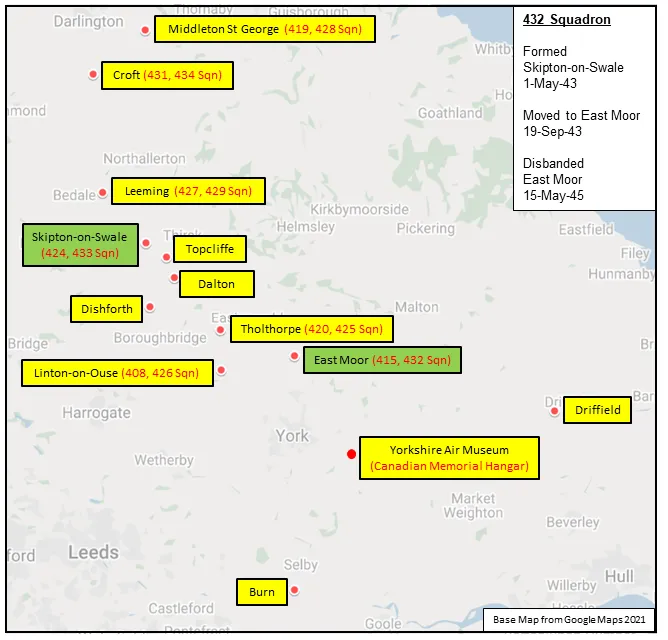
MAP 1: 432 Squadron Bases 1943-45 (marked in green). Right-click on image to display enlarged in new tab
432 Squadron History Summary 1943-45
History of the Squadron Post-WWII (Aircraft: Canuck)
The squadron was re-formed at Bagotville, Quebec as an All-Weather Fighter unit on 1 October 1954. The squadron flew Avro CF-100 Canuck aircraft on North American Air Defence until it was disbanded on 15 October 1961.
Previous Events
1943-December-17 Sergeant Survived
Lancaster Mk.IIQO K |
432 B Sqn RCAF |
Lancaster Mk.II DS832
Bombing Berlin Germany 1943-December-16 to 1943-December-17
(B) Sqn (RCAF) East Moor
Battle of Berlin
483 Lancasters and I0 Mosquitoes on the main raid and 5 further Mosquitoes dropped decoy fighter flares south of Berlin.
The bomber route again led directly to Berlin across Holland and Northern Germany and there wore no major diversions, The German controllers plotted the the course of the bombers with great accuracy; many German fighters were met T the coast of Holland and further fighters were guided on to the bomber stream throughout the approach to the target. More fighters were waiting at the target and there were many combats. The bombers shook off the opposition on the return flight by taking a northerly route over Denmark. 25 Lancasters, 5.2 per cent of the Lancaster force, were lost. Many further aircraft were lost on returning to England (see later paragraph).
Berlin was cloud-covered but the Pathfinder sky-marking was reasonably accurate and much of the bombing fell in the city. The local report says that the raid hit no identifiable aiming point but the central and eastern districts were hit more than other areas. Little industrial damage was caused; most of the bombing hit housing and railways. Conflicting figures on the number of dead are given; the overall tot may be 720, of which 279 were foreign workers - 186 women, 65 men and 28 youths 70 of these foreigners - all from the East - were killed when the train in which they were travelling was bombed at the Halensee Station. In the city centre, the National Theatre and the building housing Germany's military and political archives were both destroyed. The damage to the Berlin railway system and to rolling stock, and the large numbers of people still leaving the city, were having a cumulative effect upon the transportation of supplies to the Russian Front; 1000 wagon-loads of war material were held up for 6 days. The sustained bombing had now made more than a quarter of Berlin's total living accommodation unusable.
On their return to England, many of the bombers encountered very low cloud at their bases. The squadrons of 1, 6 and 8 Groups were particularly badly affected. Lancasters (and a Stirling from the minelaying operation) either crashed or were abandoned when their crews parachuted. The group with heaviest losses was 1 Group with 13 aircraft lost; the squadron with heaviest losses was 97 Squadron, 8 Group with 7 aircraft lost. There is a little confusion in Bomber Command records over aircrew casualties but it is probable that 148 men were killed in the crashes, 39 were injured and 6 presumed lost in the sea.
source: The Bomber Command War Diaries, Martin Middlebrook and Chris Everitt
Lancaster BII aircraft DS 832 QO-K returning from an operation to Berlin, Germany encountered poor weather conditions and heavy fog over England. The aircraft was directed north to RAF Leeming but, unable to locate Leeming and out of fuel, the aircraft was abandoned by the crew over Castleton, England. The Lancaster crashed in a peat bog north of Danby, YorkshireFlying Officer HB Hatfield (RCAF), Flight Lieutenant JA Allen (RCAF), Flying Officer JL Higgs (RCAF), Flying Officer GJ Smith (RCAF), Pilot Officer GM McGregor (RCAF), Sergeant AC Phillips (RAF), Sergeant WH Poole (RAF) and Sergeant RA Hutchinson (RAFVR) all survived the crash with various injuries. Flying Officer Hatfield with a broken leg and Sergeant Poole with serious injuries suffered exiting the bomber. The other crew members with minor or no injuries
There were two 432 Squadron Lancaster II aircraft lost on this operation. Please see Turner, HA for information on Lancaster DS 831 QO-N
Black Night for Bomber Command, The Tragedy of 16 December 1943 by Richard Knott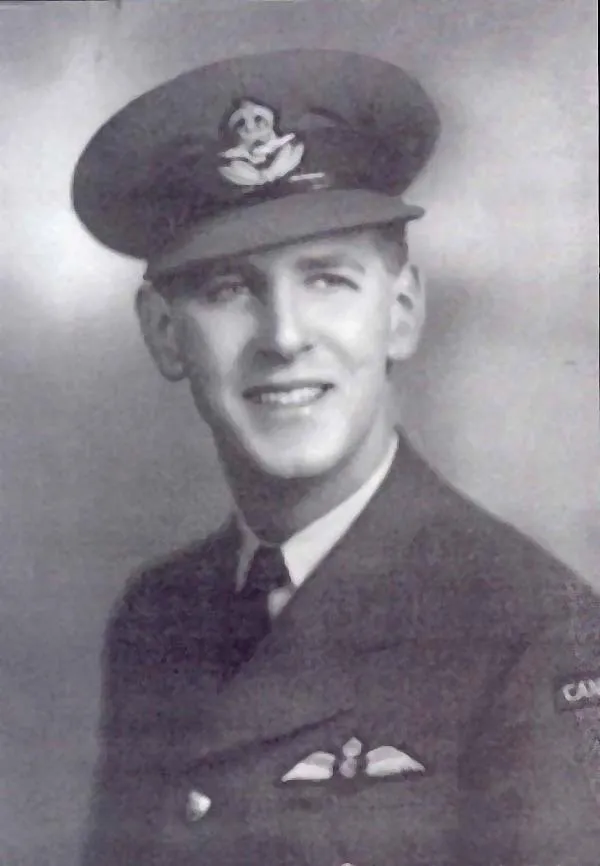
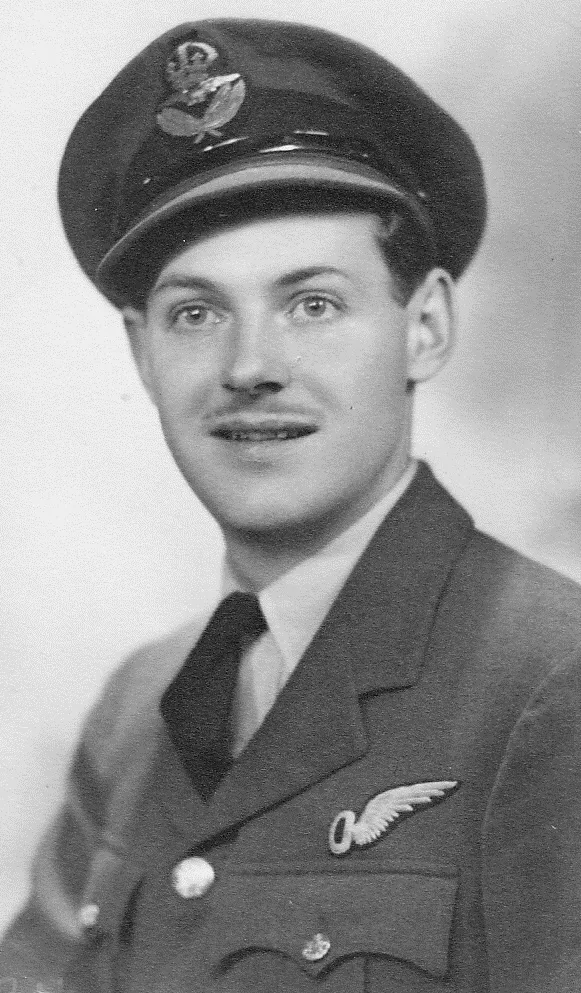
Halifax LW592 B/A.Mk.III - Bombing Montzen Belgium - 1944-04-27 to 1944-04-28
Squadron: 432 (B) Sqn (RCAF)
Start Date: 1944-04-27
Completion Date: 1944-04-28
Mission: Bombing
Operation: unspecified
Target City: Montzen Belgium
Target Specific:
Base: RAF East Moor
Take Off Time: 23:41
Squadron Code: QO-A
Radio Code:
Return Base:
Return Time:
Crash City: Belgium
Crash Specifics: Sur-les-Bois, Saint-Georges-sur-Meuse, province of Liege
Crash Latitude: 0.00000000
Crash Longitude: 0.00000000
Crash Reason: fighter
Flak Battery:
Enemy Claim: Oberleutnant Johannes Hager, Staffelkapitan of the 6/NJG 1
War Diary Unavailable
6 Bomber Group April 27/28, 1944
19 Lancasters from 408 and 426 Squadrons were ordered on an attack at Friedrichshafen. The crews were over the target at between 20,000 and 21,000 feet, releasing 48,000 lbs of high explosives and 77,000 lbs of incendiaries. According to reports, this attack was accurate with severe damage being caused. A factory making tank gearboxes was totally destroyed.
While the Lancasters went to Freidrichshafen, 47 Halifaxes from 419,431, 432, and 434 Squadrons were joined by 8 Lancasters from 419 Squadron on an attack of the rail yards at Montzen. The crews were over the target at between 13,000 and 15,000 feet, releasing 591,000 lbs of high explosives.According to reports, the attack was scattered and only half of the yards were damaged. This attack was intercepted by German Night fighters and 10 crews failed to return.
90 Halifaxes from 420, 424, 425, 427, 428, 429, and 433 Squadrons were ordered on an attack of the rail yards at Aulnoye. The crews were over the target at between 3,000 and 7,000 feet, releasing 942,000 lbs of high explosives. According to reports, the target was accurately bombed with severe damage.
8 Halifaxes from 428 Squadron were ordered on a mining operation toCherbourg. The crews were over the garden at between 12,000 and 15,000feet, sowing 16@1500 lb mines. Richard Koval (6bombergroup.ca)
144 aircraft- 120 Halifaxes, 16 Lancasters, 8 Mosquitoes-of 4, 6 and 8 Groups. The bombing force, particularly the second of the 2 waves, was intercepted by German fighters and 14 Halifaxes and I Lancaster were shot down. Only one part of the railway yards was hit by the bombing. The only Lancaster lost was that of Squadron Leader E. M. Blenkinsopp, a Canadian pilot of 405 Squadron who was acting as Deputy Master Bomber. Blen-kinsopp managed to team up with a Belgian Resistance group and remained with them until captured by the Germans in December 1944. He was taken to Hamburg to work as a forced labourer and later died in Belsen concentration camp 'of heart failure'. He has no known grave
.source: The Bomber Command War Diaries, Martin Middlebrook and Chris Everitt
Halifax BIII aircraft LW 592 QO-A missing during a raid to bomb the rail yards in Montzen, Belgium, shot down by night fighter pilot Oberleutnant Johannes Hager, Staffelkapitan of the 6/NJG 1 based at Saint-Dizier airfield in France. The Halifax crashed at Sur-les-Bois, Saint-Georges-sur-Meuse, province of Liege, Belgium
Flying Officer JW Burrows (RCAF) and Pilot Officer PE Driver (RCAF) were killed in action
Sergeant AC Phillips (RAFVR) survived and was taken as Prisoner of War
Pilot Officer HH Whaley (RCAF), Pilot Officer DC McDonald (RCAF), Pilot Officer DA McCoy (RCAF) and Flight Sergeant KJ Doyle (RCAF) survived and avoided capture as Evaders
There were three 432 Squadron Halifax III aircraft lost on this operation. Please see aircraft serials LK 807 QO-J and MZ 588 QO-W for additional information on these aircraft and crews
Sur-les-Bois-Halifax III LW592 QO-A 432 Squadron-Halifax JD371 KN...
