Squadron: 434 (B) Sqn (RCAF)
Start Date: 1943-06-11
Completion Date: 1943-06-12
Mission: Bombing
Operation: unspecified
Target City: Dusseldorf Germany
Target Specific:
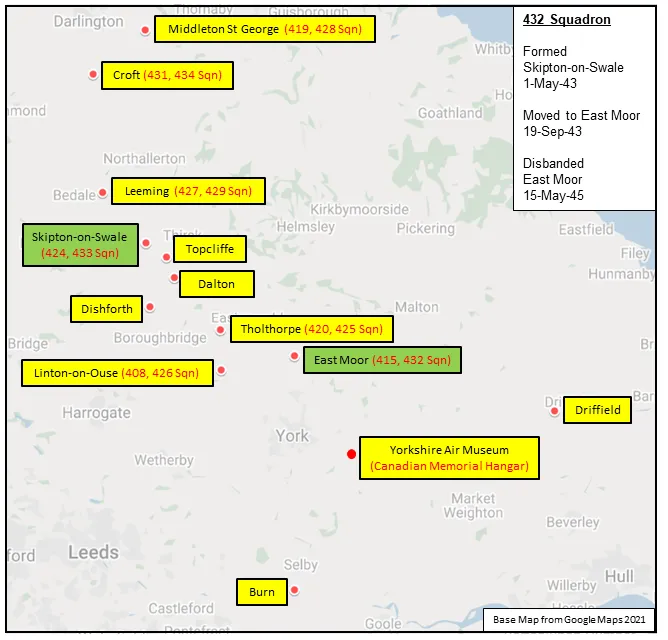
Base: RAF Skipton-on-Swale
Take Off Time: 23:19
Squadron Code: QO U
Radio Code: U
Return Base:
Return Time:
Crash City: North Sea
Crash Specifics:
Crash Latitude: 0.00000000
Crash Longitude: 0.00000000
Crash Reason: fighter
Flak Battery:
Enemy Claim:
War Diary Unavailable
6 Bomber Group June 11/12, 1943
51 Halifaxes from 408, 419, and 427 Squadrons were joined by 63 Wellingtons from 426, 428, 429, 431, and 432 Squadrons on an attack at Dusseldorf. The crews were over the target at between 12,000 and 15,000 feet, releasing 145,000 lbs of high explosives and 275,000 lbs of incendiaries. According to reports, severe damage was caused to this target.
Richard Koval (6bombergroup.ca)
783 aircraft - 326 Lancasters, 202 Halifaxes, 143 Wellingtons, 99 Stirlings, 13 Mosquitoes. This was the first night that more than 200 Halifaxes took part in a raid. 38 aircraft- 14 Lancasters, 12 Halifaxes, 10 Wellingtons, 2 Stirlings - lost, 4.9 per cent of the force.
The Pathfinder marking plan proceeded excellently until an Oboe Mosquito inadvertently released a load of target indicators 14 miles north-east of Dusseldorf. This caused part of the Main Force to waste its bombs on open country. But the main bombing caused extensive damage in the centre of Dusseldorf, where 130 acres were claimed as destroyed, and this proved to be the most damaging raid of the war for this city.
Dusseldorf reports that the fire area measured 8 km by 5 km, covering the city centre - both the old and new parts, the Dcrcndorf district and the south of the city. No less than 8,882 separate fire incidents were recorded of which 1,444 were classified as large. 1,292 people were killed. 140,000 people were bombed out of their homes. The list of destroyed and seriously damaged industrial and public buildings covered 9 typed pages in the Dusseldorf report! 42 industries connected with the war effort suffered complete stoppages of production and 35 more suffered a partial reduction 20 military establishments were hit. 8 ships were sunk or damaged. The Gau (province) local government headquarters was destroyed.
source: The Bomber Command War Diaries, Martin Middlebrook and Chris Everitt
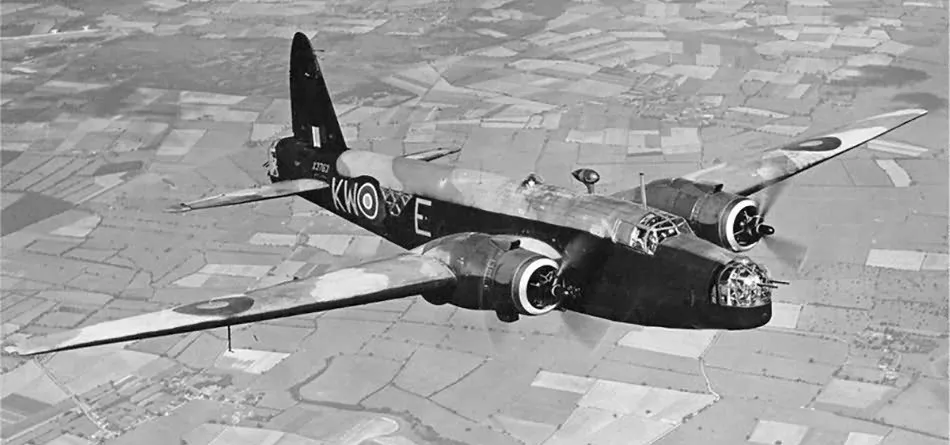
Wellington BX aircraft HE 729 QO-U failed to return from operations over Dusseldorf, Germany, lost without a trace
The Wellington crashed into the North Sea or possibly IJsselmeer, Noord-Holland. There are multiple night fighter claims for the loss of this aircraft, but neither the actual crash location or correct night fighter pilot has been absolutely identified to date
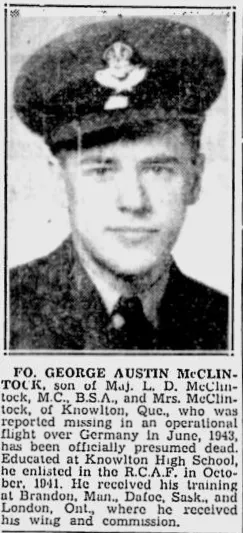
Pilot Officer HD Warner (RCAF), FS JAM Philpott (RCAF), FS DS McRae (RCAF), Flying Officer GA McClintock, (RCAF) and Flight Lieutenant LA Bourgeois (RCAF) were all missing, presumed killed in action
The missing have no known grave and are all commemorated on the Runnymede Memorial
 Aviation Safety Network
Wellington X HE729 [Royal Air Force Serial and Image Database]...
 6 Group Bomber Command
RAF Commands


 Rapid City, Manitoba
 Canadian Virtual War Memorial
 Commonwealth War Graves Commission
 Finadagrave.com
 Library and Archives Canada Service Files (may not exist)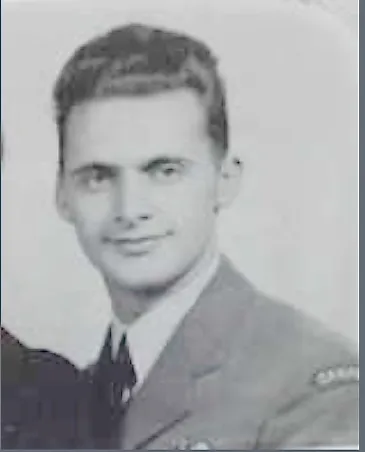


 Wikipedia Vickers Wellington
 YouTube Vickers Wellington documentary