232 Squadron (Strike). Liberator aircraft crashed. Flying Officer Wireless Operator Air Gunner McPherson was buried in the Brookwood Military Cemetery, Woking, Surrey, England. His remains were exhumed and reburied in the Cemetery at New Albany, Mississippi, USA
McPherson, George Everett (Flying Officer)
Killed in Flying Accident 1945-June-15
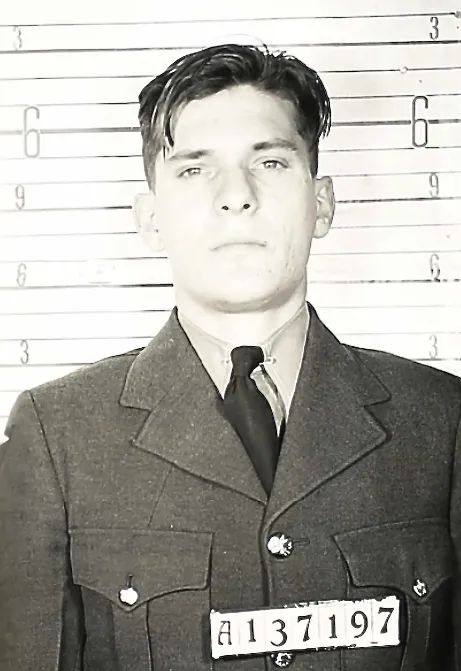

Birth Date: 1919
Born:
Parents: Son of George and Addie E. McPherson, of New Albany, husband of Lois Helen McPherson, of Northmount, Ontario.
Spouse: Husband of Lois Helen McPherson, of Northmount, Ontario.
Home: New Albany, Mississippi, USA
Enlistment:
Enlistment Date: unkown date
Service
RCAF
Unit
232 Sqn- Squadron (RAF)
Strike
Base
Rank
Flying Officer
Position
Wireless Air Gunner
Service Numbers
J/38603
Temporary Burial
 Brookwood Military Cemetery, Woking, Surrey, Uk
Remains were later exhumed from this location and reburied
 Canadian Virtual War Memorial
 Library and Archives Canada Service Files (may not exist)
Crew or Other Personnel
Liberator JT985


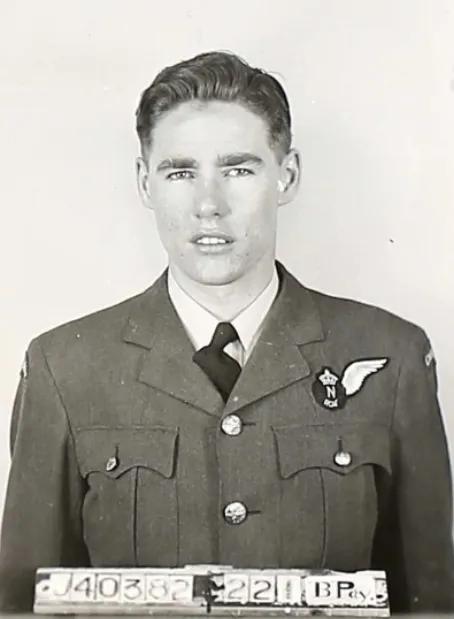
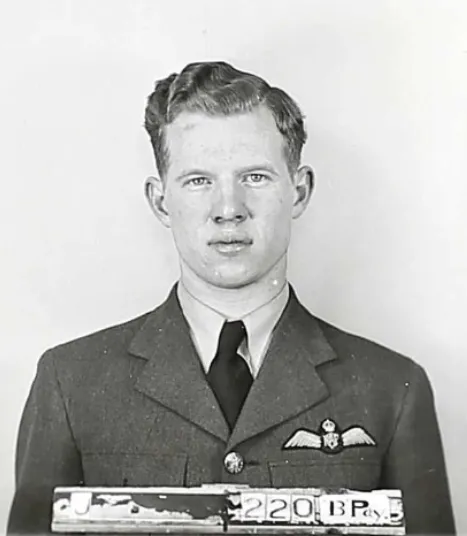
Liberator serial: JT985
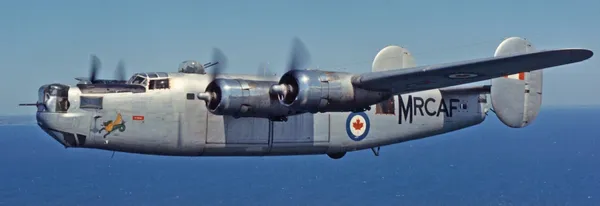
(DND Photos via James Craik) (Source Harold A Skaarup Web Page)
Consolidated Liberator G.R. Mk. VIII, RCAF (Serial No. 11130) ex-USAAF Consolidated (Vultee) B-24L Liberator USAAF (44-50154)
ex-RAF (Serial No. 5009), ex-Indian Air Force (Serial No. HE773).
Currently preserved in the Canada Aviation and Space Museum Ottawa Ontario.
Consolidated Liberator G.R. Mk. VIII, RCAF (Serial No. 11130) ex-USAAF Consolidated (Vultee) B-24L Liberator USAAF (44-50154)
ex-RAF (Serial No. 5009), ex-Indian Air Force (Serial No. HE773).
Currently preserved in the Canada Aviation and Space Museum Ottawa Ontario.
The Consolidated B-24 Liberator was an American heavy bomber flown by the RCAF during the Second Word War. It was designed with a shoulder-mounted, high aspect ratio Davis wing which gave the Liberator a high cruise speed, long range and the ability to carry a heavy bomb load. Early RAF Liberators were the first aircraft to cross the Atlantic Ocean as a matter of routine. In comparison with its contemporaries the B-24 was relatively difficult to fly and had poor low speed performance; it also had a lower ceiling compared with the Boeing B-17 Flying Fortress. Of the roughly 18,500 B-24s built in the USA during the war, 148 were flown by the RCAF on long range anti-submarine patrols, with the B-24 serving an instrumental role in closing the Mid-Atlantic gap in the Battle of the Atlantic. The RCAF also flew a few B-24s post war as transports.
Roughly half of all (RAF) Liberator crews in the China-Burma-India (CBI) Theatre were Canadian by the end of the war. John Muir of Vancouver flew the longest mission of the war: 24hrs, 10mins from Ceylon to Burma and back. (Kyle Hood) Harold Skaarup web page
 Liberator bomber
 Wikipedia Liberator bomber
 Harold A Skaarup Web Page
Supplemental Story
Consolidated Liberator JT985
The Dorset Echo, January 2021
Dorset's worst ever aeroplane crash, and another fatal aircraft accident that happened within 25 yards of it, are remembered with a Purbeck Stone memorial seat.
The two tragedies took place on North Hill above Encombe in Purbeck.
On the morning of Friday June 15 1945, with the war still raging in the Far East, Liberator JT985 of No 232 Squadron took off from RAF Holmsley South in the New Forest, on the first leg of its long flight to Palam, India.
The first refuelling stop was scheduled to be at RAF Castel Benito, near Tripoli in North Africa.
This Liberator was a passenger-carrying 'RY-3' (US designation) variant, with passenger accommodation in the former bomb bay area as well as within the main fuselage, and was distinguished easily from the twin tail fin bomber variants so well known with Coastal Command and the USAAF by it single large tailfin.
It was unarmed. The aircraft was under the command of Flt Lt Saxon Cole RCAF; other crew members were Fg Off Donald Twaddle RCAF (co-pilot), Fg Off Joseph Todd RCAF (navigator), Fg Off George McPherson RCAF (radio officer [and an American citizen]) and Sergeant George Wyke RAF (flight engineer).
The passenger load consisted not of VIPs, as was the more normal load for such a flight, but of 22 airmen being sent out as urgently needed groundcrew at Palam.
The weather at Holmsley South was poor, but both the captain and the duty executive officer considered it suitable for take off, but poor enough for a diversion to be likely if an early return was necessitated. JT985 departed at 0720 hours.
At 0745 hours, shortly after crossing the coast outbound, the aircraft reported a loss of fuel pressure.
At around 0815 hours the owner of Encombe House, Sir Ernest Scott, and a worker at Encombe dairy saw the aircraft, which was obviously below the height of the hills, and both knew instinctively that it was going to crash.
It impacted on the edge of what is now the Dorset Coastal Path, the wings were ripped off and the engines detached and were thrown forward towards Orchard Hill Farm, one wing coming to rest on the footpath (not a public footpath) in Polar Wood leading from the top of the ridge to the farm. There were no survivors.
The first to reach the scene were an RAF sergeant by the name of Reginald Reynolds, who was staying at Encombe House, and members of an Army searchlight battery located between the farm and the village of Kingston; they were soon joined by RAF personnel from, presumably, nearby RAF Worth Matravers.
The National Fire Service from Swanage was soon on the scene, as were local police officers.
When the low cloud lifted at about eleven o'clock a scene of total devastation was revealed.
The tragic remains of 27 bodies was joined by much in the way of personal belongings such as a baby's photograph, playing cards, personal notebooks, wallets and the like, together with a distinguished flying cross, thrown from its box but which was also retrieved.
The bodies of the crash victims were eventually taken away to Poole Mortuary. This was, and still is, Dorset's worst ever air crash.