Lough, Ross William (Pilot Officer)
Killed in Action 1944-July-25


Birth Date: 1921-May-07
Born:
Parents: Son of George and Victoria Lough, of Belleville, Ontario, Canada.
Spouse:
Home: Belleville, Ontario
Enlistment:
Enlistment Date: 1942-June-11
Service
RCAF
Unit
630 (B) Sqn- Squadron (RAF)
Nocturna Mors Death by night
Base
RAF East Kirkby
Rank
Pilot Officer
Position
Air Gunner (Rear)
Service Numbers
J/92127
Prev: R/105236
 Belleville, Ontario
 Canadian Virtual War Memorial
 Commonwealth War Graves Commission
 Finadagrave.com
 Library and Archives Canada Service Files (may not exist)
Crew or Other Personnel
Lancaster PA992





Mission
Lancaster Mk.I/III PA992
Bombing Stuttgart Germany 1944-July-24 to 1944-July-25
630 (B) Sqn (RAF) RAF East Kirkby
630 Squadron RAF (Nocturna Mors) RAF East Kirkby. Lancaster BIII aircraft PA 992 LE-Y missing during night operations over Stuttgart, Germany, possibly shot down by a night fighter. The bomber crashed between Tramont-Bay (Meurthe-et-Moselle) and Tramont-Lassus, France
Rear Air Gunner Pilot Officer RW Lough (RCAF) and Mid-Upper Air Gunner Technical Sergeant JB Kiesow (USAAF) were killed in action
Flying Officer AS Woolf (RAFVR) survived, injured and was taken to a POW hospital in northern France
Flying Officer EK Wood (RCAF), Sergeant TW Tanner (RAFVR), Sergeant RA Toogood (RAFVR and Flying Officer W Adams (USAAF) survived and all avoided capture as Evaders
Lancaster serial: PA992
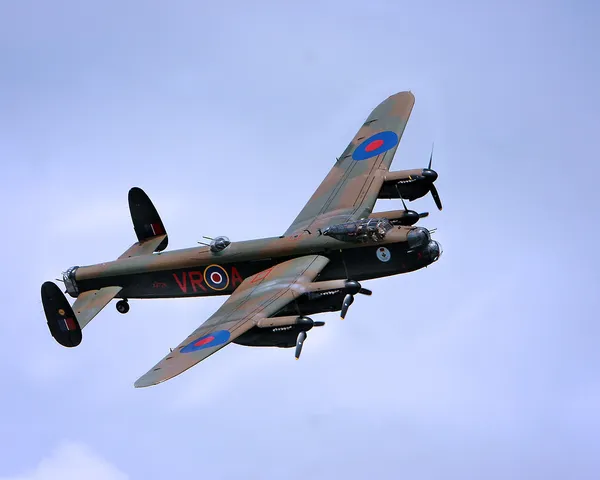
Avro Lancaster Mk. X RCAF Serial FM 213
Canadian Warplane Heritage Museum
Canadian Warplane Heritage Museum
The Avro Lancaster is a British Second World War heavy bomber. It was designed and manufactured by Avro as a contemporary of the Handley Page Halifax, both bombers having been developed to the same specification, as well as the Short Stirling, all three aircraft being four-engined heavy bombers adopted by the Royal Air Force (RAF) during the same wartime era.
The Lancaster has its origins in the twin-engine Avro Manchester which had been developed during the late 1930s in response to the Air Ministry Specification P.13/36 for a capable medium bomber for "world-wide use". Originally developed as an evolution of the Manchester (which had proved troublesome in service and was retired in 1942), the Lancaster was designed by Roy Chadwick and powered by four Rolls-Royce Merlins and in one version, Bristol Hercules engines. It first saw service with RAF Bomber Command in 1942 and as the strategic bombing offensive over Europe gathered momentum, it was the main aircraft for the night-time bombing campaigns that followed. As increasing numbers of the type were produced, it became the principal heavy bomber used by the RAF, the Royal Canadian Air Force (RCAF) and squadrons from other Commonwealth and European countries serving within the RAF, overshadowing the Halifax and Stirling. Wikipedia
 Lancaster Bomber
 Wikipedia
Lancaster PA992 Mk.I/III - Bombing Stuttgart Germany - 1944-07-24 to 1944-07-25
Squadron: 630 (B) Sqn (RAF)
Start Date: 1944-07-24
Completion Date: 1944-07-25
Mission: Bombing
Operation: unspecified
Target City: Stuttgart Germany
Target Specific:
Base: RAF East Kirkby
Take Off Time: 21:39
Squadron Code: LE-Y
Radio Code:
Return Base:
Return Time:
Crash City: France
Crash Specifics:
Crash Latitude: 0.00000000
Crash Longitude: 0.00000000
Crash Reason:
Flak Battery:
Enemy Claim:
War Diary Unavailable
6 Bomber Group July 24/25, 1944
40 Lancasters from 408, 419 and 428 Squadrons were ordered on an attack at Stuttgart. The crews were over the target at between 18,000 and 20,000feet, releasing 268,000 lbs of high explosives. According to reports, this, the first of 3 attacks severely damaged this city.
While the Lancasters went to Stuttgart, 100 Halifaxes from 420, 424,425, 426, 427, 429, 432 and 433 Squadrons were ordered on attacks of 2V-1 sites at L'Hey and Ferfay. The crews were over the targets at between12,000 and 13,000 feet, releasing lbs of high explosives. According to reports, most of the crews were sent home by the master bomber due to poor weather over the targets
.4 Halifaxes from 424 Squadron were also ordered on a mining operation to Brest and Lorient. The crews were over the garden at 12,000 feet, sowing14@1500 lb mines. Richard Koval (6bombergroup.ca)
630 Squadron RAF (Nocturna Mors) RAF East Kirkby. Lancaster BIII aircraft PA 992 LE-Y missing during night operations over Stuttgart, Germany, possibly shot down by a night fighter. The bomber crashed between Tramont-Bay (Meurthe-et-Moselle) and Tramont-Lassus, France
Rear Air Gunner Pilot Officer RW Lough (RCAF) and Mid-Upper Air Gunner Technical Sergeant JB Kiesow (USAAF) were killed in action
Flying Officer AS Woolf (RAFVR) survived, injured and was taken to a POW hospital in northern France
Flying Officer EK Wood (RCAF), Sergeant TW Tanner (RAFVR), Sergeant RA Toogood (RAFVR and Flying Officer W Adams (USAAF) survived and all avoided capture as Evaders
 [Royal Air Force Serial and Image Database]...
