Liston, Joseph Michael (Major)
PoW China 1952-August-13
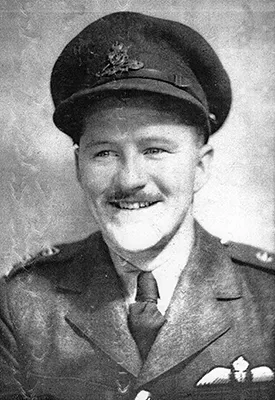

Birth Date: 1920-February-22
Born: Ottawa, Ottawa Municipality, Ontario, Canada
Parents:
Spouse: Husband of IeIene Maude (nee Norton) Liston
Home: Ottawa, Ontario
Enlistment: Ottawa Ontario
Enlistment Date: 1941
Service
Army
Unit
1903 (AOP) Sqn- Squadron (RAF)
Base
Airstrip AE111, Pusan, South Korea
Rank
Major
Position
Pilot
Service Numbers
Home
 Ottawa, Ontario
 Finadagrave.com
Mission
Auster Mk 6 VF561
Reconnaissance 1952-August-13 to 1952-August-13
1903 (AOP) Sqn (RAF) Airstrip AE111, Pusan, South Korea
Captain Joseph Michael Liston CD RCA (Royal Canadian Artillery), was flying one of his very first missions in Korea with 1903 Independent Air Observation Post Squadron RAF when his Auster AOP6 aircraft VF 561 was struck by Chinese Artillery. Captain Liston baled from his aircraft and was captured by Chinese troops. During his 13 months in Communist captivity as a Prisoner of War Captain Liston was held largely in solitary confinement and was the highest-ranking Canadian officer captured in Korea. After he was released in 1953 he stayed in the RCAF, later being promoted to Major and retired from the military in 1969
Canada's Flying Gunners, A History of the Air Observation Post of the Royal Regiment of Canadian Artillery by Lieutensnt Colonel D. L. Fromow CD, pages 63,74,81,84,85,87,88,91,95-98
 Distinguished%20Flying%20Cross%20since%20WWI, Last Flight With Dates
Aircrew Remembered Korean War Database
Auster serial: VF561
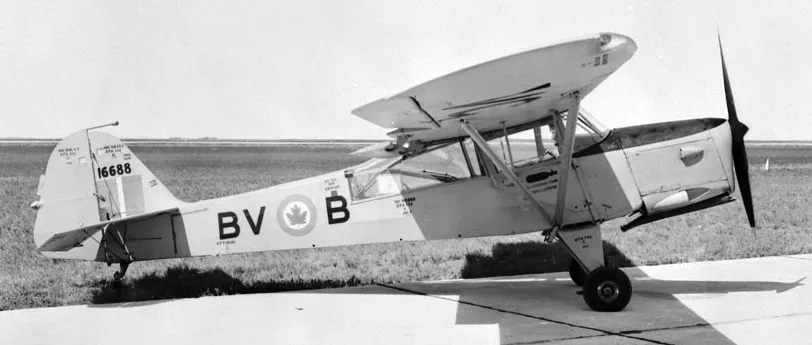
Auster T7, RCAF (Serial No. 16688), BV-B, No. 444 (Air Observation Post) Squadron, 5 Aug 1952. On 1 Oct 1947, No. 444 (Air Observation Post) Squadron was formed at the Canadian Joint Air Training Centre (CJATC) at Rivers, Manitoba, flying de Havilland Chipmunk and Auster AOP Mk. VI aircraft. These aircraft were used to train army pilots in ranging and directing artillery fire. The squadron was disbanded on 1 Apr 1949.
Taylorcraft Aeroplanes (England) Limited began in 1938 at the Britannia Works, Thurmaston near Leicester, England making light observation aircraft (designed by the Taylorcraft Aircraft Corporation of America). 1,604 high-wing Taylorcraft Auster monoplanes were built during World War II for the armed forces of the UK and Canada, primarily for the role of Air Observation Post (AOP).
During the war the head office and drawing office were at a big old house on the outskirts of Thurmaston called "The Woodlands". The fuselages and wings were manufactured at Syston under the works manager by the name of Sharp. Sheet metalwork was done at the old 'en tout cas' works at Thurmaston. Final assembly, fitting out and testing took place at Rearsby aerodrome. The name changed to Auster (after the Roman name for the south wind) on 7 March 1946, when production shifted to Rearsby aerodrome, all in Leicestershire. All designs were evolved from the early Taylorcraft with a sprung skid or tailwheel beneath the fin (except for a low-wing aircraft called the "Agricola" designed for aerial farming work; only nine of these were completed). When the company was merged into Beagle Aircraft in June, 1961, the high-wing design was developed still further as the Terrier and, with a nosewheel, the Airedale.
The various Auster models were extensively used in the UK and British colonies after World War II for a variety of activities such as AOP, mail delivery, VIP transport, private owner flights and joy rides at seaside airports and town carnivals.
The Auster name was dropped in 1962 after Beagle Aircraft was created. https://en.wikipedia.org/wiki/Auster
Auster VF561 Mk 6 - Reconnaissance - 1952-08-13 to 1952-08-13
War Diary Unavailable
6 Group Unavailable
Captain Joseph Michael Liston CD RCA (Royal Canadian Artillery), was flying one of his very first missions in Korea with 1903 Independent Air Observation Post Squadron RAF when his Auster AOP6 aircraft VF 561 was struck by Chinese Artillery. Captain Liston baled from his aircraft and was captured by Chinese troops. During his 13 months in Communist captivity as a Prisoner of War Captain Liston was held largely in solitary confinement and was the highest-ranking Canadian officer captured in Korea. After he was released in 1953 he stayed in the RCAF, later being promoted to Major and retired from the military in 1969
Canada's Flying Gunners, A History of the Air Observation Post of the Royal Regiment of Canadian Artillery by Lieutensnt Colonel D. L. Fromow CD, pages 63,74,81,84,85,87,88,91,95-98
Distinguished%20Flying%20Cross%20since%20WWI, Last Flight With Dates
Aircrew Remembered Korean War Database
LestWeForgetEnglish25May2022.pdf
