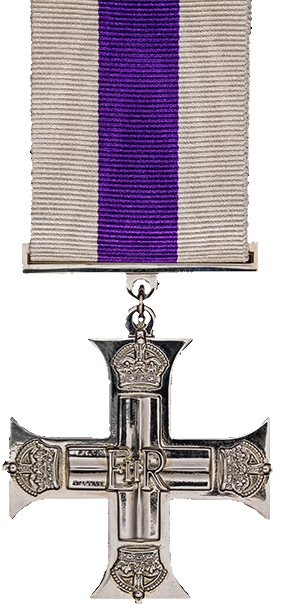
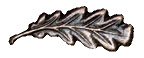
Summers transferred to the RFC on 1915-04-30 as an observer with 3 Sqn. He received Royal Aero Club Aviator's Certificate 2154 on a Maurice Farman biplane at military school, Birmingham on 1915-12-13 and returned to 3 Sqn and was appointed a F.O. on 1916-02-29, a Lieut. in July 1916, and a flight commander on 1917-03-08. He received a MiD and the MC before moving to 209 Sqn in June, 1918 where he scored 8 victories by the end of the war. He was shot down and made a PoW in 1918 and was repatriated in December, 1918. He stayed in the RAF after the war, until retiring in 1943, in Rhodesia. His date of death is not known
Summers, John Kenneth (Captain)
Prisoner of War 1918-August-12


Birth Date: 1894-December-02
Born: Shamian Island, Canton, China
Parents: J. A. Summers & ??
Spouse:
Home: Rhodesia
Enlistment: enlisted in 3rd Btn, Warwickshire Rgmt.
Enlistment Date: 1915-January-15
Service
RAF
Unit
209 Sqn- Squadron (RFC)
Base
Rank
Captain
Position
3Sq,Obs.; 209Sq, Pilot
Service Numbers
Home
 Rhodesia
Camel serial: D9637

By unknown RAF photographer - gallery link image link, Public Domain, https://commons.wikimedia.org/w/index.php?curid=8473883
The Sopwith Camel became the most successful British fighter of the First World War. The Sopwith F.1 and 2F.1 Camel first went into operations on the Western Front in 1917 and then served in virtually every theatre of Royal Flying Corps (RFC), Royal Naval Air Service (RNAS) and Royal Air Force (RAF) service. Several Canadian aces used the Camel as their mount. The Camel was very manoeuvrable, and it could be tricky to fly in the hands of a novice pilot. For experienced pilots, however, the aircraft proved to be a superb fighter.
The Camel's machine-guns were mounted on the forward fuselage with their breeches enclosed in a faired metal cowling "hump" that gave the Camel its name. Several Camels were also shipped to Canada in the post-war period as part of an Imperial gift. Three registered Sopwith F.1 Camels entered service with the RCAF at Camp Borden in 1924. The following year, the RCAF purchased seven additional aircraft to provide further spares for the active aircraft. These latter aircraft were in fact 2F.1 models that had been "navalized" variants. Used primarily by wartime experienced fighter pilots for refresher training, the Camels lasted another five years before finally being scrapped. Wikipedia
 Sopwith Camel
 Wikipedia Sopwith Camel
 Harold A Skaarup Web Page
 Sopwith Camel - Kestrel Publications