 Reston, Manitoba
467 Australia Squadron. Lancaster aircraft 4 LL 789 missing during an attack against Stuttgart, Germany. Six RAAF members of the crew were also killed.
addendum2: See page 86. Lancaster aircraft LL 789 (PO-P) missing during an attack against Stuttgart, Germany. Sgt. T. Ballantyne (RAF), FS.s P. Callow (RAAF), G.T. Kirby (RAAF), and R.G. Symonds (RAAF) were also killed. One RAAF member of the crew was taken Prisoner Of War.
Cenotaph at Reston and District Cemetery, Reston, Virden Census Division, Manitoba, Canada
Bulloch, Earl Kitchener (Flight Sergeant)
Killed in Action 1944-September-12


Birth Date: 1916-May-05
Born:
Parents: Son of James I. and Nellie Mae Bulloch, of Reston, Manitoba.
Spouse:
Home: Reston, Manitoba
Enlistment:
Enlistment Date: unkown date
Service
RCAF
Unit
467 (B) Sqn- Squadron (RAAF)
Recidite Adversarius Atque Ferociter Your opponents will retreat because of your courageous attack
Base
RAF Metheringham
Rank
Flight Sergeant
Position
Bomb Aimer
Service Numbers
R/162158
 Canadian Virtual War Memorial
 Commonwealth War Graves Commission
 Finadagrave.com
 Library and Archives Canada Service Files (may not exist)
Mission
Lancaster Mk.I LL789
Bombing Stuttgart Germany 1944-September-12 to 1944-September-12
467 (B) Sqn (RAAF) RAF Waddington, England
467 Australia Squadron. Lancaster aircraft LL 789 went missing during an attack against Stuttgart, Germany. Killed were RCAF Flt. Sgt. E.K. Bulloch; RAAF Sgt's. P. Callow, G.T. Kirby, and R.G. Symonds; and RAF Sgt. T. Ballantyne. Taken Prisoners of War was RAAF Flying Officer A.L. Bright.Lancaster serial: LL789
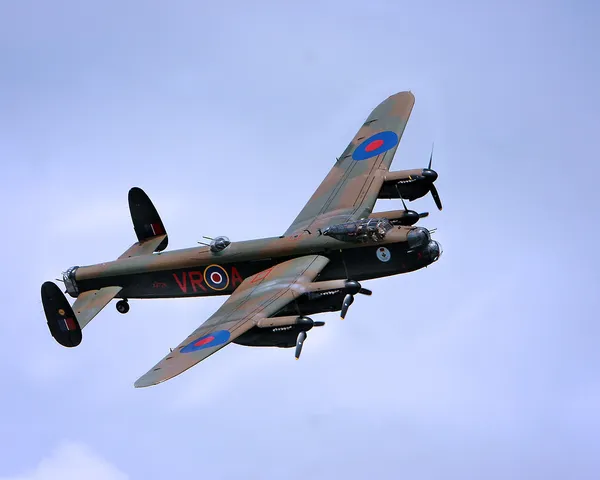
Avro Lancaster Mk. X RCAF Serial FM 213
Canadian Warplane Heritage Museum
Canadian Warplane Heritage Museum
The Avro Lancaster is a British Second World War heavy bomber. It was designed and manufactured by Avro as a contemporary of the Handley Page Halifax, both bombers having been developed to the same specification, as well as the Short Stirling, all three aircraft being four-engined heavy bombers adopted by the Royal Air Force (RAF) during the same wartime era.
The Lancaster has its origins in the twin-engine Avro Manchester which had been developed during the late 1930s in response to the Air Ministry Specification P.13/36 for a capable medium bomber for "world-wide use". Originally developed as an evolution of the Manchester (which had proved troublesome in service and was retired in 1942), the Lancaster was designed by Roy Chadwick and powered by four Rolls-Royce Merlins and in one version, Bristol Hercules engines. It first saw service with RAF Bomber Command in 1942 and as the strategic bombing offensive over Europe gathered momentum, it was the main aircraft for the night-time bombing campaigns that followed. As increasing numbers of the type were produced, it became the principal heavy bomber used by the RAF, the Royal Canadian Air Force (RCAF) and squadrons from other Commonwealth and European countries serving within the RAF, overshadowing the Halifax and Stirling. Wikipedia
 Lancaster Bomber
 Wikipedia
 Harold A Skaarup Web Page
Lancaster LL789 Mk.I - Bombing Stuttgart Germany - 1944-09-12 to 1944-09-12
Squadron: 467 (B) Sqn (RAAF)
Start Date: 1944-09-12
Completion Date: 1944-09-12
Mission: Bombing
Operation: unspecified
Target City: Stuttgart Germany
Target Specific:
Base: RAF Waddington, England
Take Off Time: 19:13
Squadron Code: PO P
Radio Code:
Return Base:
Return Time:
Crash City: Pfahibronn, Germany
Crash Specifics: about 2 km WSW of Alfdorf a small town 7 km NW of Schw_bisch- Gm_nd
Crash Latitude: 0.00000000
Crash Longitude: 0.00000000
Crash Reason:
Flak Battery:
Enemy Claim:
War Diary Unavailable
6 Bomber Group September 12, 1944
122 Halifaxes from 408, 415, 420, 425, 426, 431,432, and 434 squadrons attacked the synthetic oil plant at Wanne Eickel. The attack was carried out from 16,000 to 19,000 feet with the crew releasing 960,000 lbs of ordinance. No observations were made due to a smoke screen over the target. A great number of aircraft were damaged by flak. Richard Koval (6bombergroup.ca)
467 Australia Squadron. Lancaster aircraft LL 789 went missing during an attack against Stuttgart, Germany. Killed were RCAF Flt. Sgt. E.K. Bulloch; RAAF Sgt's. P. Callow, G.T. Kirby, and R.G. Symonds; and RAF Sgt. T. Ballantyne. Taken Prisoners of War was RAAF Flying Officer A.L. Bright.
