Harrison, Arthur Robert (Warrant Officer 1st Class)
Prisoner of War 1943-April-15


Birth Date: unkown date
Born:
Parents:
Spouse:
Home: Toronto, Ontario
Enlistment:
Enlistment Date: unkown date
Service
RCAF
Unit
424 (B) Sqn- Squadron
Castigandos Castigamus Chastise those deserving
Base
Rank
Warrant Officer 1st Class
Position
Service Numbers
R/105255
PoW: 1000
Crew or Other Personnel
Wellington HZ273
Mission
Wellington B. Mk. X HZ273
Bombing Stuttgart Germany 1943-April-14 to 1943-April-15
424 (B) Sqn (RCAF) RAF Leeming
Battle of the Ruhr
462 aircraft- 146 Wellingtons, 135 Halifaxes, 98 Lancasters, 83 Stirlings. 23 aircraft - 8 Stirlings, 8 Wellingtons, 4 Halifaxes, 3 Lancasters - lost, 5.0 per cent of the force.
The Pathfinders claimed to have marked the centre. of this normally difficult target accurately but the main bombing area developed to the north-east, along the line of approach of the bombing force. This was an example of the 'creep back', a feature of large raids which occurred when. Main Force crews- and some Pathfinder backers-up - failed to· press through to the centre of the marking area but bombed - of re-marked - the earliest markers visible. Bomber Command was never able to eliminate the creep back tendency and much bombing fell outside city areas because of it
On this night the creep back extended over the suburb of Bad Canstatt, which was of an industrial nature, and some useful damage was caused, particularly in the large railway-repair workshops situated there. The neighbouring districts of Munster and Miihlhausen were also hit and the majority of the 393 buildings destroyed and 942 severely damaged and the 200-plus civilian casualties were in these northern areas.
Only a few bombs fell in the centre of Stuttgart but the old Gedachtnis church was destroyed. In the district of Gaisburg, just east of the centre, 1 bomb scored a direct hit on an air-raid shelter packed with French and Russian prisoners of war. 257 Frenchmen and 143 Russians were killed. This tragedy brought the total death roll in Stuttgart to 619, a new record for raids to Germany
.Used by No. 424 Squadron, RCAF, in the UK, mid 1943, coded "QB*G". Shot down while on a mission to Stuttgart on 15 April 1943. All crew baled and were captured POW.
Unit Desciption
424 (B) Sqn Castigandos Castigamus ("Tiger")
History of the Squadron during World War II (Aircraft: Wellington III, X, Halifax III, Lancaster I, III)
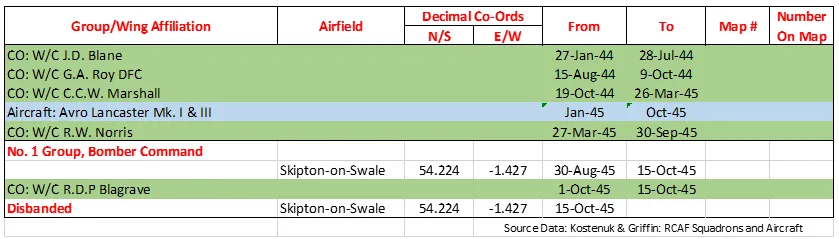
424 Squadron was the sixth RCAF bomber squadron to be formed overseas in WWII, at Topcliffe, Yorkshire, UK  on October 15, 1942, originally as part of No 4 Group of RAF Bomber Command. It remained at Topcliffe when it was transferred to the newly-formed 6 (RCAF) Group on January 1, 1943. It moved to Leeming, Yorkshire , and then Dalton, Yorkshire , flying Vickers Wellington Mk III and X aircraft before being dispatched on June 22, 1943 to No 331 (RCAF) Wing of No 205 Group in Tunisia (Kairouan/Zina and Hani East airfields), from where it flew in support of the invasions of Sicily and Italy. It returned by sea to Skipton-on-Swale, Yorkshire in October/November 1943. It re-equipped with Handley Page Halifax Mk III aircraft, which it flew until January 1945, when it re-equipped with Avro Lancaster I and III aircraft. After the termination of hostilities in Europe, the squadron was transferred to No 1 Group, and was employed in operation DODGE, the repatriation of British and Canadian troops from Italy. It was disbanded at Skipton on October 15, 1945, 3 years to the day since its formation.
In the course of hostilities, the squadron flew 3257 sorties for the loss of 52 aircraft. 8776 tons of bombs were dropped. Crew members were awarded 1 DSO, 49 DFC's and 1 Bar to DFC, 1 CGM, 11 DFM's and 1 MiD. Battle Honours were: English Channel and North Sea 1943-45, Baltic 1944-45, Fortress Europe 1943-44, France and Germany 1944-45, Biscay Ports 1943-44, Ruhr 1943-45, Berlin 1944, German Ports 1943-45, Nornamdy 1944, Rhine, Bisacy 1943-44, Sicily 1943, Italy 1943, Salerno.Wikipedia, Kostenuk and Griffin
Squadron History (Bomber Command Museum PDF)
Maps for Movements of 424 Squadron 1942-45
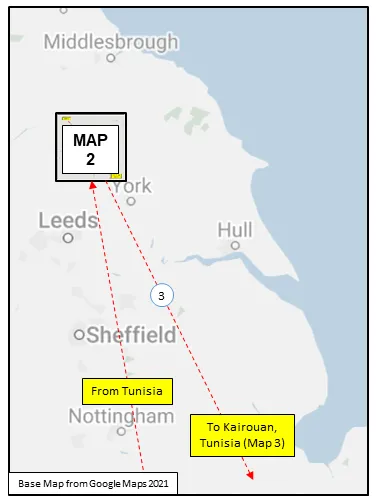
MAP 1: 424 Squadron Movements 1942-45 (right-click on image to display enlarged in new tab)
|
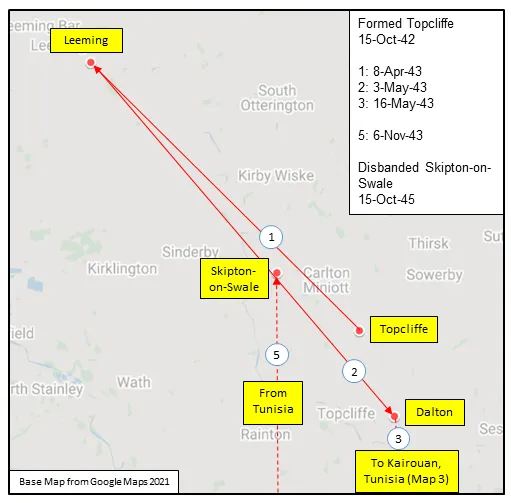
MAP 2: 424 Squadron Movements 1942-45 (detail of Map 1)
|
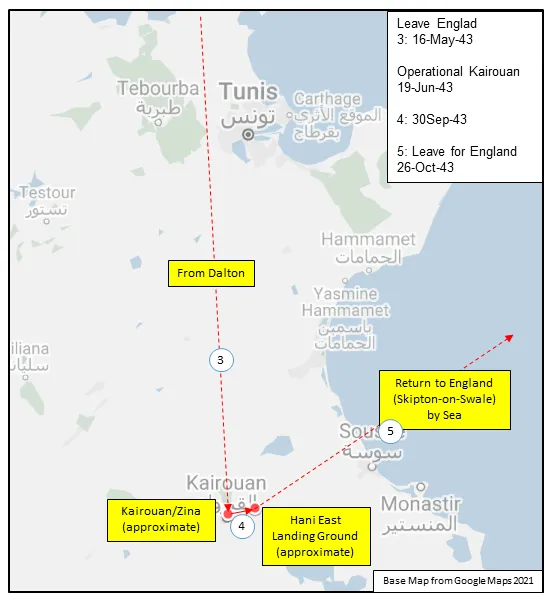
MAP 3: 424 Squadron Movements in North Africa 1943
|
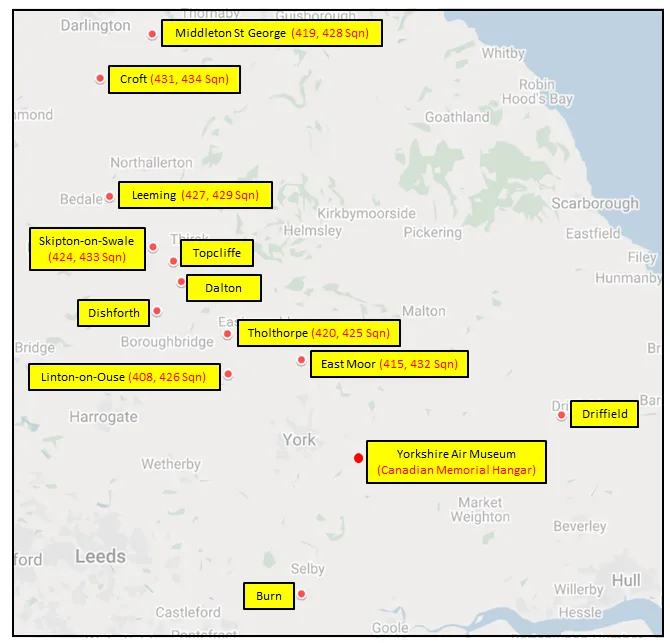
MAP 4: 6 Group Bomber Bases in Yorkshire and Durham, 1943-45
424 Squadron History Summary 1942-45
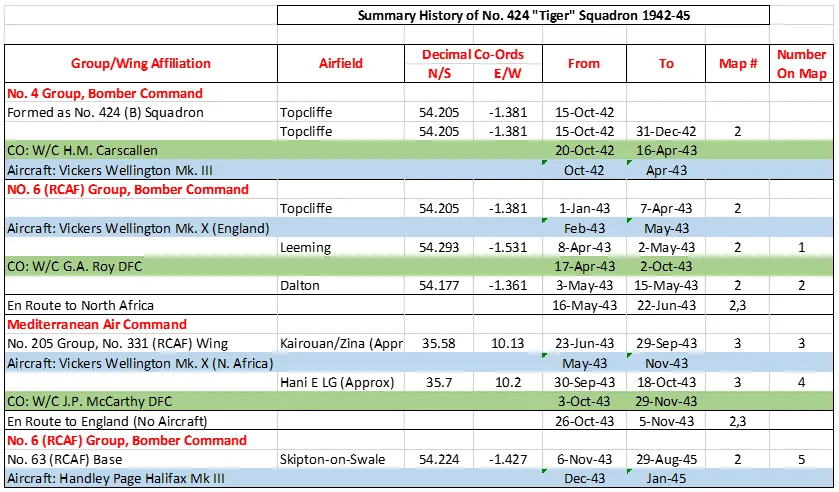
424 Squadron History Summary 1942-45 Page 2
History of the Squadron Post-WWII (Aircraft: Harvard II, Mustang IV, Silver Star 3, Expeditor, Otter, Griffon, Hercules)
The squadron was re-formed at Mount Hope, Hamilton, Ontario on 15 April 1946, as a light bomber unit. It was redesignated as an auxiliary fighter unit on 1 April 1947. It flew North American Harvard II and Mustang IV aircraft in a fighter role, as well as Canadair Silver Star aircraft until 1 September 1957 when it was then reassigned as a light transport and emergency rescue role and re-equipped with Beechcraft Expeditor and de Havilland Otter aircraft. On 21 October 1961 the unit received its Squadron Standard for 25 years’ service as No. 119 and 424 Squadron. A reduction of the Auxiliary Force resulted in the squadron being disbanded on 1 April 1964. On 8 July 1968, with unification of the Canadian Forces, the squadron was reactivated as 424 Communications and Transport Squadron, operating from CFB Trenton, Ontario . The squadron has flown more than 14 different types of aircraft during its history.
424 (Tiger) Squadron is now a Transport and Rescue Squadron based at 8 Wing Trenton. To fulfil its roles, 424 Squadron operates the CH-146 Griffon helicopter and the CC-130H Hercules. 424 Squadron and 435 Transport and Rescue Squadron provide primary search and rescue response for the Trenton Search and Rescue Region (SRR), the largest in Canada. The Trenton SRR extends from Quebec to the British Columbia/Alberta border, and from the Canada/United States border to the North Pole. The Squadron crews one aircraft of each type on standby response posture in order to respond to distress cases as tasked by Joint Rescue Coordination Centre Trenton.
In addition to providing SAR response through a para-rescue capability, the CC-130H Hercules allows the squadron to conduct its transport role in Canada and around the world. The CH-146 Griffon enables rescues and medical evacuations from locations on land and over water. Both aircraft carry Search and Rescue Technicians onboard in order to provide urgent care to those in need. The members of 424 Squadron provide SAR response to incidents under the federal SAR mandate; all aircraft incidents and all marine incidents in waters under federal jurisdiction. They also support humanitarian missions and other SAR organizations when able. Wikipedia and www.canada.ca/en/air-force/corporate/squadrons/424-squadron.html
Wellington HZ273 B. Mk. X - Bombing Stuttgart Germany - 1943-04-14 to 1943-04-15
Squadron: 424 (B) Sqn (RCAF)
Start Date: 1943-04-14
Completion Date: 1943-04-15
Mission: Bombing
Operation: Battle of the Ruhr
Target City: Stuttgart Germany
Target Specific:
Base: RAF Leeming
Take Off Time: 21.12
Squadron Code: QB G
Radio Code:
Return Base:
Return Time:
Crash City:
Crash Specifics:
Crash Latitude: 0.00000000
Crash Longitude: 0.00000000
Crash Reason:
Flak Battery:
Enemy Claim:
War Diary Unavailable
6 Bomber Group April 14/15, 1943
30 Halifaxes from 405, 408, and 419 Squadrons were joined by 91 Wellingtons from 420, 424, 425, 426, 427, 428, 429, and 431 Squadrons on an attack at Stuttgart. The crews were over the target at between 12,000 and 20,000 feet, releasing 42,000 lbs of high explosives and 236,000 lbs of incendiaries. According to reports, the weather was clear and much damage was caused to the industrial area, including a large rail repair shop. Richard Koval (6bombergroup.ca)
462 aircraft- 146 Wellingtons, 135 Halifaxes, 98 Lancasters, 83 Stirlings. 23 aircraft - 8 Stirlings, 8 Wellingtons, 4 Halifaxes, 3 Lancasters - lost, 5.0 per cent of the force.
The Pathfinders claimed to have marked the centre. of this normally difficult target accurately but the main bombing area developed to the north-east, along the line of approach of the bombing force. This was an example of the 'creep back', a feature of large raids which occurred when. Main Force crews- and some Pathfinder backers-up - failed to· press through to the centre of the marking area but bombed - of re-marked - the earliest markers visible. Bomber Command was never able to eliminate the creep back tendency and much bombing fell outside city areas because of it
On this night the creep back extended over the suburb of Bad Canstatt, which was of an industrial nature, and some useful damage was caused, particularly in the large railway-repair workshops situated there. The neighbouring districts of Munster and Miihlhausen were also hit and the majority of the 393 buildings destroyed and 942 severely damaged and the 200-plus civilian casualties were in these northern areas.
Only a few bombs fell in the centre of Stuttgart but the old Gedachtnis church was destroyed. In the district of Gaisburg, just east of the centre, 1 bomb scored a direct hit on an air-raid shelter packed with French and Russian prisoners of war. 257 Frenchmen and 143 Russians were killed. This tragedy brought the total death roll in Stuttgart to 619, a new record for raids to Germany
.Used by No. 424 Squadron, RCAF, in the UK, mid 1943, coded "QB*G". Shot down while on a mission to Stuttgart on 15 April 1943. All crew baled and were captured POW.
