 Hagersville, Haldimand County, Ontario
1918-08-29: embarked for European Front, by air, with 115Sqn.
1918-09-16: Gallagher was missing in H.P O/400, D-9689;from a night bombing raid night on the 16th-17th., and made a POW. He was re-patriated 1918-11-18.
Gallagher, Ernest Graham (Lieutenant)
Survived 1918-September-16


Birth Date: 1895-March-13
Born: Hagersville, Haldimand County, Ontario
Parents: Henry "Harry" Gallagher & Julia Gertrude Julien
Spouse: Leah Marie Easton
Home: Hagersville, Haldimand County, Ontario
Enlistment:
Enlistment Date: unkown date
Service
RAF
Unit
115 (B) Sqn- Squadron (RAF)
Despite The Elements
Base
France
Rank
Lieutenant
Position
air-gunner
Service Numbers
O/400 serial: D9689
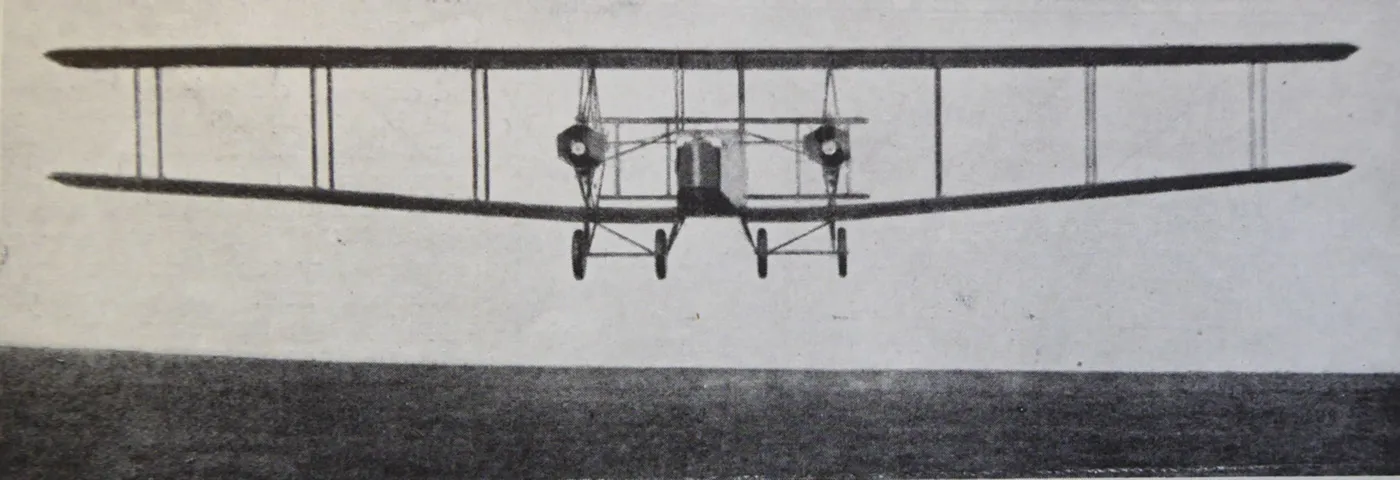
Handley Page O/400
Source History of War.org
The Handley Page Type O was a biplane bomber used by Britain during the First World War. When built, the Type O was one of the largest aircraft in the world. There were two main variants, the Handley Page O/100 (H.P.11) and the Handley Page O/400 (H.P.12).
The Handley Page O/400 was one of the first purpose built heavy bombers. The design order was issued by the Admiralty for the RNAS at the end of 1914, but the O/400 did not enter active service until March 1918, when it was used against German U-boat bases. It was then used against Germany shipping and ports, and had an increasing impact as the number of aircraft in operation increased. In addition to service on the western front, one O/400 was sent to the Aegean, where it operated against the Turks for three months before engine failure forced it out of action, and another was sent to Palestine to help General Allenby, again against the Turks, where its size made as much impact as its bombs. When the RNAS and RFC merged to form the RAF, the O/400 became its standard heavy bomber, but despite efforts to turn the O/400 into a transport plane, they had all gone out of service by the summer of 1923. Wikipedia
 Handley Page
O/400 D9689
airhistory.org.uk/rfc
Type: Handley Page O/400 Built by: Clayton & Shuttleworth /Lincoln Contract: AS28197 (dated 30-01-1918) Taken on charge: 07-1918
Unit Desciption
115 (B) Sqn Despite The Elements ()
No. 115 Sqn was originally formed on Dec 1, 1917 as a heavy bomber squadron and joined the Independent Air Force of the RAF in August 1918. It was disbanded in 1919, then re-formed in June 1937. It formed part of RAF Bomber Command No. 3 Group in WWII. Starting with Handley Page Harrow aircraft, it transferred to Vickers Wellingtons in 1939, which it flew until March 1943, when it transferred to Avro Lancaster B. Mk. II and later B. Mks I and III. Between April 1940 and September 1942 the squadron was seconded to Coastal Command and based at Kinloss, Scotland. It rejoined Bomber Command and flew from Mildenhall, East Wretham and Little Snoring in 1942 and 1943 before settling at Witchford, Cambridgeshire from November 1943 until the end of hostilities.
In April 1940 the squadron made the RAF's first bombing attack on the mainland of Europe, at Stavanger in Norway. In August of 1941 it participated in the service trials of the new navigational aid, GEE, and as a result of its report the device was put into mass production. Overall, in WWII the squadron flew 5392 sorties and dropped about 23,000 tons of bombs. This was the second-highest tonnage of bombs in Bomber Command. The squadron was 3rd in the number of raids in the course of the war. Since it was active over the whole span of WWI, it lost the greatest number of aircraft of any squadron in Bomber Command: it was the only squadron to lose more than 200 aircraft.