Gray, Robert Hampton (Lieutenant (A))

Killed in Action 1945-August-09

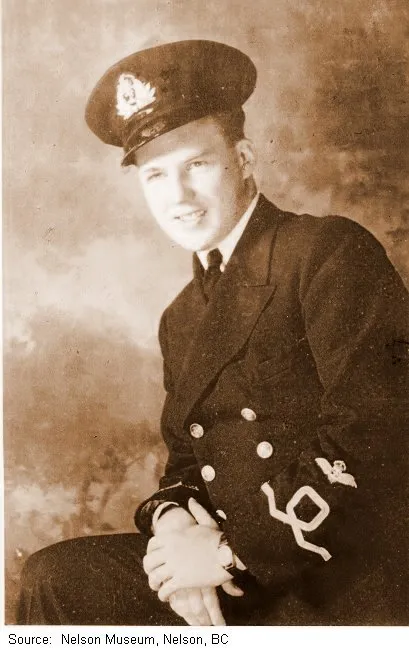
Lieutenant (A) Robert Hampton Gray RCNVR

Birth Date: 1917-November-02

Born: Trail, British Columbia

Parents: Son of John Balfour and Wilhelmina Gray, of Nelson, British Columbia.

Spouse:

Home: Nelson, British Columbia

Enlistment: Calgary, Alberta

Enlistment Date: 1940-July-18

Victoria Cross Distinguished Service Cross Mentioned in Dispatches (1)

Service

RCNVR

Unit

1841 Sqn- Squadron (RN FAA)

Base

HMS Formidable

Rank

Lieutenant (A)

Position

Pilot

Service Numbers

V/13438

Target
Google MapOnagawa Japan
Temporary Burial
Google MapOnagawa Bay Japan
Memorial Location
Google MapNaval Memorial
Panel 13

1841 Naval Air Squadron Fleet Air Arm, HMS Formidable

Lt (A) Gray was awarded the VC when he flew his Corsair IV aircraft KD 658 115-X into a hail of cannon and machine gun fire during an attack on the Japanese destroyer escort Amakusa anchored in Onagawa Bay. The aircraft was hit, appeared to catch fire and one of the two 500 lb. bombs was shot off, Lt (A) Gray righted the aircraft and pressed on with his attack. At an altitude of 50 feet he released his remaining bomb which resulted in the sinking of the Amakusa, as he was weaving out of the area his aircraft was hit again, flicked over and dove into the ocean, there was no time for him to bail out

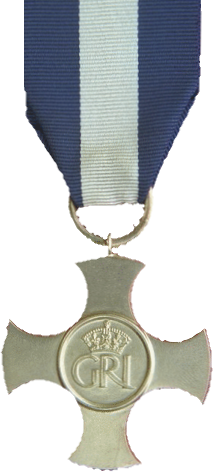
Lt (A) Gray served with the Royal Canadian Naval Volunteer Reserve and was Mentioned in Dispatches for his attack in a Barracuda aircraft against the German battleship Turpitz, he also earned the D.S.C. for his part, "Determination and address in air attacks on targets in Japan, in July, 1945"

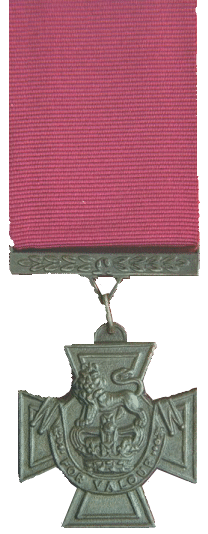
In November of 1945, Hammy Gray was officially awarded the British Commonwealth's highest honour for valour, the Victoria Cross. The Citation reads: The King has been graciously pleased to approve the award of the Victoria Cross to the late Temporary Lieutenant Robert Hampton Gray, RCNVR, for great valour in leading an attack on a Japanese destroyer in Onagawa Bay on the 9th August 1945. In the face of fire from shore batteries, and a heavy concentration of fire from some five warships, Lieutenant Gray pressed home his attack, flying very low in order to ensure success, and although he was hit and his aircraft in flames, he obtained one direct hit, sinking the destroyer. Lieutenant Gray has consistently shown a brilliant flying spirit and most inspiring leadership."

Lt Gray was BROTHER to FS John Balfour Gray (RCAF), air gunner with 144 Sqn RAF, killed in action 1942-02-27 when Hampden L 4178 crashed in England returning from a mine laying operation

source: They Shall Grow Not Old, BCATP Museum, Brandon MB

Early life:

Gray was born in Trail, British Columbia, Canada, but resided from an early age in Nelson, where his father was a jeweller. In 1940, following education at the University of Alberta and University of British Columbia, where he completed his Bachelor of Arts and was a member of the Phi Delta Theta Fraternity, he enlisted in the Royal Canadian Naval Volunteer Reserve (RCNVR) at HMCS Tecumseh in Calgary, Alberta. Originally sent to England for training, Gray was sent back to Canada to train at RCAF Station Kingston.

War service:

Gray initially joined 757 Naval Air Squadron at Winchester, England. He was then assigned to the African theatre, flying Hawker Hurricanes for shore-based squadrons, nos. 795, 803, and 877, where he spent two years at Nairobi.

Gray was one of the last Canadians to die during World War II, and was the second to last Canadian to be awarded the Victoria Cross, the last being that of Pilot Officer Andrew Mynarski, awarded a year later in relation to an incident that occurred before Gray's. His VC is owned by the Gray family.

Legacy:

As Gray's remains were never found, he was listed as missing in action and presumed dead. He is commemorated, with other Canadians who died or were buried at sea during the First and Second World Wars, at the Halifax Memorial in Point Pleasant Park, Halifax, Nova Scotia. The War Memorial Gym at University of British Columbia, Royal Canadian Legion hall in Nelson, numerous other sites in Nelson, and the wardroom of HMCS Tecumseh (his RCNVR home unit) also bear plaques in his honour.

A memorial for Gray was erected at Onagawa Bay in 1989 in Sakiyama Park. This is the only memorial dedicated to a foreign soldier on Japanese soil. Following the devastation of the March 11, 2011 earthquake (during which the granite monument itself was knocked over), the monument (with new plaque) was moved from its original location in Sakiyama Park to one beside the hospital (Onagawacho Community Medicine Center) in Onagawa Town. A rededication ceremony was held August 24, 2012. Gray is one of fourteen figures commemorated at the Valiants Memorial in Ottawa.

To celebrate the Centennial of the Canadian Navy, during the 2010 air show season, Vintage Wings of Canada flew at events across Canada in a Corsair bearing the markings of the plane Gray was likely flying that fateful day

His life is recorded in A Formidable Hero: Lt. R.H. Gray, VC, DSC, RCNVR by Stuart E. Soward, published by Trafford Neptune.

On March 12, 1946, the Geographic Board of Canada named a mountain in Kokanee Glacier Provincial Park, British Columbia, after Gray and his brother, Flt Sergeant John Balfour Gray, RCAF, who was also killed in World War II. Rising to a height of 2,753 m (9,032 ft), Grays Peak is well known in Canada as the mountain pictured on the label of Kokanee Beer.

Hampton Gray Memorial Elementary: The elementary school at CFB Shearwater is named after Gray.

Kingston Norman Rogers Airport: Gray completed his training at No. 31 Service Flying Training School in Kingston, Ontario. There is a Harvard aircraft, same type of trainer he flew at Kingston, mounted on a pedestal with a memorial dedicated to him. Additionally, the road leading to the airport terminal has been named Hampton Gray Gate.

Royal Canadian Sea Cadets: The Royal Canadian Sea Cadet Corps in Nelson, BC is named 81 Hampton Gray, VC Royal Canadian Sea Cadet Corps.

Royal Canadian Air Cadets: In 2012, the Royal Canadian Air Cadets created a new squadron in his honour called 789 Lt. R. Hampton Gray VC Squadron which is located in Mississauga, Ontario.

Harry DeWolf-class offshore patrol vessel: The sixth Harry DeWolf-class offshore patrol vessel for the Royal Canadian Navy will be named for Gray

source: British & Commonwealth Forces,Stan Barclay)

Corsair serial: KD658

(RN Photo)
Chance Vought F4U Corsair, RN.

Designed and initially manufactured by Chance Vought, the Corsair was operated as a carrier-based aircraft, and entered service in large numbers with the USN and RN in late 1944 and early 1945. Additional production contracts were given to Goodyear, whose Corsairs were designated FG, and Brewster, whose Corsairs were designated F3A.

From the first prototype delivery to the U.S. Navy in 1940, to final delivery in 1953 to the French, 12,571 F4U Corsairs were manufactured in 16 separate models. Its 1942"“1953 production run was the longest of any American piston-engined fighter.

In November 1943, the Royal Navy received its first batch of 95 Vought F4U-1s, which were given the designation of "Corsair I". The first squadrons were assembled and trained on the American East Coast and then shipped across the Atlantic. The Royal Navy put the Corsair into carrier operations immediately. They found its landing characteristics dangerous, suffering a number of fatal crashes, but considered the Corsair to be the best option they had.

The Royal Navy developed a number of modifications to the Corsair that made carrier landings more practical. Among these were a bulged canopy (similar to the Malcolm Hood), raising the pilot's seat 7 in (180 mm), and wiring shut the cowl flaps across the top of the engine compartment, diverting oil and hydraulic fluid spray around the sides of the fuselage.

The Royal Navy initially received 95 "birdcage" F4U-1s from Vought which were designated Corsair Mk. I in Fleet Air Arm service. Next from Vought came 510 "blown-canopy" F4U-1A/-1Ds, which were designated Corsair Mk. II (the final 150 equivalent to the F4U-1D, but not separately designated in British use). 430 Brewster Corsairs (334 F3A-1 and 96 F3A-1D), more than half of Brewster's total production, were delivered to Britain as the Corsair Mk. III. 857 Goodyear Corsairs (400 FG-1/-1A and 457 FG-1D) were delivered and designated Corsair Mk. IV. The Mk. IIs and Mk. IVs were the only versions to be used in combat.

The Royal Navy cleared the F4U for carrier operations well before the USN and showed that the Corsair Mk. II could be operated with reasonable success even from escort carriers. It was not without problems; one was excessive wear of the arrester wires, due both to the weight of the Corsair and the understandable tendency of the pilots to stay well above the stalling speed. A total of 2,012 Corsairs were supplied to the United Kingdom.

Fleet Air Arm (FAA) units were created and equipped in the United States, at Quonset Poiint, Rhode Island, or Brunswick, Maine, and then shipped to war theatres aboard escort carriers. The first FAA Corsair unit was 1830 NAS, created on the first of June 1943, and soon operating from HMS Illustrious. At the end of the war, 18 FAA squadrons were operating the Corsair. British Corsairs served both in Europe and in the Pacific. The first, and also most important, European operations were the series of attacks (Operation Tungsten) in April, July, and August 1944 on the German battleship Tirpitz, for which Corsairs from HMS Victorious and HMS Formidable provided fighter cover. It appears the Corsairs did not encounter aerial opposition on these raids.

From April 1944, Corsairs from the British Pacific Fleet took part in a several major air raids in South East Asia beginning with Operation Cockpit, an attack on Japanese targets at Sabang island, in the Dutch East Indies.

In July and August 1945, Corsair naval squadrons 1834, 1836, 1841, and 1842 took part in a series of strikes on the Japanese mainland, near Tokyo. These squadrons operated from HMS Victorious and HMS Formidable. On 9 August 1945, days before the end of the war, Corsairs from HMS Formidable attacked Shiogama harbour on the northeast coast of Japan. Royal Canadian Navy Volunteer Reserve pilot, Lieutenant Robert Hampton Gray, of 1841 Squadron was hit by flak but pressed home his attack on a Japanese destroyer, sinking it with a 1,000 lb (450 kg) bomb but crashing into the sea. He was posthumously awarded Canada's last Victoria Cross, becoming the second fighter pilot of the war to earn a Victoria Cross as well as the final Canadian casualty of the Second World War. Harold Skaarup web page

YouTube Corsair Fighter

Wikipedia Wikipedia Corsair Fighter

Unvetted Source Harold A Skaarup Web Page

Supplemental Story

Robert Hampton Gray, VC

YouTube Victoria Cross

Museum Vintage Wings - The Last VC

Museum The Gray Corsair (Video)

Museum Lieutenant Gray (CFB Esquimalt)

Museum Letter of Condolence

HMS Formidable

YouTube HMS Formidable - Kamikaze

Unvetted Source HMS Formidable Story

YouTube Formidable Return Home

Questions for Robert Hampton Gray VC

  1. Where was Robert, known as Hammy to his friends, born?
  2. What happened to his brother?
  3. What was he studying just before he signed up with the RCAF?
  4. Personal Details
    1. How old was he when he signed up for the RCAF?
    2. At what age was he killed?
  5. What was the first action of the War he was involved in?
  6. Describe what Hammy went through the day of his last flight.
  7. Surrounding Events
    1. What other major world event took place on August 9, 1945?
    2. What was the result of this major event?
    3. Have the implications of that event lasted until today?
  8. What did Hammy’s actions on August 9 show about his personality and character?
  9. Why was Hammy known as an extraordinary pilot?
  10. On his last flight he flew a Corsair airplane.
    1. Where did he take off from for his mission?
    2. What had happened to the Formidable two months before Hammy's flight?
  11. Considering the War in the Pacific was coming to an end, would you have launched an attack on a Japanese destroyer the way Hammy did? Explain your answer.
  12. How do you think Hammy's friends in the RCAF would have reacted to his death?